


Iraq

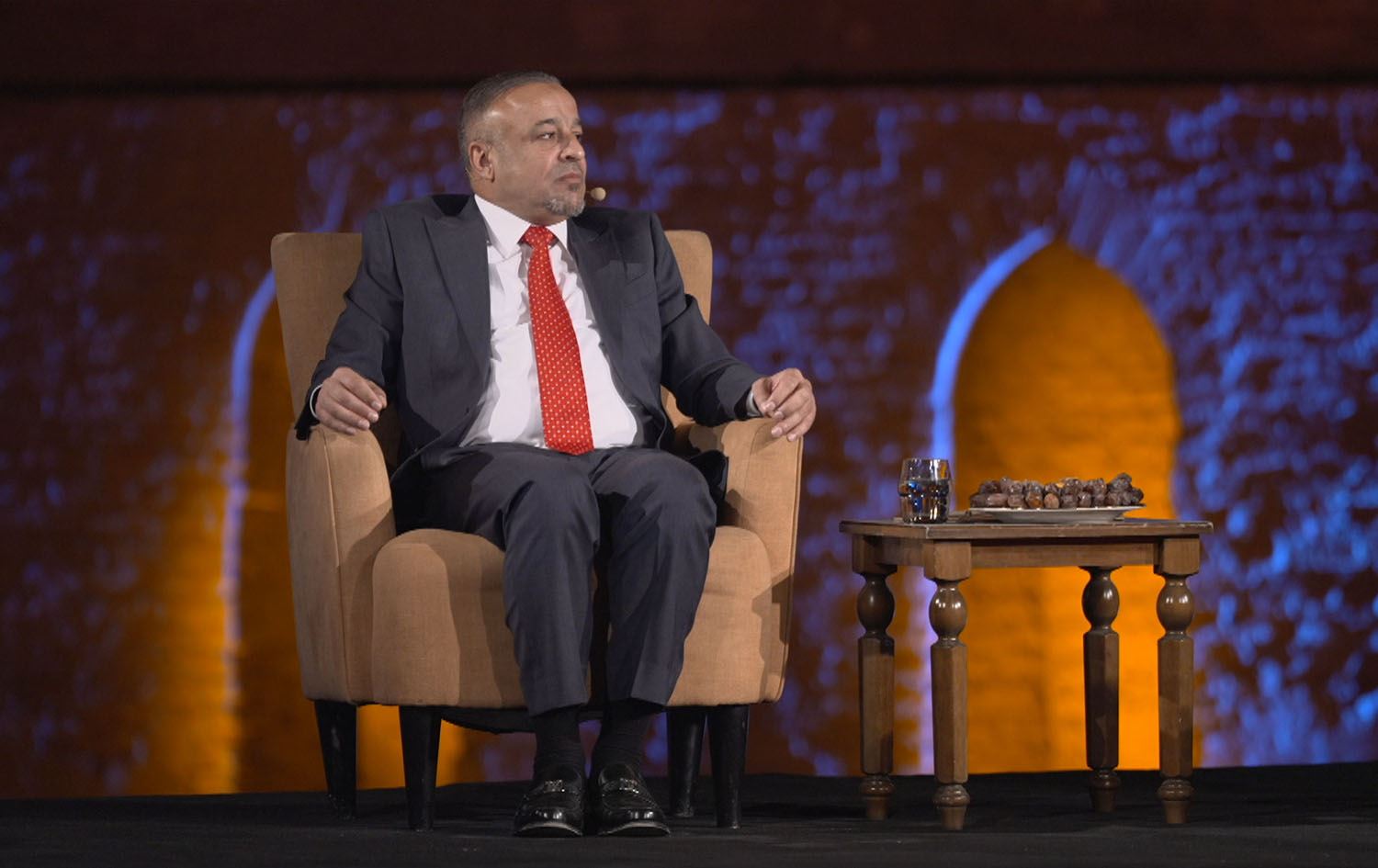
Salahaddin Governor Badr al-Fahl, in an interview with Rudaw in October 2025. Photo: screengrab/Rudaw
ERBIL, Kurdistan Region - Salahaddin Governor Badr al-Fahl has accused the Popular Mobilization Forces (PMF, or Hashd al-Shaabi) of restricting his authority and blocking access to parts of the province, saying the Iran-backed group continues to control areas in and around Hawija ahead of Iraq’s upcoming parliamentary elections.
Speaking on Rudaw’s Bestoon Talk program, Fahl said that “Despite being the head of the security committee of Salahaddin province, the Popular Mobilization Forces prevent me from entering Hawija as I would enter other areas.”
Hawija, a predominantly Sunni Arab district administratively part of Kirkuk province, was a major Islamic State (ISIS) stronghold after 2014 but was retaken by Iraqi forces in 2017. Although the Iraqi army and local police officially oversee security, the PMF - which played a major role in defeating ISIS - continues to exert significant influence, controlling key checkpoints and access routes.
“For nearly six years, efforts have been made to return the people of Hawija to their areas, but the Popular Mobilization Forces have controlled the areas, so they have not been able to return yet,” Fahl said, adding that a committee has now been formed to facilitate returns within two months.
He noted that an official decision is in place for the return of displaced residents, and implementation has begun.
Fahl, who is running as a candidate for the National Masses Party in Salahaddin, said that “although ISIS threats in the area have greatly diminished and the security situation in Salahaddin province is very good, we need more security forces to prevent gaps and maintain stability.”
The governor recalled that ISIS’s 2014 invasion set Salahaddin back 20 years, adding that the province still suffers from weak investment and limited job opportunities.
“Annually, about 25,000 young people complete their studies at Tikrit universities, but the government cannot employ this large number of graduates, so I encourage young people to do freelance work or work in the private sector,” he said.
He added that 70 percent of Salahaddin is agricultural land with few large investment projects.
“Most foreign companies invest in a place that is stable, but Salahaddin’s situation is in the ‘red zone’ internationally, and there is no encouragement for investment in the governorate, while Erbil and Sulaimani are in the ‘green zone’ for investment projects,” Fahl said.
Salahaddin province has 12 parliamentary seats, contested by 13 parties and alliances fielding 296 candidates. Nationwide, 7,768 candidates - 5,520 men and 2,248 women - are running for 329 seats, including nine reserved for minority groups, according to Iraq’s Independent High Electoral Commission (IHEC).
Jamal Hasan contributed to this report.
Speaking on Rudaw’s Bestoon Talk program, Fahl said that “Despite being the head of the security committee of Salahaddin province, the Popular Mobilization Forces prevent me from entering Hawija as I would enter other areas.”
Hawija, a predominantly Sunni Arab district administratively part of Kirkuk province, was a major Islamic State (ISIS) stronghold after 2014 but was retaken by Iraqi forces in 2017. Although the Iraqi army and local police officially oversee security, the PMF - which played a major role in defeating ISIS - continues to exert significant influence, controlling key checkpoints and access routes.
“For nearly six years, efforts have been made to return the people of Hawija to their areas, but the Popular Mobilization Forces have controlled the areas, so they have not been able to return yet,” Fahl said, adding that a committee has now been formed to facilitate returns within two months.
He noted that an official decision is in place for the return of displaced residents, and implementation has begun.
Fahl, who is running as a candidate for the National Masses Party in Salahaddin, said that “although ISIS threats in the area have greatly diminished and the security situation in Salahaddin province is very good, we need more security forces to prevent gaps and maintain stability.”
The governor recalled that ISIS’s 2014 invasion set Salahaddin back 20 years, adding that the province still suffers from weak investment and limited job opportunities.
“Annually, about 25,000 young people complete their studies at Tikrit universities, but the government cannot employ this large number of graduates, so I encourage young people to do freelance work or work in the private sector,” he said.
He added that 70 percent of Salahaddin is agricultural land with few large investment projects.
“Most foreign companies invest in a place that is stable, but Salahaddin’s situation is in the ‘red zone’ internationally, and there is no encouragement for investment in the governorate, while Erbil and Sulaimani are in the ‘green zone’ for investment projects,” Fahl said.
Salahaddin province has 12 parliamentary seats, contested by 13 parties and alliances fielding 296 candidates. Nationwide, 7,768 candidates - 5,520 men and 2,248 women - are running for 329 seats, including nine reserved for minority groups, according to Iraq’s Independent High Electoral Commission (IHEC).
Jamal Hasan contributed to this report.


Comments
Rudaw moderates all comments submitted on our website. We welcome comments which are relevant to the article and encourage further discussion about the issues that matter to you. We also welcome constructive criticism about Rudaw.
To be approved for publication, however, your comments must meet our community guidelines.
We will not tolerate the following: profanity, threats, personal attacks, vulgarity, abuse (such as sexism, racism, homophobia or xenophobia), or commercial or personal promotion.
Comments that do not meet our guidelines will be rejected. Comments are not edited – they are either approved or rejected.
Post a comment