



Error occured during this request! Please try again later.
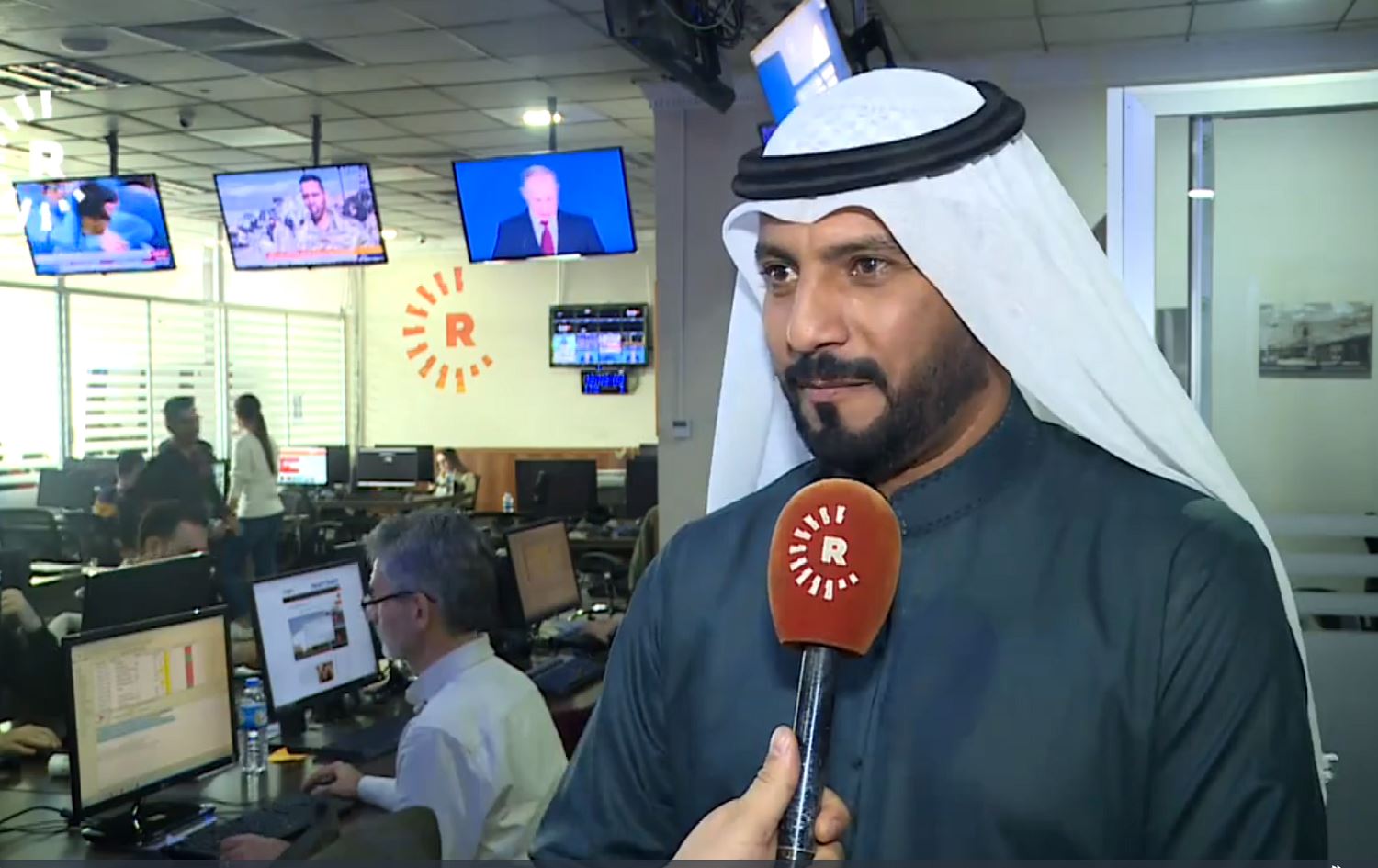
ERBIL, Kurdistan Region – Sunni Arabs have been ignored by central Iraqi government and are too scared to express political discontent for fear of reprisals from Iran-backed Shiite militias belonging to the Popular Mobilization Forces (PMF, known in Arabic as Hashd al-Shaabi), a tribal leader has told Rudaw English.
Sunnis in the western Iraqi province of Anbar are still reeling from the heavy repression enacted when from 2012 to 2013, popular protests demanded greater autonomy and an end to central state repression, Sheikh Mustafah al-Dilemmi said in an interview conducted on January 15.
A year later, the Islamic State (ISIS) swept across Iraqi provinces including Anbar in 2014, devastating the population. The area’s residents – hundreds of thousands of whom have been displaced to other parts of the country – have accused the government of inaction on reconstruction and the reinstatement of security in the area since their defeat.
“Our relations with the [Iraqi] government, ever since the civil movement that happened in Anbar [from 2012 to 2013] is not good and the government has proven everything we have said about it - that it is a hijacked government, hijacked by militias,” Dilemmi told Rudaw English. “Iraq is ruled by mafia, not law or government.”
Iraqis in Baghdad and the Shiite-majority south have been on the streets since October to demand improved socio-economic conditions, early elections, an end to corruption and an overhaul of the political system.
Over 600 people, predominantly protesters, have been killed over the course of four months.
Sunnis who have expressed solidarity with the protests have faced arrest and interrogation, according to a November report by Human Rights Watch.
“[Sunni] people are powerless, unable to speak. They support the current protests, but imagine for a second that a resident of Anbar gets arrested if he even supports the protests on social media,” Dilemmi said.
“There is semi-house arrest imposed on the [Sunni Arab] people. They cannot speak, breathe, or do anything [freely],” claimed the tribal leader.
The atmosphere of repression is being upheld due to the influence of predominantly-Shiite militias on Iraqi governance, Dilemmi argues, with the PMF and allied Sunni militias are cracking down on Sunni Arabs in Anbar “through cooperation with the Anbar representatives.”
The Iraqi government has “legitimized” Shiite militias through the PMF body, he added.
He even claimed Shiite militias “brought [ISIS] into our provinces” to quash Sunni protests, and accused PMF factions of “finishing” what ISIS started.
The Sheikh, who resides in Erbil, claimed that around 50,000 Sunni Arabs from Anbar live in the Kurdistan Region. They can’t go back because they are accused of “terrorism” or sympathy with the Islamic State for speaking up against the militias.
On foreign policy affecting Sunnis in western Iraq, the tribal leader slammed the Obama administration for “allowing Iran to infiltrate into Sunni areas”. He praised the US’ current hardline stance on Iran, especially the January assassination of General Qasem Soleimani, who was instrumental in Tehran’s Iraq policy.
Only fundamental political change will bring improvement for Sunnis in Anbar, Dilemmi argues.
“The way forward is for the current political process to be fully overhauled,” the prince added.
One such proposal has been the establishment of an autonomous Sunni region, similar to that of the Kurdistan Region.
“The [Kurdistan] Region is a successful model that is why we encourage it [the idea of a Sunni Region]. It is a model for all Iraqi provinces,” he said, claiming it was a main demand of the 2012-13 protests.
Earlier in January, reports emerged of Sunni leaders including parliament speaker Mohammed al-Halbousi meeting in Dubai to discuss a Sunni region. However, Halbousi and other politicians denied such a meeting had taken place, and there is no census among Sunni politicians over the topic of autonomy.
“However, it has to be outside of the current political organization…they [the Sunni political class] have gone bankrupt in the political process,” Dilemmi said.
Some Sunni politicians are now using autonomy as a means of skirting planned “clean, internationally supervised” Iraqi elections.
“[They] have resorted to this weak method, to play the [Sunni] Region card. The Anbar, Sunni public reject them. We don’t want a region on their terms,” Dilemmi added.
Though they have suffered extensive destruction, Sunni provinces have the means to rebuild and be economically self-sufficient, while Baath-era security officials, many of whom were Sunni, could possess the necessary expertise to help Sunni areas themselves, the tribal leader suggested.
“We have studied all the dimensions of such proposal carefully.”
Sunnis in the western Iraqi province of Anbar are still reeling from the heavy repression enacted when from 2012 to 2013, popular protests demanded greater autonomy and an end to central state repression, Sheikh Mustafah al-Dilemmi said in an interview conducted on January 15.
A year later, the Islamic State (ISIS) swept across Iraqi provinces including Anbar in 2014, devastating the population. The area’s residents – hundreds of thousands of whom have been displaced to other parts of the country – have accused the government of inaction on reconstruction and the reinstatement of security in the area since their defeat.
“Our relations with the [Iraqi] government, ever since the civil movement that happened in Anbar [from 2012 to 2013] is not good and the government has proven everything we have said about it - that it is a hijacked government, hijacked by militias,” Dilemmi told Rudaw English. “Iraq is ruled by mafia, not law or government.”
Iraqis in Baghdad and the Shiite-majority south have been on the streets since October to demand improved socio-economic conditions, early elections, an end to corruption and an overhaul of the political system.
Over 600 people, predominantly protesters, have been killed over the course of four months.
Sunnis who have expressed solidarity with the protests have faced arrest and interrogation, according to a November report by Human Rights Watch.
“[Sunni] people are powerless, unable to speak. They support the current protests, but imagine for a second that a resident of Anbar gets arrested if he even supports the protests on social media,” Dilemmi said.
“There is semi-house arrest imposed on the [Sunni Arab] people. They cannot speak, breathe, or do anything [freely],” claimed the tribal leader.
The atmosphere of repression is being upheld due to the influence of predominantly-Shiite militias on Iraqi governance, Dilemmi argues, with the PMF and allied Sunni militias are cracking down on Sunni Arabs in Anbar “through cooperation with the Anbar representatives.”
The Iraqi government has “legitimized” Shiite militias through the PMF body, he added.
He even claimed Shiite militias “brought [ISIS] into our provinces” to quash Sunni protests, and accused PMF factions of “finishing” what ISIS started.
The Sheikh, who resides in Erbil, claimed that around 50,000 Sunni Arabs from Anbar live in the Kurdistan Region. They can’t go back because they are accused of “terrorism” or sympathy with the Islamic State for speaking up against the militias.
On foreign policy affecting Sunnis in western Iraq, the tribal leader slammed the Obama administration for “allowing Iran to infiltrate into Sunni areas”. He praised the US’ current hardline stance on Iran, especially the January assassination of General Qasem Soleimani, who was instrumental in Tehran’s Iraq policy.
Only fundamental political change will bring improvement for Sunnis in Anbar, Dilemmi argues.
“The way forward is for the current political process to be fully overhauled,” the prince added.
One such proposal has been the establishment of an autonomous Sunni region, similar to that of the Kurdistan Region.
“The [Kurdistan] Region is a successful model that is why we encourage it [the idea of a Sunni Region]. It is a model for all Iraqi provinces,” he said, claiming it was a main demand of the 2012-13 protests.
Earlier in January, reports emerged of Sunni leaders including parliament speaker Mohammed al-Halbousi meeting in Dubai to discuss a Sunni region. However, Halbousi and other politicians denied such a meeting had taken place, and there is no census among Sunni politicians over the topic of autonomy.
“However, it has to be outside of the current political organization…they [the Sunni political class] have gone bankrupt in the political process,” Dilemmi said.
Some Sunni politicians are now using autonomy as a means of skirting planned “clean, internationally supervised” Iraqi elections.
“[They] have resorted to this weak method, to play the [Sunni] Region card. The Anbar, Sunni public reject them. We don’t want a region on their terms,” Dilemmi added.
Though they have suffered extensive destruction, Sunni provinces have the means to rebuild and be economically self-sufficient, while Baath-era security officials, many of whom were Sunni, could possess the necessary expertise to help Sunni areas themselves, the tribal leader suggested.
“We have studied all the dimensions of such proposal carefully.”


Comments
Rudaw moderates all comments submitted on our website. We welcome comments which are relevant to the article and encourage further discussion about the issues that matter to you. We also welcome constructive criticism about Rudaw.
To be approved for publication, however, your comments must meet our community guidelines.
We will not tolerate the following: profanity, threats, personal attacks, vulgarity, abuse (such as sexism, racism, homophobia or xenophobia), or commercial or personal promotion.
Comments that do not meet our guidelines will be rejected. Comments are not edited – they are either approved or rejected.
Post a comment