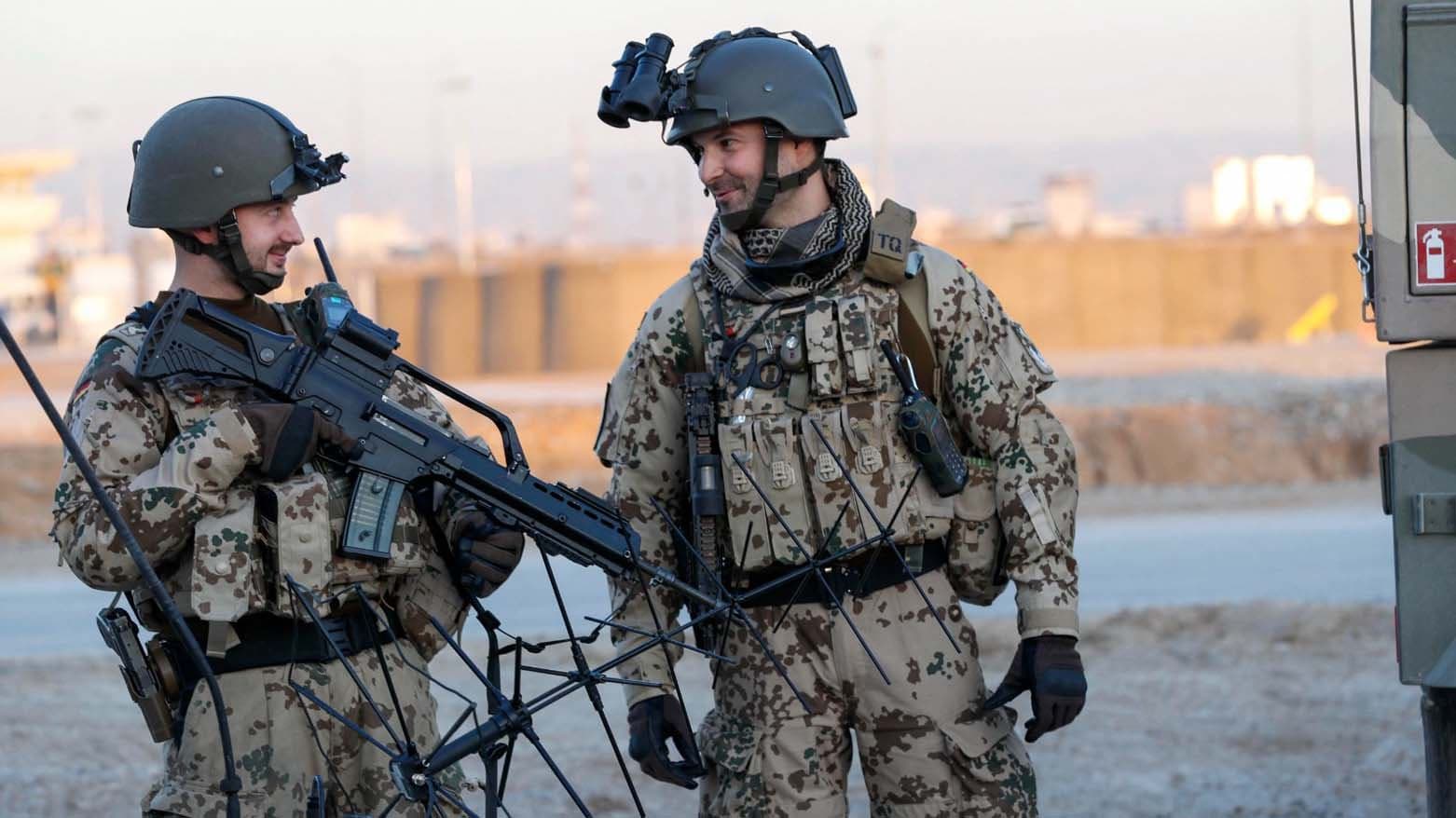

ERBIL, Kurdistan Region - Germany’s Bundestag on Thursday approved a one-year extension of the deployment of German armed forces in Iraq, aimed at supporting stability and preventing a resurgence of the Islamic State (ISIS).
A total of 477 lawmakers voted in favor of the extension, while 100 opposed it. One lawmaker abstained.
Under the approved legislation, €109 million has been allocated to cover the cost of the extended mission in Iraq and the Kurdistan Region.
The extension of Germany’s military mandate, which had been approved by the German government in mid-October, was requested by the Iraqi government, according to Germany’s Defense Ministry.
At the time, the ministry said the mission “aims to sustainably equip the regular Iraqi armed and security forces to ensure security and stability in Iraq and to prevent a resurgence of ISIS.”
German forces in Iraq operate in support of the NATO Mission Iraq (NMI), a non-combat advisory mission.
The current mandate is set to expire on January 31, 2026.
Germany’s military involvement in Iraq dates back to August 2014, when Berlin began supplying military equipment - including anti-tank missiles and assault rifles - to Kurdish Peshmerga forces. In October 2014, German troops were deployed to Erbil to train Peshmerga fighters, marking Germany’s first operational military presence in the region.
Germany is also a major contributor to the NATO Mission Iraq, launched in 2018 at the request of Baghdad. The mission focuses on advising Iraqi security institutions and building their capacity to independently counter terrorism and prevent the re-emergence of ISIS.
Beyond military support, Germany has provided significant civilian assistance to Iraq. The German Foreign Ministry told Rudaw in mid-August that Berlin had delivered more than €3 billion in humanitarian, development, and stabilization aid since 2014.
This assistance includes €800 million ($933 million) in humanitarian aid and €2.6 billion ($3 billion) for stabilization programs between 2014 and 2022, supporting initiatives such as psychosocial services and rehabilitation programs for survivors of ISIS atrocities.
Most German troops deployed under the mandate are stationed in the Kurdistan Region.
.jpg&w=3840&q=75)