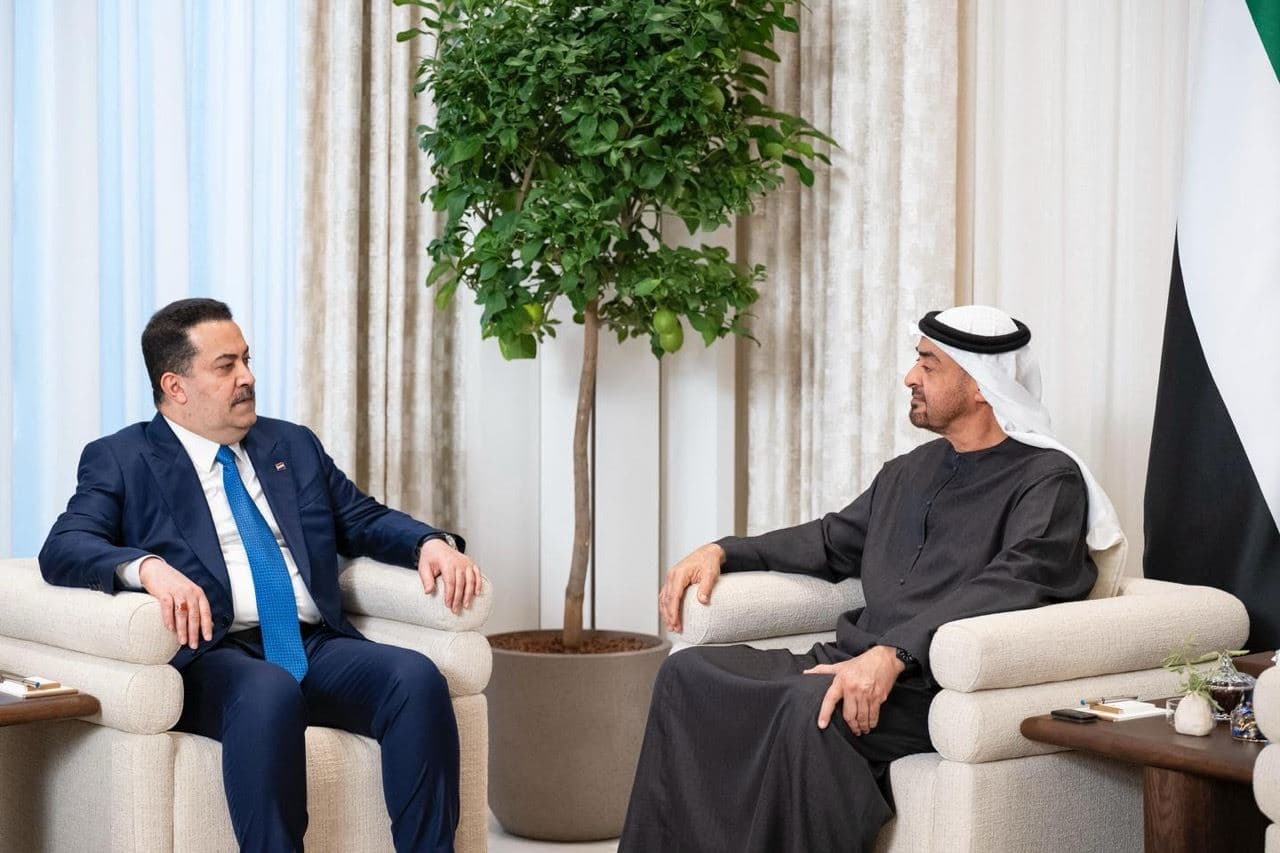

ERBIL, Kurdistan Region - UAE President Mohamed bin Zayed Al Nahyan and Iraqi Prime Minister Mohammed Shia' al-Sudani condemned a recent drone attack on the UAE Consulate General in Erbil that injured two security personnel and damaged the building, during a phone call late Sunday.
The two leaders also discussed ongoing regional conflicts involving the United States, Israel, and Iran, according to a statement from Sudani’s office.
Both condemned the “attacks targeting the UAE consulate in Erbil” and pledged to strengthen “diplomatic efforts to halt military operations and return to the negotiating table in order to establish stability in the region and safeguard the security and well-being of its people.”
Saturday’s drone strike marked the second such attack on the UAE consulate since the start of the US-Israel-Iran war more than two weeks ago.
“During the call, they emphasized the need to continue joint Arab coordination and to take action at the regional and international levels to de-escalate tensions and work toward ending the war as quickly as possible, sparing the region further turmoil and instability,” the statement added.
The Kurdistan Region has been targeted by more than 300 explosive-laden drones and missiles, as Iran and its proxy forces in Iraq continue attacks on the US diplomatic mission in Erbil and other military and civilian sites across the Region.
Among Gulf states, the UAE has been one of the most heavily targeted by Iran during the conflict, with missiles and drones launched almost daily toward locations hosting US bases, in retaliation for the joint US-Israel attack on the Islamic republic.
The UAE foreign ministry said early Monday that its air defense systems were intercepting Iranian missiles and drones.
“UAE air defenses are currently responding to incoming missile and drone threats from Iran,” the ministry said in a statement.