
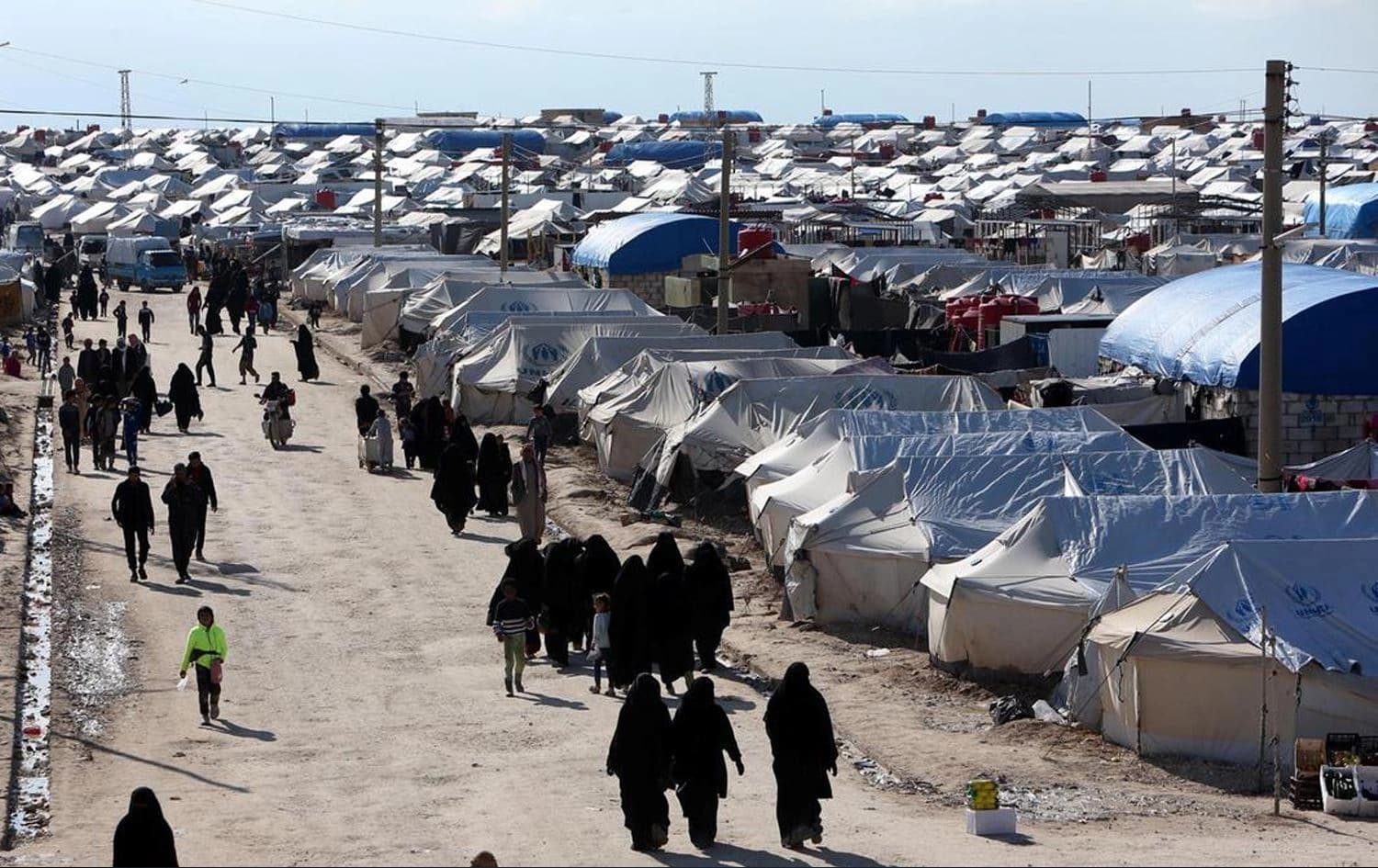

ERBIL, Kurdistan Region - About 5,000 Iraqi nationals remain in al-Hol camp in northeast Syria (Rojava) that houses suspects linked to the Islamic State (ISIS), the Ministry of Migration and Displaced said on Saturday as Baghdad makes a global push to empty the camp.
“So far, approximately 18,000 Iraqi citizens have been repatriated from al-Hol camp and about 5,000 others remain in the camp,” Ali Abbas, spokesperson for the ministry, told Rudaw.
Al-Hol camp in Hasaka province is infamous for its squalid conditions and has been branded a breeding ground for terrorism. Iraqis and Syrians make up the majority of the nearly 28,000 ISIS-linked people who have been held at the camp since the territorial defeat of the jihadists in 2019. People from around the world who traveled to join ISIS are also held at the camp.
Baghdad is concerned about threats to its national security emanating from al-Hol and is planning to host an international conference about it in New York in September. It has invited all countries that have nationals in the camp to discuss mechanisms to empty and dismantle the facility.
Abbas said that the conference “came at Iraq’s request, and its aim is to present the camp’s dossier before the international community.”
Over 30 countries have confirmed their participation in the conference, according to Iraq’s charge d’affaires in Damascus.
Iraq has been repatriating its citizens from al-Hol and the smaller Roj camp in groups and putting them through a rehabilitation program, but many countries remain reluctant to take back their nationals over fears of extremist ideology spreading at home. On Saturday, Iraqi lawmaker Sherwan Dubardani told Rudaw that 233 families - comprising 854 individuals - were repatriated in the 29th and latest group of Iraqis to be returned from the camp.
Baghdad has set a goal of repatriating all Iraqi citizens from camps in Rojava by 2027.
Nahro Mohammed contributed to this report.
.png&w=3840&q=75)