


Iraq

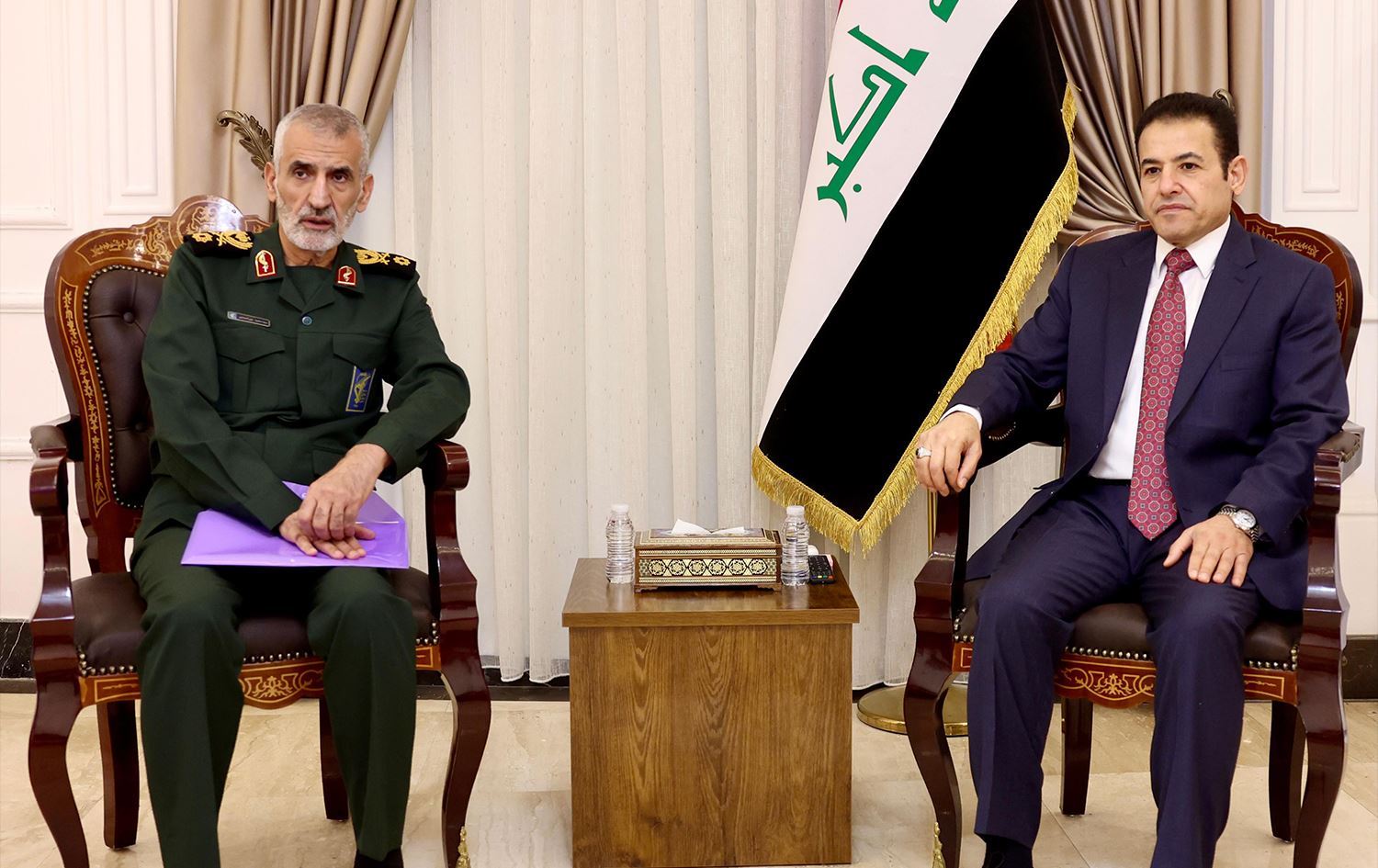
Iraqi National Security Advisor Qasim al-Araji receives Majid Mirahmadi, head of the Iranian Armed Forces Intelligence, in Baghdad on September 30, 2025. Photo: Araji's office
ERBIL, Kurdistan Region - Iraq is taking “all necessary measures” to prevent its territory from being used as a launchpad for attacks on neighboring countries, including Iran, a senior Iraqi security official said Tuesday. The remarks come weeks after Israel reportedly used Iraqi airspace to conduct strikes against Iran, and months ahead of Iraq’s planned acquisition of new air defense systems.
Iraqi National Security Advisor Qasim al-Araji confirmed that Baghdad has filed a formal complaint to the United Nations Security Council (UNSC) against Israel on the grounds of its using Iraq's airspace in its attacks on Iran.
The Iraqi government "will take all necessary measures to prevent the recurrence of such aggressions” in a way that preserves Iraq's sovereignty and the security of the region, he affirmed.
Araji made his remarks on the sidelines of a meeting he held in Baghdad with Majid Mirahmadi, head of the Iranian Armed Forces Intelligence, on Tuesday.
In a statement, the Iraqi national security advisor’s office noted that the two officials “discussed a number of dossiers of mutual interest,” and highlighted “the importance of cooperation between Baghdad and Tehran to maintain security and stability, based on good neighborliness and existing security agreements.”
On June 13, Israel launched a series of airstrikes on Iranian territory, targeting nuclear facilities and killing several high-ranking military commanders and nuclear scientists. Iran retaliated with missile and drone strikes against Israeli targets.
Tensions escalated further when the United States conducted airstrikes on June 22 against Iran’s Fordow, Isfahan, and Natanz nuclear sites. In response, Iran fired ballistic missiles at the US-operated al-Udeid Air Base in Qatar. A ceasefire, brokered by Washington on June 24, has since held.
In the wake of the Iran-Israel war, Iraq’s Foreign Minister Fuad Hussein voiced “Iraq’s firm position in rejecting the use of its airspace” in the conflict. Baghdad on June 13 submitted a formal complaint with the UNSC, accusing Tel Aviv of using Iraqi airspace to carry out military attacks on Iran in a "flagrant violation of international law and the UN Charter."
Importantly, Araji’s Tuesday remarks came just days after Iraqi Prime Minister Mohammed Shia’ al-Sudani met with South Korean Defense Minister Ahn Gyu-back in Baghdad on Wednesday to discuss strengthening ties, particularly in the areas of “armament and defense.”
A statement from the Prime Minister’s office quoted Sudani as underscoring the importance of advancing cooperation with Seoul by “adopting the latest defense technologies, particularly in air defense systems.”
A day prior, the Iraqi defense ministry reported that Iraq is set to receive the South Korean KM-SAM air defense system - also known as the Cheongung-II - in early 2026 as part of a $2.8 billion contract signed in September 2024. The system is capable of intercepting both aircraft and ballistic missiles.
Iraqi National Security Advisor Qasim al-Araji confirmed that Baghdad has filed a formal complaint to the United Nations Security Council (UNSC) against Israel on the grounds of its using Iraq's airspace in its attacks on Iran.
The Iraqi government "will take all necessary measures to prevent the recurrence of such aggressions” in a way that preserves Iraq's sovereignty and the security of the region, he affirmed.
Araji made his remarks on the sidelines of a meeting he held in Baghdad with Majid Mirahmadi, head of the Iranian Armed Forces Intelligence, on Tuesday.
In a statement, the Iraqi national security advisor’s office noted that the two officials “discussed a number of dossiers of mutual interest,” and highlighted “the importance of cooperation between Baghdad and Tehran to maintain security and stability, based on good neighborliness and existing security agreements.”
On June 13, Israel launched a series of airstrikes on Iranian territory, targeting nuclear facilities and killing several high-ranking military commanders and nuclear scientists. Iran retaliated with missile and drone strikes against Israeli targets.
Tensions escalated further when the United States conducted airstrikes on June 22 against Iran’s Fordow, Isfahan, and Natanz nuclear sites. In response, Iran fired ballistic missiles at the US-operated al-Udeid Air Base in Qatar. A ceasefire, brokered by Washington on June 24, has since held.
In the wake of the Iran-Israel war, Iraq’s Foreign Minister Fuad Hussein voiced “Iraq’s firm position in rejecting the use of its airspace” in the conflict. Baghdad on June 13 submitted a formal complaint with the UNSC, accusing Tel Aviv of using Iraqi airspace to carry out military attacks on Iran in a "flagrant violation of international law and the UN Charter."
Importantly, Araji’s Tuesday remarks came just days after Iraqi Prime Minister Mohammed Shia’ al-Sudani met with South Korean Defense Minister Ahn Gyu-back in Baghdad on Wednesday to discuss strengthening ties, particularly in the areas of “armament and defense.”
A statement from the Prime Minister’s office quoted Sudani as underscoring the importance of advancing cooperation with Seoul by “adopting the latest defense technologies, particularly in air defense systems.”
A day prior, the Iraqi defense ministry reported that Iraq is set to receive the South Korean KM-SAM air defense system - also known as the Cheongung-II - in early 2026 as part of a $2.8 billion contract signed in September 2024. The system is capable of intercepting both aircraft and ballistic missiles.


Comments
Rudaw moderates all comments submitted on our website. We welcome comments which are relevant to the article and encourage further discussion about the issues that matter to you. We also welcome constructive criticism about Rudaw.
To be approved for publication, however, your comments must meet our community guidelines.
We will not tolerate the following: profanity, threats, personal attacks, vulgarity, abuse (such as sexism, racism, homophobia or xenophobia), or commercial or personal promotion.
Comments that do not meet our guidelines will be rejected. Comments are not edited – they are either approved or rejected.
Post a comment