


Iraq

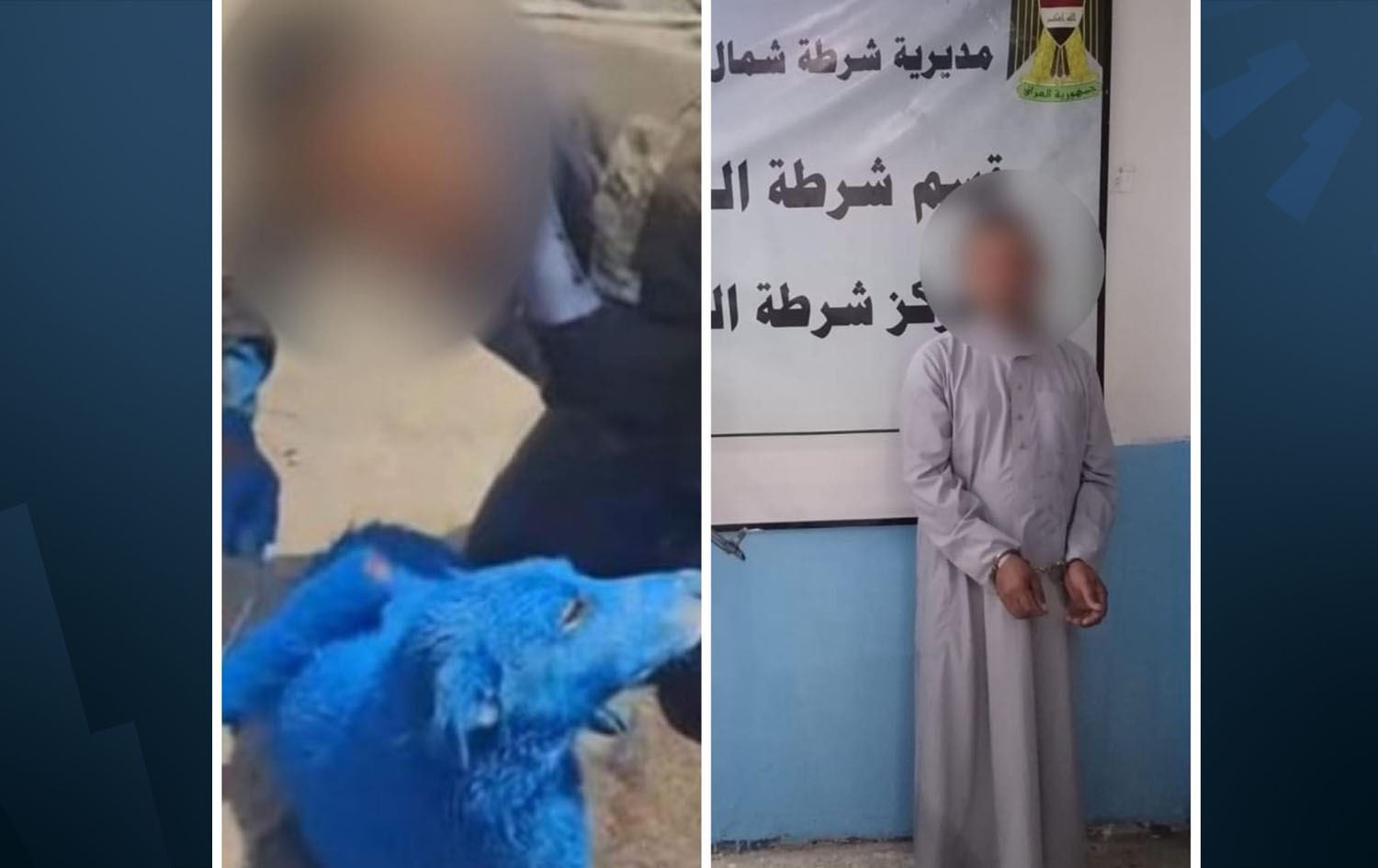
Haidar al-Aboud, arrested for painting a stray dog blue in Basra on August 31, 2025. Photo: Basra police/Facebook
ERBIL, Kurdistan Region - Outrage swept through Iraqi social media on Sunday after a video went viral of a man in Iraq’s southernmost Basra province painting a stray dog. The incident led to the man’s arrest over animal abuse charges.
In the controversial video, the man is seen covering the dog with blue paint.
Basra police on Sunday confirmed the man’s arrest, citing “Article 486 of the Iraqi Penal Code, which criminalizes animal abuse." The law provides for “up to three months in detention or a fine for severely beating, tormenting or otherwise mistreating animals.”
The Basra law enforcement described the man’s actions as "reprehensible and contrary to human norms,” adding that he had been “placed in custody pending legal proceedings” Authorities also condemned "such abusive acts” that “do not reflect the values and ethics of Iraqi society" and urged citizens to use social media responsibly, in a “way that upholds human values."
The suspect, who identified himself as Haidar al-Aboud, later issued a public apology.
He claimed that the paint he used was not standard “emulsion paint” and said it had been removed. Aboud further described the dog as his “personal guard” and apologized to the public following the backlash.
Animal abuse remains a persistent issue in Iraq and the Kurdistan Region. Stray animals are often viewed as public health threats and are frequently subjected to beating, poisoning or killing by cars and gunfire. While few cases - like this one - gain public attention and lead to legal action, many more go unreported and unpunished.
In response, several non-governmental organizations (NGOs) have been working to improve animal welfare, especially in the Kurdistan Region. These organizations advocate for stronger legal protections, rehome abandoned animals and provide veterinary care. They also run awareness campaigns to promote compassion toward animals.


Comments
Rudaw moderates all comments submitted on our website. We welcome comments which are relevant to the article and encourage further discussion about the issues that matter to you. We also welcome constructive criticism about Rudaw.
To be approved for publication, however, your comments must meet our community guidelines.
We will not tolerate the following: profanity, threats, personal attacks, vulgarity, abuse (such as sexism, racism, homophobia or xenophobia), or commercial or personal promotion.
Comments that do not meet our guidelines will be rejected. Comments are not edited – they are either approved or rejected.
Post a comment