


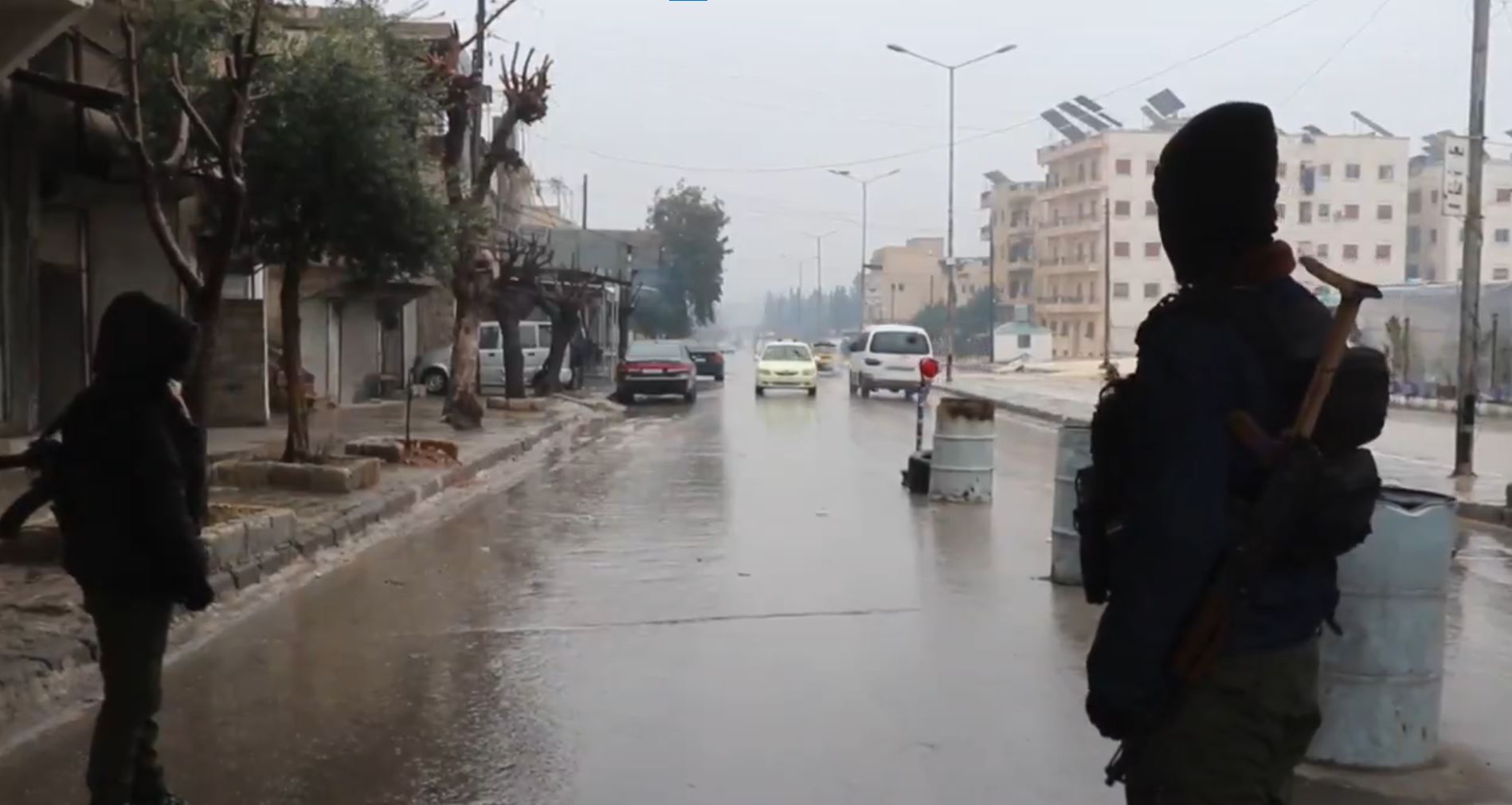
ERBIL, Kurdistan Region - The ongoing siege on two Kurdish-majority neighborhoods in Syria’s northern city of Aleppo has severely disrupted daily life, with a senior official saying the areas are suffering a complete power blackout, schools have been shut down, and residents face mistreatment by state security forces.
Late last month, clashes broke out between Damascus-affiliated forces and Kurdish internal security forces (Asayish) in the Kurdish-majority neighborhoods of Sheikh Maqsood and Ashrafiyeh in Aleppo city. Despite a ceasefire, a partial siege on the quarters continues.
Nouri Sheikho, co-chair of the civilian council administering both neighborhoods, told Rudaw on Saturday that the siege has severely affected daily life, noting that only two of the seven access points connecting the areas to the rest of the city remain open, where security forces frequently mistreat residents at checkpoints.
“The siege is still ongoing, and due to the severe cold, we were forced to suspend schools,” he said, adding that many residents have fallen ill due to the weather and that a shortage of medicine has put lives at risk.
Sheikho said the power grid has been severely damaged by a series of clashes between both forces, causing a complete blackout. “We contacted them [Syrian authorities] several times so that we could repair it, but they refused. This is a political objective to force the people to retreat further… They do not allow fuel to pass through and say that the [Kurdish] military forces use it for themselves. These are all pretexts so that gas and fuel do not reach the neighborhoods and pressure is put on the people.”
Since the collapse of the former Assad regime last year, Kurdish-led forces - who maintain security control over the two densely populated neighborhoods, home to more than 1.5 million people - have repeatedly clashed state-affiliated armed groups.
Assad’s regime, which collapsed in December last year, had also imposed sieges on the neighborhood but they did not last long - thanks to Russian mediation.
Sheikho compared sieges during both governments.
“At that time there was some understanding and the roads were open. But now all entrances are completely closed and nothing enters the neighborhoods,” he said.
The latest development comes despite a landmark agreement signed on March 10 between Damascus and the Kurdish administration in northeast Syria (Rojava). The deal called for the integration of all civil and military institutions in Rojava into the Syrian state and included a commitment to a nationwide ceasefire.
Asayish is affiliated with the Kurdish-led Syrian Democratic Forces (SDF), de facto military force in Rojava.
The SDF chief Mazloum Abdi was scheduled to visit Damascus before the New Year as reports suggest progress in the US-mediated talks to integrate the SDF in the new Syrian army.
Late last month, clashes broke out between Damascus-affiliated forces and Kurdish internal security forces (Asayish) in the Kurdish-majority neighborhoods of Sheikh Maqsood and Ashrafiyeh in Aleppo city. Despite a ceasefire, a partial siege on the quarters continues.
Nouri Sheikho, co-chair of the civilian council administering both neighborhoods, told Rudaw on Saturday that the siege has severely affected daily life, noting that only two of the seven access points connecting the areas to the rest of the city remain open, where security forces frequently mistreat residents at checkpoints.
“The siege is still ongoing, and due to the severe cold, we were forced to suspend schools,” he said, adding that many residents have fallen ill due to the weather and that a shortage of medicine has put lives at risk.
Sheikho said the power grid has been severely damaged by a series of clashes between both forces, causing a complete blackout. “We contacted them [Syrian authorities] several times so that we could repair it, but they refused. This is a political objective to force the people to retreat further… They do not allow fuel to pass through and say that the [Kurdish] military forces use it for themselves. These are all pretexts so that gas and fuel do not reach the neighborhoods and pressure is put on the people.”
Since the collapse of the former Assad regime last year, Kurdish-led forces - who maintain security control over the two densely populated neighborhoods, home to more than 1.5 million people - have repeatedly clashed state-affiliated armed groups.
Assad’s regime, which collapsed in December last year, had also imposed sieges on the neighborhood but they did not last long - thanks to Russian mediation.
Sheikho compared sieges during both governments.
“At that time there was some understanding and the roads were open. But now all entrances are completely closed and nothing enters the neighborhoods,” he said.
The latest development comes despite a landmark agreement signed on March 10 between Damascus and the Kurdish administration in northeast Syria (Rojava). The deal called for the integration of all civil and military institutions in Rojava into the Syrian state and included a commitment to a nationwide ceasefire.
Asayish is affiliated with the Kurdish-led Syrian Democratic Forces (SDF), de facto military force in Rojava.
The SDF chief Mazloum Abdi was scheduled to visit Damascus before the New Year as reports suggest progress in the US-mediated talks to integrate the SDF in the new Syrian army.


Comments
Rudaw moderates all comments submitted on our website. We welcome comments which are relevant to the article and encourage further discussion about the issues that matter to you. We also welcome constructive criticism about Rudaw.
To be approved for publication, however, your comments must meet our community guidelines.
We will not tolerate the following: profanity, threats, personal attacks, vulgarity, abuse (such as sexism, racism, homophobia or xenophobia), or commercial or personal promotion.
Comments that do not meet our guidelines will be rejected. Comments are not edited – they are either approved or rejected.
Post a comment