
ERBIL, Kurdistan Region - Over 200,000 displaced people and foreign nationals are currently living in camps in northeast Syria (Rojava), an official from the Kurdish-led administration governing the enclave told Rudaw on Sunday, stating that the interim government in Damascus provides no assistance to the camps.
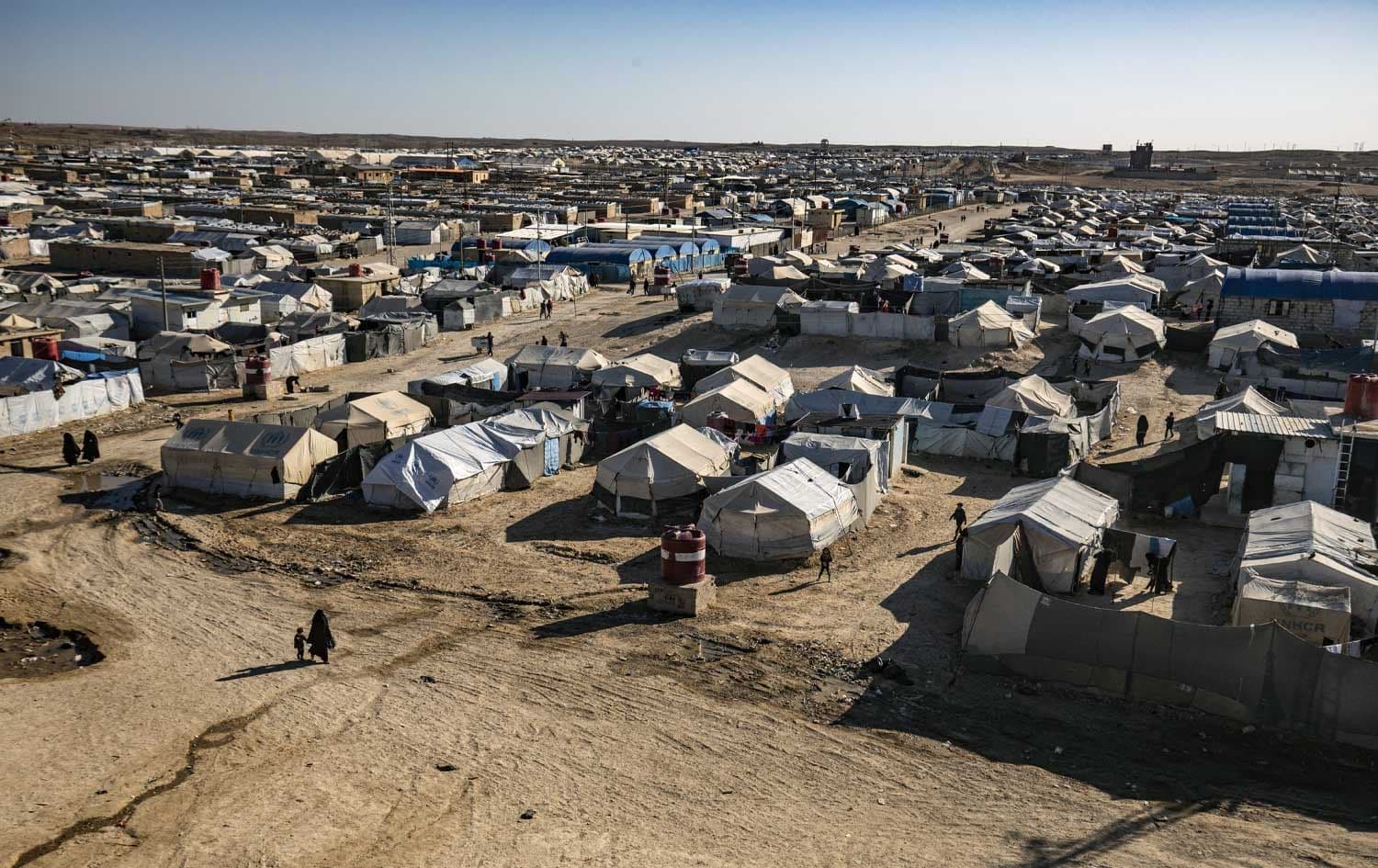
Sheikhmous Ahmed, who oversees all camps for internally displaced persons (IDPs) and refugees in Rojava, said the enclave has 10 official displacement and refugee camps.
“More than 100,000 people live in these official camps, while around 100,000 others reside in temporary centers and unofficial camps,” he explained, emphasizing that “the camps receive absolutely no assistance from the Syrian government.”
Ahmed further noted that only five official camps - al-Hol, Arisha, Mahmoudli, Newroz, and Roj - receive support from the United Nations, while “the other camps rely primarily on assistance from certain international and local organizations to meet their needs.”
Among these, al-Hol is the largest camp in the Rojava-administered area. Notorious for its squalid conditions and often described as a breeding ground for extremism, al-Hol currently houses over 24,000 people with suspected ties to the Islamic State (ISIS), down from more than 60,000 following the group’s territorial defeat in Syria in 2019.
Another camp, Roj, accommodates families considered less dangerous than those at Hol.
The two camps are primarily composed of Syrian and Iraqi nationals, though thousands of people from other countries who joined ISIS or lived under its rule also remain there.
On the return of Syrian families from Hol and Roj, Ahmed reported a lack of coordination between the Syrian government and the Rojava administration in “facilitating the return of these families to their areas.”
In November, the Rojava official had also reported that the interim authorities in Damascus were not cooperating with Rojava officials to remove families with alleged ISIS links from Hol.
Ahmed also noted that the repatriation of foreign nationals from the camps is slow and “entirely dependent on the willingness and cooperation of their home countries.”
For its part, Iraq in December repatriated 240 Iraqi families - a total of 858 people - from Hol, according to the UK-based Syrian Observatory for Human Rights (SOHR).
Baghdad has pledged to ensure that no Iraqi families remain in al-Hol by 2027, with all expected to be repatriated in stages.
Earlier, in September, Iraq held a meeting on the sidelines of the United Nations General Assembly (UNGA) in New York to advance plans to empty and dismantle Hol. The meeting led to the creation of a US-led joint task force aimed at accelerating the repatriation of foreign nationals.
Despite international pressure, several governments continue to refuse the return of their citizens, citing security concerns.
Nushin Heme contributed to this article from Erbil.
.webp&w=3840&q=75)