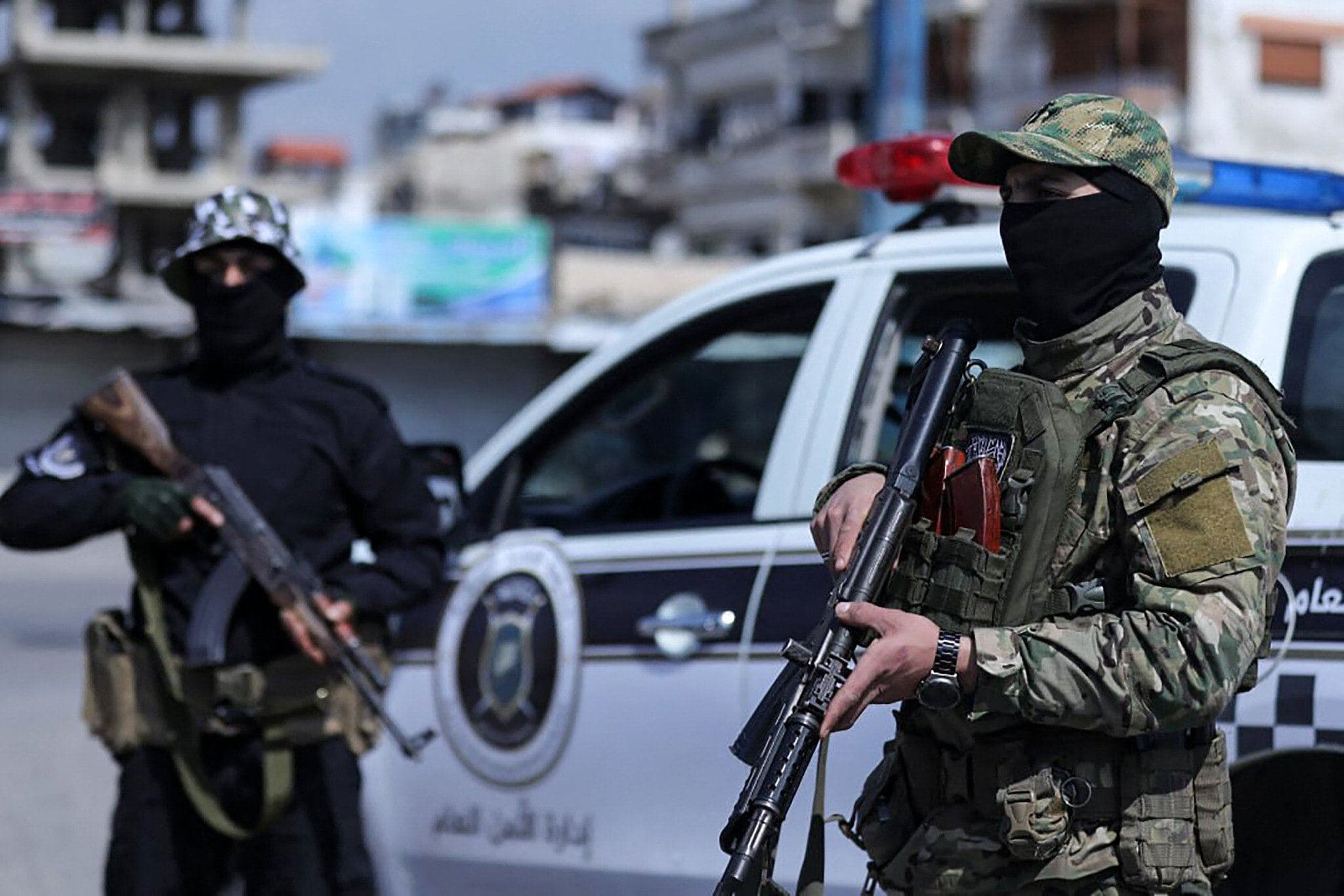

ERBIL, Kurdistan Region - Damascus-affiliated forces have reportedly shut down several key routes connecting northeast Syria (Rojava) to other parts of the country, Rudaw learned on Sunday. The move comes amid a cautious calm along the lines of control between the Kurdish-led administration in Rojava and Damascus’s authorities. It also coincides with Syria holding its first indirect legislative elections under the new leadership - excluding Rojava from the process.
Lazgin Khalil, head of the Haval Tourism and Travel Company, told Rudaw that “Syrian General Security forces shut down the Zakia checkpoint, which connects Damascus-controlled regions with areas administered by the [Democratic Autonomous Administration of North and East Syria] DAANES.”
“Transportation has come to a complete halt,” Khalil stated. “This morning [Sunday], we had several trips scheduled from Hasaka province to Damascus and vice versa, but the first bus was stopped at the [Zakia] checkpoint and denied passage.” He added that the seeming travel ban affects “all cars and buses heading to areas under Syrian government control.”
The Zakia checkpoint lies on the main road connecting the north-central Raqqa province - chiefly led by the DAANES - and the central-western Homs province.
Meanwhile, media outlets close to the DAANES on Sunday reported the closure of another road leading to Rojava - the Salamiyyah-Tabqa road, which links Rojava to Syria’s west-central Hama province.
According to the Hawar News Agency (ANHA), the road serves as “a vital artery” connecting the Kurdish-led regions to “the Syrian interior through [the town of] Ithriyah [in Hama] and [the town of] Khanasir [in northern Aleppo province].”
Dozens of buses were reportedly “stopped at the entrance to Tabqa,” as the road was blocked by barriers erected by Damascus-affiliated forces, ANHA added. Most of the affected travelers are said to be “university students and patients, especially cancer patients,” who depend on these routes to pursue education or access medical treatment.
Travelers had reportedly turned to this route following the recent closure of another road - the Deir Hafer–Aleppo road - by Damascus-affiliated forces.
The UK-based Syrian Observatory for Human Rights (SOHR) reported Monday that the Aleppo-Deir ez-Zor road, running through Deir Hafer, “remains closed for the third day in a row.”
The closures come amid heightened military activity, including “the arrival of Turkish military reinforcements at Kuweires Airbase in eastern Aleppo,” SOHR added. The base is controlled by the Syrian National Army (SNA) - a Turkish-backed coalition of Syrian armed opposition groups, with an estimated strength of up to 70,000 fighters.
The SNA operates primarily in northern Syria and its operations have chiefly been directed at forces of toppled Syrian dictator Bashar al-Assad, the US-backed SDF and previously the Islamic State (ISIS).
SOHR also reported military reinforcements reaching the Tishreen Dam in Aleppo, located along the Euphrates River, from both the SDF and from “Turkish and [Syrian] government forces.” Both sides maintain a presence near the strategic dam.
The closure of these vital arteries also comes as Syria held its first indirect legislative elections on Sunday following the fall of longtime dictator Bashar al-Assad. The vote was widely criticized for excluding several provinces, most notably in Rojava.
According to the state-run Syrian Arab News Agency (SANA), nearly 1,600 candidates are competing for 210 parliamentary seats, 14 percent of whom are women. Of these, 140 are to be elected indirectly by around 6,000 regional representatives, while 70 will be appointed by interim President Ahmed al-Sharaa.
Seat distribution announced in August gave Aleppo province the largest share with 32 seats, followed by Rif Dimashq, Homs, Hama, and Idlib with 12 each. Damascus and Deir ez-Zor were assigned 10 seats apiece, while Latakia and Tartus received seven and five, respectively.
In Rojava, Hasaka and Raqqa provinces were allocated 10 and six seats, respectively. The Druze-majority southern province of Suwayda was assigned three seats.
However, voting in Hasaka, Raqqa, and Suwayda was postponed, with Syrian authorities citing “a lack of a secure and stable environment.”
Nawar Najmeh, spokesperson for Syria’s Higher Committee for People’s Assembly Elections, told Rudaw in August that elections in those provinces would take place once “appropriate security and political conditions” are restored.
The DAANES has in recent weeks sharply criticized the election process, calling it “exclusionary and undemocratic,” and has urged the international community not to recognize the results.