


Syria

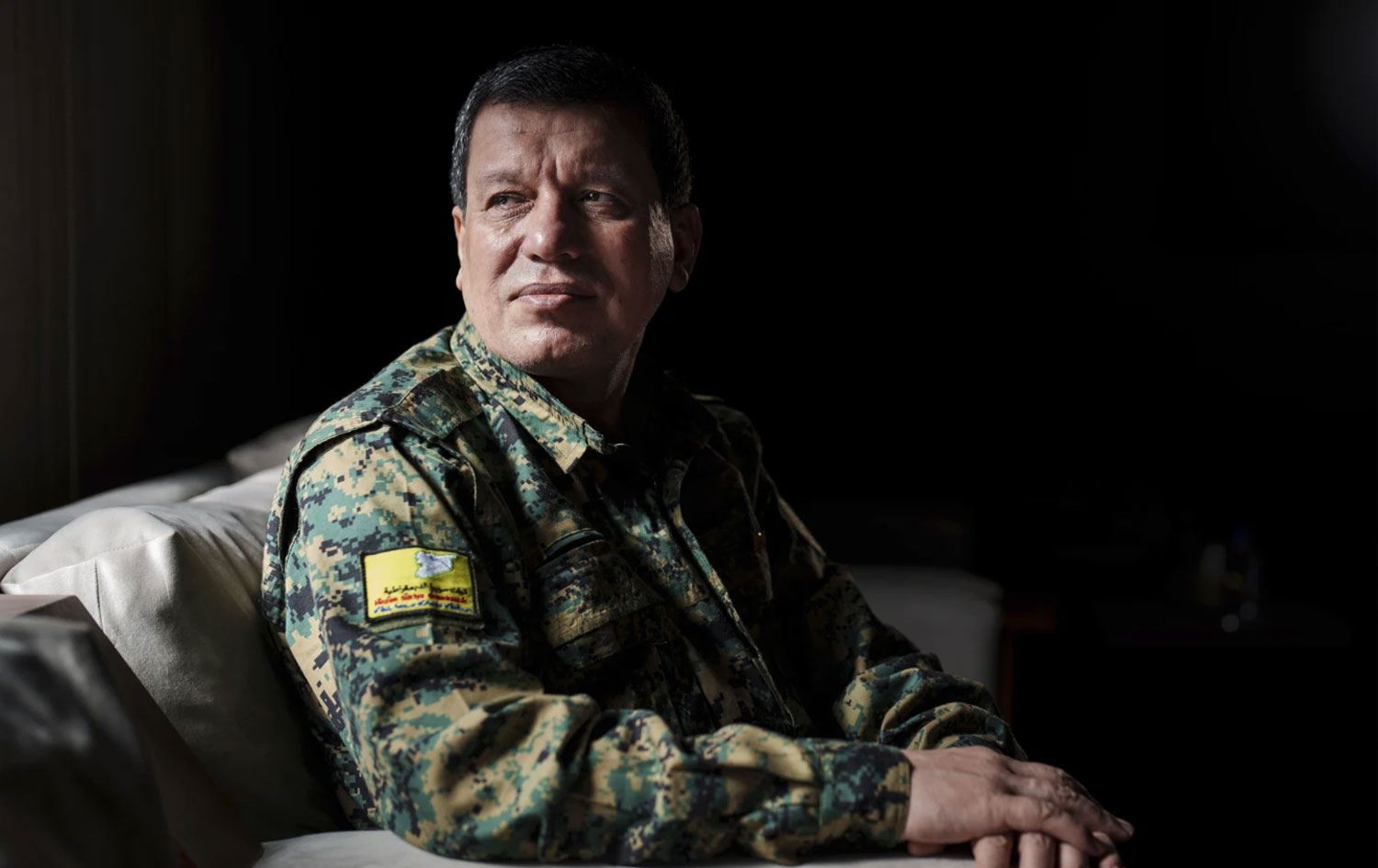
Mazloum Abdi, Commander of the Syrian Democratic Forces (SDF) in the northeastern city of Hasaka on February 2, 2025. Photo: Bernat Armangue/AP
ERBIL, Kurdistan Region - Mazloum Abdi, Commander of the Syrian Democratic Forces (SDF), on Sunday renewed his call for a “comprehensive dialogue” to establish a “democratic, decentralized” Syria. On the eve of the first anniversary of the fall of the former Baath regime, he also reaffirmed the Kurdish-led forces’ commitment to the March 10 integration agreement with Damascus.
In a post on X, Abdi stated, “A year ago, Syria entered a new phase with the fall of the former regime, a pivotal moment we take pride in, which ended decades of tyranny and division.”
He congratulated “the people of Syria on this anniversary, which affirms the Syrians’ determination to build a future based on justice, stability, partnership, and the protection of the rights of all communities.”
The SDF chief thus underscored that “the current phase mandates on everyone a shared national responsibility and calls for a comprehensive dialogue that places the interests of Syrians above all else.”
Following a swift offensive, a coalition of opposition forces led by the now-dissolved Hay’at Tahrir al-Sham (HTS) - then led by Ahmed al-Sharaa - toppled the regime of longtime Syrian dictator Bashar al-Assad on December 8, 2024. In late January, Sharaa was appointed interim president.
Since the new leadership took charge, Syria’s Kurdish, Alawite, and Druze communities have increasingly called for decentralization, citing decades of grievances and repression under the Assad regime.
These demands intensified after the intercommunal violence in mid-July between Druze fighters and Sunni Arab Bedouin tribes in southern Suwayda province, which left around 800 Druze civilians dead, according to war monitors.
Earlier, in March, violence erupted in Alawite-majority coastal regions after Assad loyalists attacked security forces aligned with the country’s interim leadership. The UK-based Syrian Observatory for Human Rights (SOHR) reported that the clashes claimed 1,700 lives, mostly Alawite civilians, with the killings largely attributed to government or pro-government forces.
On March 10, Abdi and Sharaa signed a landmark agreement aimed at bringing all civil and military institutions in northeast Syria (Rojava) - including the SDF - under centralized state control and establishing a nationwide ceasefire.
Talks to implement the agreement have continued since March, though disputes have emerged over how integration should be carried out. While the SDF has been advocating for integrating its forces as a unified bloc, Damascus has favored absorbing the Kurdish fighters individually and distributing them across regular army units.
Abdi on Sunday reaffirmed “our steadfast commitment to the March 10 agreement, as it serves as the foundation for building a democratic, decentralized Syria, united by the will of its people and safeguarded by the values of freedom, justice, and equality.”
Of note, the SDF is the de facto military force in Rojava and has been the main ally of the US-led Global Coalition to Defeat the Islamic State (ISIS) in Syria for the past decade.


Comments
Rudaw moderates all comments submitted on our website. We welcome comments which are relevant to the article and encourage further discussion about the issues that matter to you. We also welcome constructive criticism about Rudaw.
To be approved for publication, however, your comments must meet our community guidelines.
We will not tolerate the following: profanity, threats, personal attacks, vulgarity, abuse (such as sexism, racism, homophobia or xenophobia), or commercial or personal promotion.
Comments that do not meet our guidelines will be rejected. Comments are not edited – they are either approved or rejected.
Post a comment