



Error occured during this request! Please try again later.
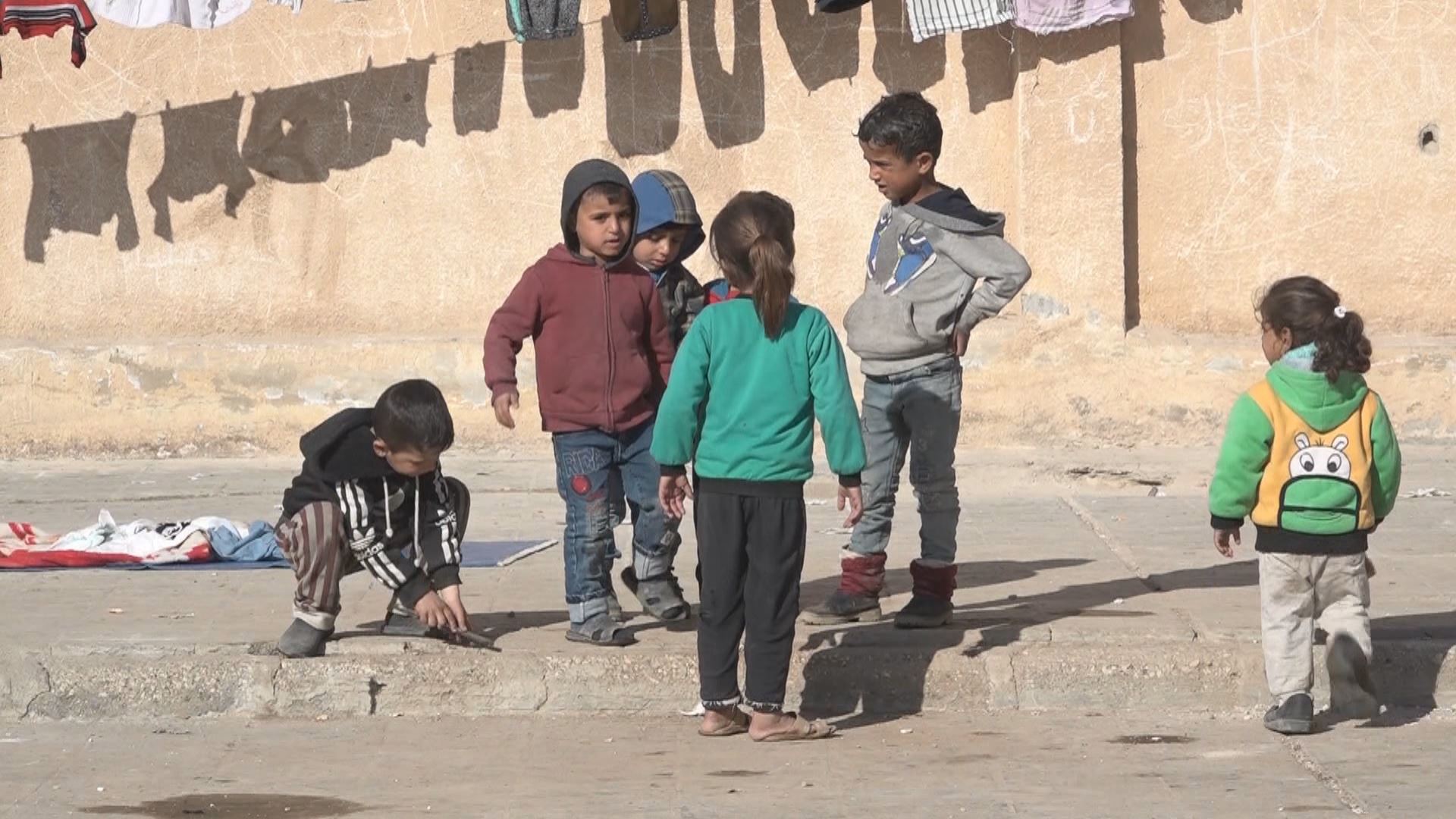
ERBIL, Kurdistan Region — Thousands of children who fled their hometown of Sari Kani (Ras al-Ain) in northern Syria due to a Turkish invasion in October 2019 have been missing out on schooling ever since.
“I want to study at a school,” six-year-old Nimar Ose told Rudaw.
Nimar is one of roughly 3,500 children who left Sari Kani along with their families in October 2019, when Turkey and its Syrian proxies attacked Sari Kani and the neighboring Gire Spi (Tal Abyad).
The Turkish invasion of both cities and their surrounding areas led to the displacement of hundreds of thousands of people – mostly Kurds – to other parts of Syria controlled by the Kurdish-led Syrian Democratic Forces (SDF).
More than 12,000 of the displaced were settled at 68 schools across the city of Hasaka. But as the new academic year neared in September 2020, Kurdish authorities in northeast Syria (Rojava) decided to move some of the displaced to the newly-established Sari Kani camp, east of Hasaka.
The camp’s administration told Rudaw that there are currently 7,906 people, including some 3,500 children, in the camp. Though 37 teachers currently live at the camp, it does not have any schools.
Nasrin Sino, the camp’s director, told Rudaw that they have dedicated space for schools but are waiting for funding from humanitarian organizations to get schools up and running.
“Regarding the education situation, we are preparing the space for it. The autonomous administration [Rojava's government] dedicated a space for it. We are waiting for an organization to provide aid so that these displaced people can resume their studies,” Sino said.
Fozya Musa is a displaced mother of four living at the camp.
“I have four children: three boys and a girl. They have been deprived of school and everything. This should not be the case,” she said.
Sheikhmous Ahmed, in charge of Rojava’s camps, said “tens of thousands” of students have been made victims of the invasion.
He added that he has spoken with education officials to discuss how to “improve the status of schools in camps, and turn the schools from tents to caravans.”
Additional reporting by Viviyan Fetah
“I want to study at a school,” six-year-old Nimar Ose told Rudaw.
Nimar is one of roughly 3,500 children who left Sari Kani along with their families in October 2019, when Turkey and its Syrian proxies attacked Sari Kani and the neighboring Gire Spi (Tal Abyad).
The Turkish invasion of both cities and their surrounding areas led to the displacement of hundreds of thousands of people – mostly Kurds – to other parts of Syria controlled by the Kurdish-led Syrian Democratic Forces (SDF).
More than 12,000 of the displaced were settled at 68 schools across the city of Hasaka. But as the new academic year neared in September 2020, Kurdish authorities in northeast Syria (Rojava) decided to move some of the displaced to the newly-established Sari Kani camp, east of Hasaka.
The camp’s administration told Rudaw that there are currently 7,906 people, including some 3,500 children, in the camp. Though 37 teachers currently live at the camp, it does not have any schools.
Nasrin Sino, the camp’s director, told Rudaw that they have dedicated space for schools but are waiting for funding from humanitarian organizations to get schools up and running.
“Regarding the education situation, we are preparing the space for it. The autonomous administration [Rojava's government] dedicated a space for it. We are waiting for an organization to provide aid so that these displaced people can resume their studies,” Sino said.
Fozya Musa is a displaced mother of four living at the camp.
“I have four children: three boys and a girl. They have been deprived of school and everything. This should not be the case,” she said.
Sheikhmous Ahmed, in charge of Rojava’s camps, said “tens of thousands” of students have been made victims of the invasion.
He added that he has spoken with education officials to discuss how to “improve the status of schools in camps, and turn the schools from tents to caravans.”
Additional reporting by Viviyan Fetah


Comments
Rudaw moderates all comments submitted on our website. We welcome comments which are relevant to the article and encourage further discussion about the issues that matter to you. We also welcome constructive criticism about Rudaw.
To be approved for publication, however, your comments must meet our community guidelines.
We will not tolerate the following: profanity, threats, personal attacks, vulgarity, abuse (such as sexism, racism, homophobia or xenophobia), or commercial or personal promotion.
Comments that do not meet our guidelines will be rejected. Comments are not edited – they are either approved or rejected.
Post a comment