
ERBIL, Kurdistan Region - The Syrian Democratic Forces (SDF) have responded to a proposal from Damascus’s defense ministry concerning the finalization of the March 10 integration agreement, and their response is currently under review, Syria’s foreign minister said on Monday. He also accused the Kurdish-led forces of engaging in “systematic stalling” over the key accord.
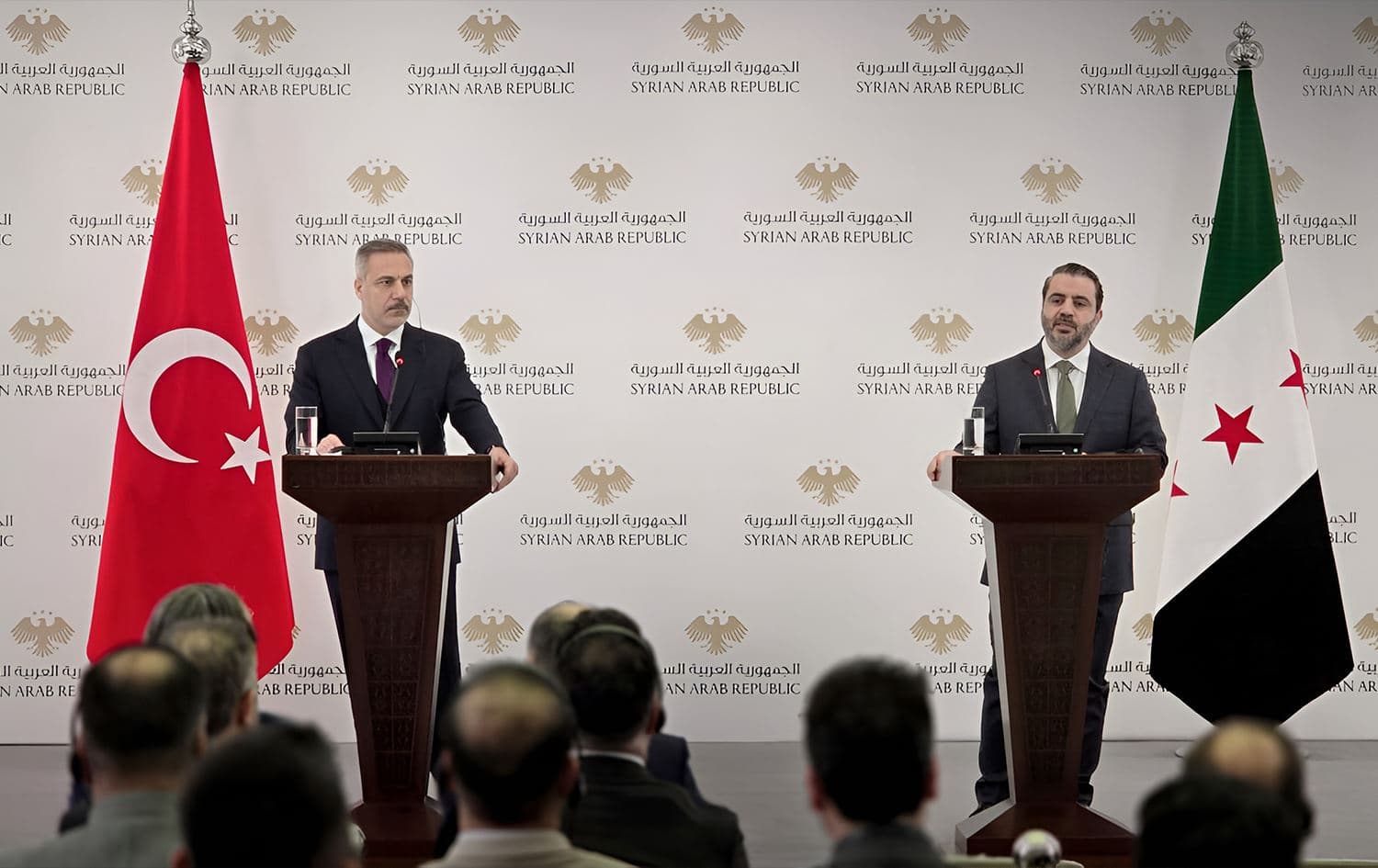
In a joint press conference with his Turkish counterpart Hakan Fidan in Damascus, Shaibani stated, “We have not seen any initiative or serious will on the part of the Syrian Democratic Forces [SDF] to implement the March 10 [integration] agreement,” adding that “there has been systematic stalling by the SDF regarding the agreement.”
He further noted that “the Syrian defense ministry recently presented a simple proposal to positively advance the integration process,” and that the SDF had “responded [to the proposal] yesterday, and its response is currently under review.”
Shaibani added that Syria’s reply to the SDF’s response will be framed within “a single, unified Syrian territory, without division or any form of partition, and without any administrative arrangements that would undermine Syrian sovereignty,” he explained.
SDF Commander-in-Chief Mazloum Abdi and Syrian interim President Ahmed al-Sharaa signed a landmark agreement on March 10 to place civil and military institutions in northeast Syria (Rojava) under centralized state authority and to establish a nationwide ceasefire.
Talks to implement the accord have since been ongoing, however the two sides remain divided over how the SDF should be integrated. While Kurdish negotiators favor incorporating the forces as a unified bloc, the Syrian side prefers absorbing SDF fighters individually into regular army units.
The Syrian foreign minister added on Monday that regions chiefly held by the SDF in Rojava - particularly the al-Jazira region east of the Euphrates, spanning the majority of provinces of Deir ez-Zor, Raqqa, and Hasaka - are “an essential part of Syria,” stressing that “the state attaches great importance to them.” He warned that any delay in implementing the March 10 agreement and "integrating the SDF would negatively affect” those areas and hinder reconstruction efforts there.
For his part, Turkish Foreign Minister Fidan said on Monday that his country “attaches great importance to Syria’s stability and is ready to provide all forms of support to achieve it.”
He further emphasized the significance of implementing the March 10 accord, noting that it “would be in everyone’s interest,” while expressing doubt over the SDF’s “intention to implement” the landmark deal.
Of note, Fidan had hinted on Thursday that delays in implementing the March 10 agreement are testing Ankara’s patience, stating, “We hope that issues are resolved through dialogue, negotiation, and peaceful means. We do not want to be forced to resort to military options again.”
The latest remarks by Fidan and Shaibani come amid statements by Syrian officials that the March 10 deal carries a year-end deadline.
In an indirect response, the Rojava administration’s communication page on X, North and East Syria Communication (Nescomm), clarified in a Friday statement that while “the March 10 Agreement includes a clause stating that the executive committees seek to complete implementation by the end of the year,” this phrasing “reflects a general timeline rather than a fixed or binding deadline.”
Nescomm explained that the use of the words “seek to complete” indicates “flexibility in the timeframe,” emphasizing that the clause “is intended to encourage progress and maintain momentum, not to impose a rigid cutoff or suggest that the agreement expires at year’s end.”
Nonetheless, the Rojava administration, through Nescomm, affirmed that “the agreement remains in effect, and its provisions continue to serve as an essential framework for stability, institutional integration, and a broader national partnership.”
“Maintaining commitment to this process allows room for meaningful political progress and prevents any misinterpretation or premature conclusions about the status of the agreement,” the statement concluded.
Last updated at 6:00 PM
.webp&w=3840&q=75)