Syria
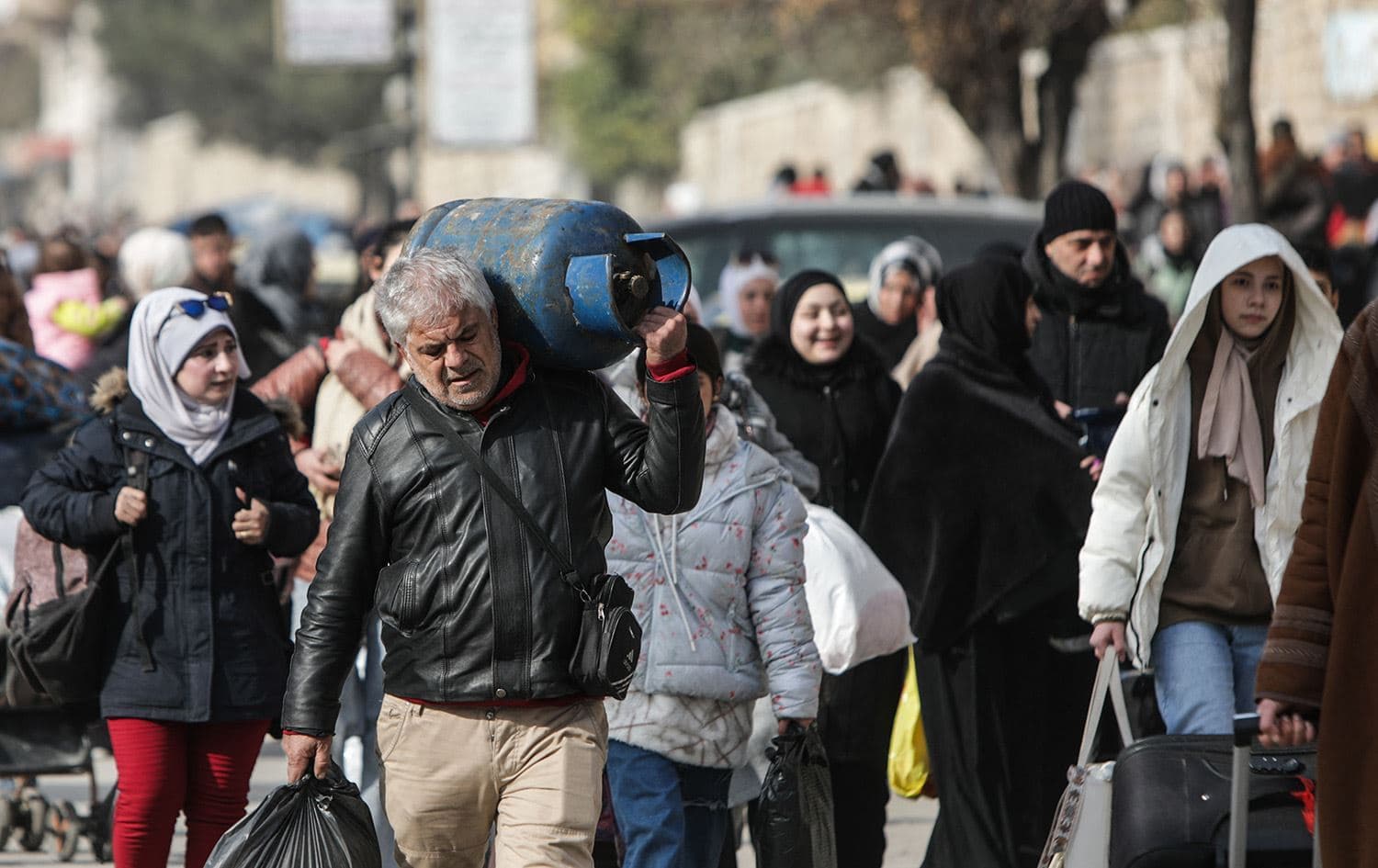
Residents of the Ashrafiyeh and Sheikh Maqsood neighborhoods flee violence in northern Aleppo on January 7, 2026. Photo: AFP
ERBIL, Kurdistan Region - Kurdish forces on Thursday accused Damascus-aligned factions of carrying out drone, heavy artillery, and Grad rocket attacks in the third consecutive day of clashes between the two sides in the predominantly Kurdish neighborhoods of Ashrafiyeh and Sheikh Maqsood in northern Aleppo.
In a statement posted on X, the Kurdish-led Syrian Democratic Forces (SDF) said that “two civilians were injured in a drone strike carried out by factions affiliated with the Damascus government in the Bani Zaid neighborhood” of northern Aleppo. Medics were unable to evacuate the wounded “due to continued shelling of the area,” the statement added.
Earlier, the SDF had published two videos that it said showed “factions of the Damascus [interim] government shelling the densely populated Sheikh Maqsood neighborhood in the city of Aleppo with heavy artillery,” accusing the factions of “deliberately targeting civilians” and “committing a documented war crime that cannot be justified by any religious or military slogan.”
The SDF also said that Damascus-aligned factions “shelled residential areas in the eastern part of Sheikh Maqsood using tanks and Grad rockets, causing material damage.”
Separately, the Kurdish Internal Security Forces (Asayish) in Aleppo reported that “armed factions affiliated with the transitional government targeted the al-Shaqif neighborhood” - located north of Ashrafiyeh and Sheikh Maqsood - with “a suicide drone.”
The Asayish added that the factions also carried out “artillery shelling using tanks along the Castello axis,” which borders the Kurdish neighborhoods from the north and west.
Syrian state forces and the Asayish, which secure the Kurdish-majority neighborhoods of Sheikh Maqsood and Ashrafiyeh, have been engaged in intense fighting since Tuesday. Both sides have traded blame and reported casualties, most of whom are civilians.
The clashes occurred despite a landmark agreement signed between the SDF and the interim government in Damascus in March, establishing a nationwide ceasefire. A follow-up agreement was signed a month later to specifically regulate security in the two neighborhoods.
Stephane Dujarric, spokesperson for the Secretary-General of the United Nations Antonio Guterres, told Rudaw on Wednesday that Guterres is “alarmed” by deadly clashes in Aleppo, calling for deescalation.
On Tuesday, Rudaw’s Namo Abdullah asked Dujarric about the attacks by Syrian state forces on the Kurdish-majority neighborhoods of Sheikh Maqsood and Ashrafiyeh in Aleppo, which began that day. Dujarric said the UN was closely monitoring the situation.
“Turning to Syria, particularly developments in the northeast, which Namo raised yesterday, I can tell you that the Secretary-General is alarmed by reports of civilian deaths and injuries following hostilities in Aleppo,” he said on Wednesday.
“The UN reiterates that all parties have a clear obligation under international humanitarian law to protect civilians and civilian infrastructure. We call on all actors to immediately de-escalate, exercise maximum restraint, and take all measures to prevent further harm to civilians,” he added.
In a statement posted on X, the Kurdish-led Syrian Democratic Forces (SDF) said that “two civilians were injured in a drone strike carried out by factions affiliated with the Damascus government in the Bani Zaid neighborhood” of northern Aleppo. Medics were unable to evacuate the wounded “due to continued shelling of the area,” the statement added.
Earlier, the SDF had published two videos that it said showed “factions of the Damascus [interim] government shelling the densely populated Sheikh Maqsood neighborhood in the city of Aleppo with heavy artillery,” accusing the factions of “deliberately targeting civilians” and “committing a documented war crime that cannot be justified by any religious or military slogan.”
The SDF also said that Damascus-aligned factions “shelled residential areas in the eastern part of Sheikh Maqsood using tanks and Grad rockets, causing material damage.”
Separately, the Kurdish Internal Security Forces (Asayish) in Aleppo reported that “armed factions affiliated with the transitional government targeted the al-Shaqif neighborhood” - located north of Ashrafiyeh and Sheikh Maqsood - with “a suicide drone.”
The Asayish added that the factions also carried out “artillery shelling using tanks along the Castello axis,” which borders the Kurdish neighborhoods from the north and west.
Syrian state forces and the Asayish, which secure the Kurdish-majority neighborhoods of Sheikh Maqsood and Ashrafiyeh, have been engaged in intense fighting since Tuesday. Both sides have traded blame and reported casualties, most of whom are civilians.
The clashes occurred despite a landmark agreement signed between the SDF and the interim government in Damascus in March, establishing a nationwide ceasefire. A follow-up agreement was signed a month later to specifically regulate security in the two neighborhoods.
Stephane Dujarric, spokesperson for the Secretary-General of the United Nations Antonio Guterres, told Rudaw on Wednesday that Guterres is “alarmed” by deadly clashes in Aleppo, calling for deescalation.
On Tuesday, Rudaw’s Namo Abdullah asked Dujarric about the attacks by Syrian state forces on the Kurdish-majority neighborhoods of Sheikh Maqsood and Ashrafiyeh in Aleppo, which began that day. Dujarric said the UN was closely monitoring the situation.
“Turning to Syria, particularly developments in the northeast, which Namo raised yesterday, I can tell you that the Secretary-General is alarmed by reports of civilian deaths and injuries following hostilities in Aleppo,” he said on Wednesday.
“The UN reiterates that all parties have a clear obligation under international humanitarian law to protect civilians and civilian infrastructure. We call on all actors to immediately de-escalate, exercise maximum restraint, and take all measures to prevent further harm to civilians,” he added.
Comments
Rudaw moderates all comments submitted on our website. We welcome comments which are relevant to the article and encourage further discussion about the issues that matter to you. We also welcome constructive criticism about Rudaw.
To be approved for publication, however, your comments must meet our community guidelines.
We will not tolerate the following: profanity, threats, personal attacks, vulgarity, abuse (such as sexism, racism, homophobia or xenophobia), or commercial or personal promotion.
Comments that do not meet our guidelines will be rejected. Comments are not edited – they are either approved or rejected.
Post a comment