
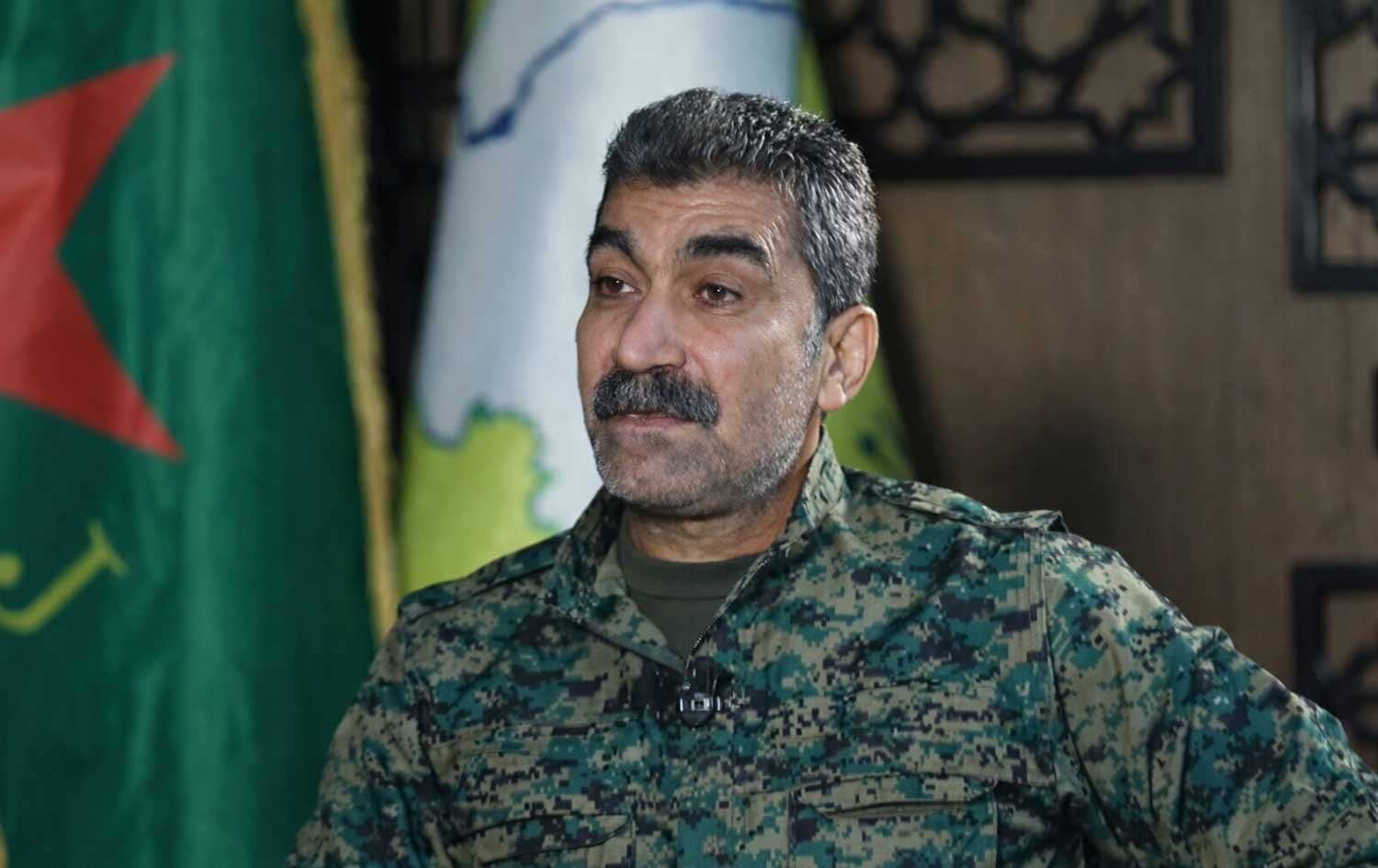

ERBIL, Kurdistan Region - A senior commander of the Kurdish-led Syrian Democratic Forces (SDF) said the recent attack on Aleppo’s Kurdish-majority neighborhoods of Sheikh Maqsood and Ashrafiyeh was not a local security development, but a politically driven assault whose decision was made outside Syria, following failed reconciliation efforts and external interference.
In an interview with pro-SDF Ronahi TV, Sipan Hemo, a member of the SDF General Command, said the assault followed months of pressure, blockades, and provocations, despite an agreement reached last year aimed at allowing the two neighborhoods to govern themselves through the SDF affiliates security forces (Asayish).
“The declaration of war against Sheikh Maqsood didn’t even happen within Syria-it happened from outside Syria,” Hemo said. “Certain officials of different states had gone to Damascus and told them, ‘Come for this, everything is ready for you.’ Support was taken from outside, and the declaration of war was made.”
The SDF, the de facto military force in northeast Syria (Rojava), withdrew from the neighborhoods and other parts of Aleppo as part of an agreement it signed with Damascus on April 1st last year.
Hemo said the roots of the escalation go back to an agreement that the SDF signed with Damascus on April 1st last year, under which SDF forces withdrew from Sheikh Maqsood and Ashrafiyeh so the neighborhoods could be administered by their own councils and protected by the Kurdish internal security forces.
However, he said surrounding forces repeatedly violated the agreement.
“They harassed the neighborhood. When people left or entered, they were arrested,” he said, adding that defensive measures taken by local security were later used as a pretext to impose a siege.
Hemo dismissed claims that the two Kurdish neighborhoods posed a threat to Aleppo.
“In a city as large as Aleppo, what impact could two Kurdish neighborhoods like Sheikh Maqsood and Ashrafiyeh truly have on the city’s fate?” he said. “No logical mind would believe they pose a threat.”
Addressing a meeting held in Damascus on January 4, Hemo said the talks were part of broader discussions related to the March 10 agreements and potential integration frameworks, mediated by international actors. He described the initial atmosphere as positive, but said the process stalled after last-minute intervention by Syrian intelligence officials.
“At that moment the ‘game’ began,” he said. “The shift that happened there… showed signs of a plot or a game being played.”
According to Hemo, renewed threats soon followed, including ultimatums to evacuate or face attack. After local councils declared they would resist any assault, the SDF decided to support them.
“After the people’s assembly declared they would resist, we as the SDF made the decision to be with them, to walk with them, and to work with them,” he said.
Hemo explicitly accused Turkey of direct but undeclared involvement in the attack.
“Let me be explicit: the drones over Sheikh Maqsood and the tanks used against it were all Turkish,” he said. “They belonged to them. But they did not declare it.”
While acknowledging shortcomings in the SDF’s response, Hemo said criticism from residents was justified and pledged internal review and self-criticism. He framed the fighting as part of a broader struggle over Kurdish existence in Syria.
“The plot is against the existence of the Kurdish people,” he said. “Sheikh Maqsood is the fortress of democracy in Syria.”
Deadly clashes erupted in Aleppo’s predominantly Kurdish quarters on Tuesday between Syrian state forces and Asayish. Both sides blamed each other for initiating the fighting.
At least 82 people were killed in the clashes, including 43 civilians, 38 government-aligned fighters, and at least one Asayish member, according to a Sunday report by the UK-based Syrian Observatory for Human Rights (SOHR), which relies on a network of sources across Syria.
The Syrian government has also said that approximately 155,000 people have been displaced from the Kurdish-majority neighborhoods since the fighting began.
An internationally mediated ceasefire agreement was reached between Syrian state forces and the Asayish to “halt attacks and violations in Aleppo,” Mazloum Abdi, chief of the SDF, announced Sunday.
“We call on the mediators to uphold their promises to stop the violations and to work toward the safe return of the displaced to their homes,” the SDF commander added.
However, on Monday, Farhad Shami, head of the SDF media center, said that the skies over and around Tishreen Dam in eastern Aleppo province "witnessed intense flights of suicide drones belonging to factions affiliated with the Damascus government," adding that "the dam’s surroundings were subjected to heavy artillery fire by these factions."
"Turkish warplanes continue to fly intensively over the area. Our forces are closely monitoring the situation," Shami added.
.png&w=3840&q=75)
.jpg&w=3840&q=75)
