
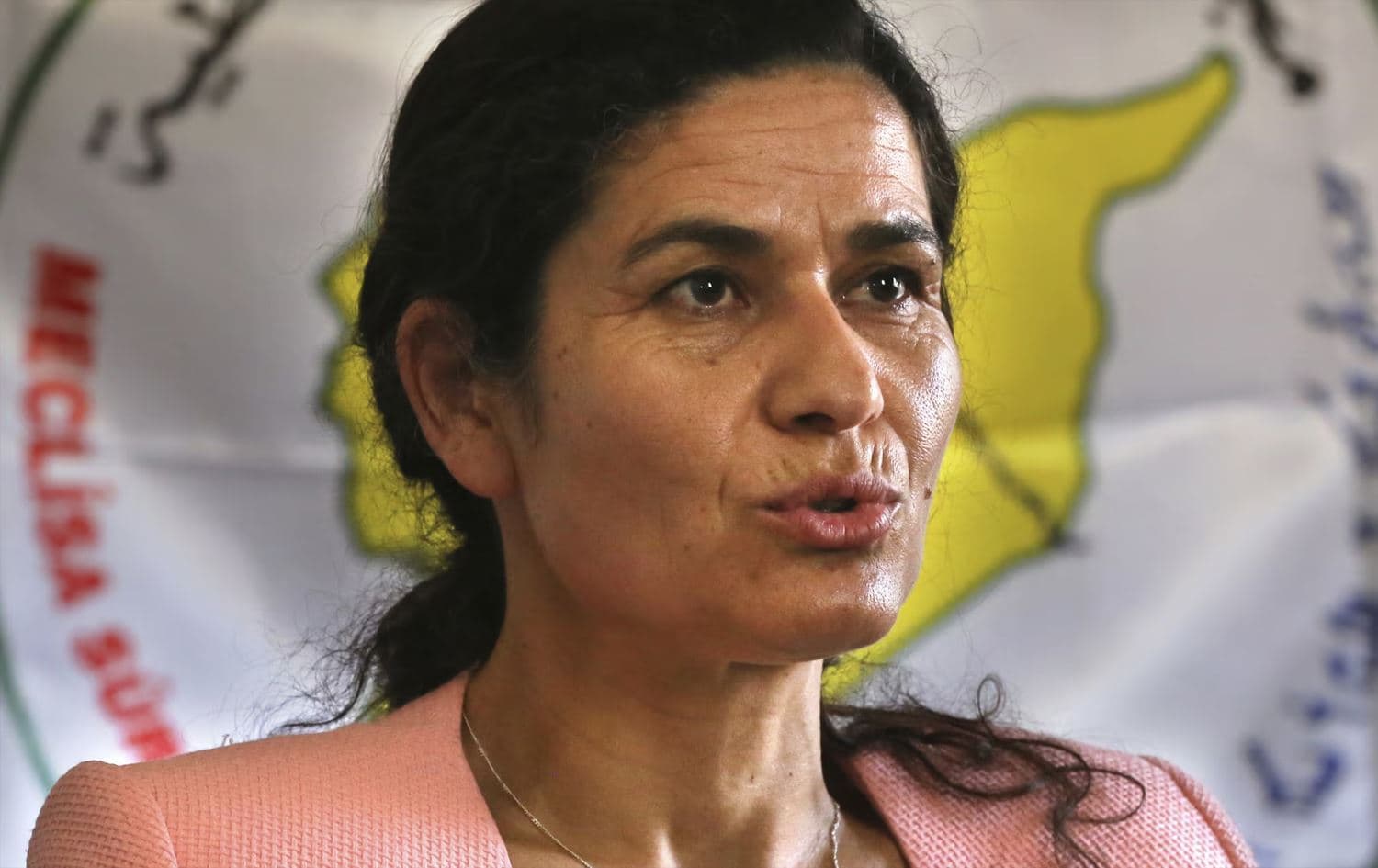
ERBIL, Kurdistan Region - A senior official from the Kurdish-led administration in northeast Syria (Rojava) on Monday urged states that fund Arab media outlets to reassess their media coverage of Syrian affairs, accusing them of “inciting Syrians against one another” and of “calling for the killing” of the country’s societal components.
Elham Ahmed, co-chair of foreign relations for the Democratic Autonomous Administration of North and East Syria (DAANES), called on “the states that fund certain Arab media channels which incite Syrians against each other and promote the killing of societal components” to “review their media policies toward the Syrian file.”
Ahmed also condemned what she described as the “distortion and falsification of facts,” urging investigations into “the reports being published regarding the issue of societal components.”
The decision came a day after an internationally mediated ceasefire was announced, ending the deadly violence that swept through the Kurdish-majority neighborhoods of Ashrafiyeh and Sheikh Maqsoud in northern Aleppo since Tuesday.
The clashes involved the Syrian Arab Army and affiliated armed groups on one side, and the Kurdish-led Internal Security Forces (Asayish) on the other.
The UK-based Syrian Observatory for Human Rights (SOHR) reported on Sunday that at least 82 people were killed in the violence, including 43 civilians, 38 government-aligned fighters, and at least one member of the Asayish.
Meanwhile, an estimated 150,000 residents have fled Aleppo’s Kurdish districts, according to the Erbil-based Barzani Charity Foundation (BCF), which spoke to Rudaw on Saturday - raising growing concerns over possible ethnic cleansing.
For her part, senior DAANES official, Ahmed, said on Monday that the “crimes and violations committed against the Kurds” in Ashrafiyeh and Sheikh Maqsood “amount to war crimes,” stressing that “restricting weapons to the hands of the state does not grant it the right to practice violence and intimidation against the people and society.”
She cited “the abduction and execution of young men, the theft and looting of civilians’ property, and the mutilation of the bodies of victims - both fighters and civilians” as among the violations committed during the violence.
Ahmed concluded by urging international human rights organizations to “intervene urgently to follow up on the cases of abducted persons and to open an investigation into what occurred during the events in the two neighborhoods.”
Since the ceasefire came into effect on Sunday, several videos have circulated online showing armed militants affiliated with Damascus rounding up, arresting, and deriding dozens of Kurdish civilians. Additionally, Kurdish social media users have widely shared images of relatives they say have gone missing since the violence.