Syria
Yazidi families flee Shingal (Sinjar) in the face of ISIS attack in August 2014. Photo via Nadia's Initiative
ERBIL, Kurdistan Region - Some 1,200 Yazidi families in northern Syria are facing a new wave of displacement and religion-based persecution, a prominent non-profit dedicated to supporting the minority group said, warning of the risk of another genocide and urging urgent intervention from the international community.
In a late Monday press release, the Free Yezidi Foundation (FYF) said the community is alarmed by deadly violence that struck Aleppo’s Kurdish neighborhoods - particularly Ashrafiyeh and Sheikh Maqsood - last week, as well as by the ensuing wave of displacement toward the city of Afrin in northwestern Syria.
The human rights monitor, which operates in the United States, the Netherlands, and the Kurdistan Region, highlighted “the dire situation of approximately 1,200 displaced Yezidi families,” who are originally from Afrin but “were forced to flee their homes several years ago due to targeted attacks by Islamist extremist groups.”
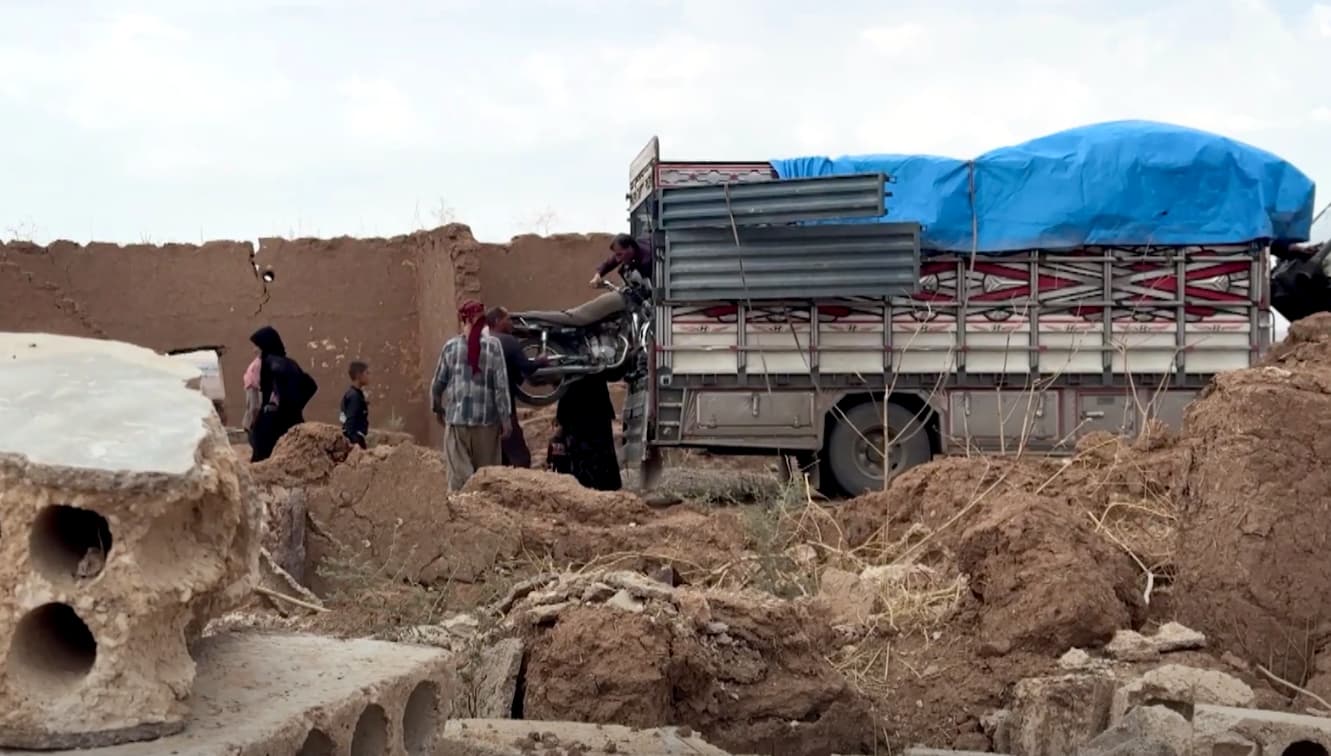
“Approximately 800 Yezidi families have been forced to return to their areas of origin in Afrin amid the chaos,” FYF reported, noting that the area “remains under the control of the same extremist factions that previously drove them out.”
The watchdog warned that this “forced return” places the families in “extreme danger,” adding that as of Monday, “communication with these 800 families has been severed, leaving their current condition unknown.”
Deadly clashes erupted on Tuesday in Aleppo’s Kurdish quarters after the Syrian Arab Army and its affiliated armed factions launched a widescale operation to seize Ashrafiyeh and Sheikh Maqsood from the Kurdish Internal Security Forces (Asayish).
The violence left at least 82 people killed, including 43 civilians, 38 government-aligned fighters, and at least one Asayish member, according to a Sunday report from the UK-based Syrian Observatory for Human Rights (SOHR).
An estimated 150,000 residents have fled Aleppo’s Kurdish quarters, the Erbil-based Barzani Charity Foundation (BCF) told Rudaw on Saturday.
An internationally mediated ceasefire came into effect on Sunday, but despite the halt in fighting, videos have continued to circulate showing arbitrary arrests and verbal abuse of Kurdish civilians, while social media users have also shared images and videos of relatives they say have gone missing amid the unrest.
Manaf Jafo, a Yazidi father and head of a household in Aleppo, described “the assault on the Kurdish neighborhoods” as “a systematic massacre,” recalling “Islamist groups indiscriminately shelling and bombarding the neighborhoods” and noting that some militants were seen carrying the flag of the Islamic State (ISIS).
For its part, the FYF detailed that “approximately 400 families remain trapped in Aleppo, sheltering in churches and makeshift buildings for refuge,” noting that “they are living in fear, with limited access to food, humanitarian aid, or safe passage.”
It further confirmed the killing of at least two Yazidi civilians in the Aleppo violence, identified as Ibrahim Khalil and Jacklin Hassko, and urged “the United States, European allies, Middle Eastern states, and all those committed to the protection of unarmed civilians to stand with us.”
“The Yazidis cannot bear another genocide,” the FYF emphasized.
ISIS in June 2014 seized large parts of northern and western Iraq. By August, the group launched a brutal campaign against the Yazidi community in northern Iraq’s Shingal (Sinjar), killing an estimated 5,000 to 10,000 Yazidi men and older women, and abducting 6,000 to 7,000 women and girls for sexual slavery and human trafficking.
A total of 3,593 survivors have since been rescued, according to the Office of Rescuing Abducted Yazidis - an affiliate of the Kurdistan Region’s presidency - as efforts continue to locate those still missing.
The United Nations has recognized the persecution of the Yazidis by ISIS as genocide.
Mariam Jirdo, a Yazidi woman and head of a household in Aleppo, was quoted in FYF’s report expressing fears that “the same crimes committed against the Yazidi community in 2014 in Sinjar - particularly the sexual violence and slavery - are likely to be carried out again in Syria against Yazidis if immediate intervention does not take place.”
In a late Monday press release, the Free Yezidi Foundation (FYF) said the community is alarmed by deadly violence that struck Aleppo’s Kurdish neighborhoods - particularly Ashrafiyeh and Sheikh Maqsood - last week, as well as by the ensuing wave of displacement toward the city of Afrin in northwestern Syria.
The human rights monitor, which operates in the United States, the Netherlands, and the Kurdistan Region, highlighted “the dire situation of approximately 1,200 displaced Yezidi families,” who are originally from Afrin but “were forced to flee their homes several years ago due to targeted attacks by Islamist extremist groups.”
“Approximately 800 Yezidi families have been forced to return to their areas of origin in Afrin amid the chaos,” FYF reported, noting that the area “remains under the control of the same extremist factions that previously drove them out.”
The watchdog warned that this “forced return” places the families in “extreme danger,” adding that as of Monday, “communication with these 800 families has been severed, leaving their current condition unknown.”
Deadly clashes erupted on Tuesday in Aleppo’s Kurdish quarters after the Syrian Arab Army and its affiliated armed factions launched a widescale operation to seize Ashrafiyeh and Sheikh Maqsood from the Kurdish Internal Security Forces (Asayish).
The violence left at least 82 people killed, including 43 civilians, 38 government-aligned fighters, and at least one Asayish member, according to a Sunday report from the UK-based Syrian Observatory for Human Rights (SOHR).
An estimated 150,000 residents have fled Aleppo’s Kurdish quarters, the Erbil-based Barzani Charity Foundation (BCF) told Rudaw on Saturday.
An internationally mediated ceasefire came into effect on Sunday, but despite the halt in fighting, videos have continued to circulate showing arbitrary arrests and verbal abuse of Kurdish civilians, while social media users have also shared images and videos of relatives they say have gone missing amid the unrest.
Manaf Jafo, a Yazidi father and head of a household in Aleppo, described “the assault on the Kurdish neighborhoods” as “a systematic massacre,” recalling “Islamist groups indiscriminately shelling and bombarding the neighborhoods” and noting that some militants were seen carrying the flag of the Islamic State (ISIS).
For its part, the FYF detailed that “approximately 400 families remain trapped in Aleppo, sheltering in churches and makeshift buildings for refuge,” noting that “they are living in fear, with limited access to food, humanitarian aid, or safe passage.”
It further confirmed the killing of at least two Yazidi civilians in the Aleppo violence, identified as Ibrahim Khalil and Jacklin Hassko, and urged “the United States, European allies, Middle Eastern states, and all those committed to the protection of unarmed civilians to stand with us.”
“The Yazidis cannot bear another genocide,” the FYF emphasized.
ISIS in June 2014 seized large parts of northern and western Iraq. By August, the group launched a brutal campaign against the Yazidi community in northern Iraq’s Shingal (Sinjar), killing an estimated 5,000 to 10,000 Yazidi men and older women, and abducting 6,000 to 7,000 women and girls for sexual slavery and human trafficking.
A total of 3,593 survivors have since been rescued, according to the Office of Rescuing Abducted Yazidis - an affiliate of the Kurdistan Region’s presidency - as efforts continue to locate those still missing.
The United Nations has recognized the persecution of the Yazidis by ISIS as genocide.
Mariam Jirdo, a Yazidi woman and head of a household in Aleppo, was quoted in FYF’s report expressing fears that “the same crimes committed against the Yazidi community in 2014 in Sinjar - particularly the sexual violence and slavery - are likely to be carried out again in Syria against Yazidis if immediate intervention does not take place.”
Comments
Rudaw moderates all comments submitted on our website. We welcome comments which are relevant to the article and encourage further discussion about the issues that matter to you. We also welcome constructive criticism about Rudaw.
To be approved for publication, however, your comments must meet our community guidelines.
We will not tolerate the following: profanity, threats, personal attacks, vulgarity, abuse (such as sexism, racism, homophobia or xenophobia), or commercial or personal promotion.
Comments that do not meet our guidelines will be rejected. Comments are not edited – they are either approved or rejected.
Post a comment