Syria
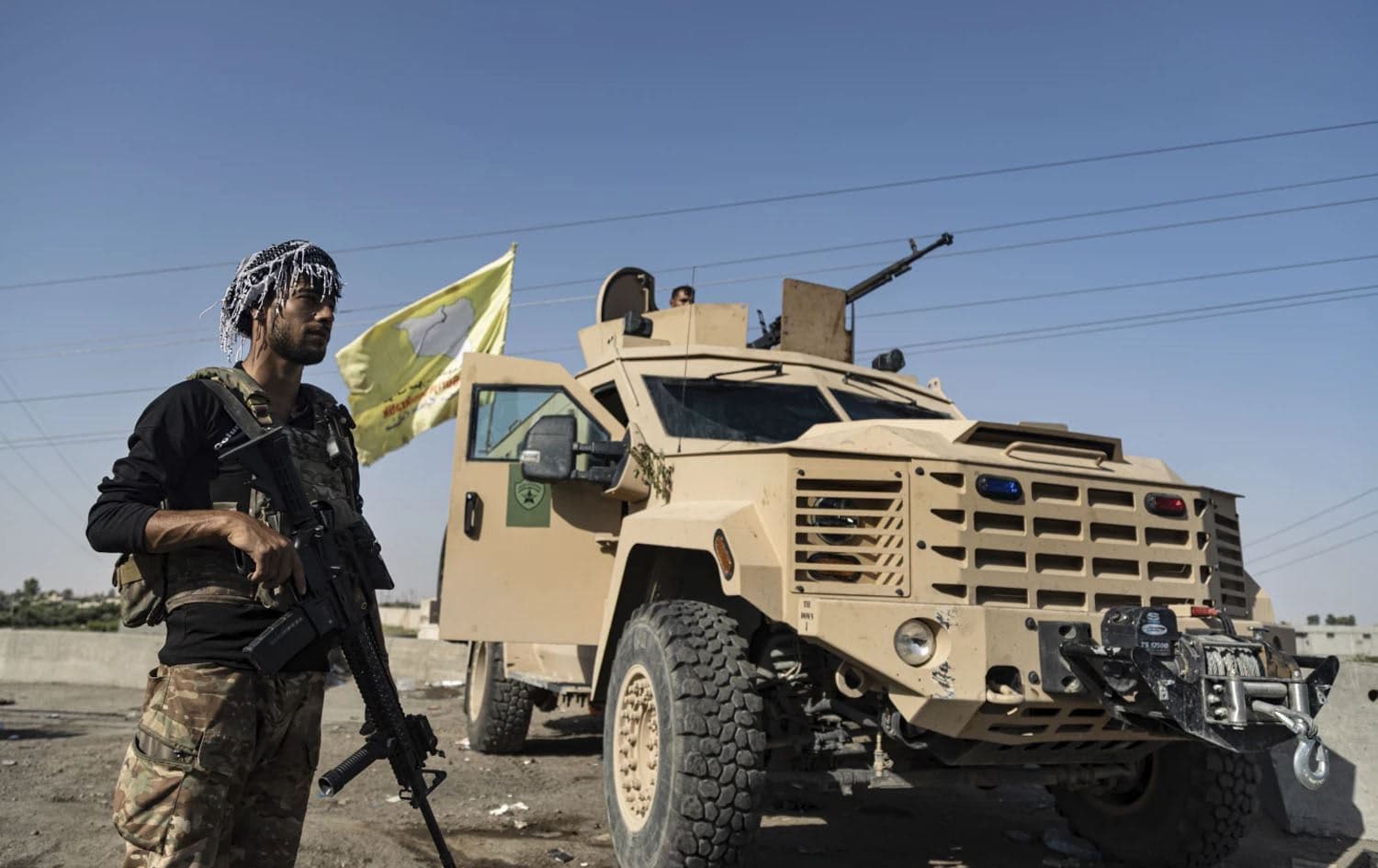
An SDF fighter stands next to an armored vehicle in Deir ez-Zor, eastern Syria in September 2023. Photo: AFP
ERBIL, Kurdistan Region - The Kurdish-led Syrian Democratic Forces (SDF) said it was confronting an attack by “armed groups” affiliated with Damascus early Sunday on its positions in the eastern Deir ez-Zor province, holding the Syrian government responsible for the “aggression.”
“This morning at approximately 9:00 am, armed groups affiliated with the Damascus government launched a direct attack on our forces positioned along the Euphrates River near al-Asharah Bridge in the town of Darnaj, Deir ez-Zor’s eastern countryside,” the SDF said in a statement.
Tensions have surged between the SDF and the Syrian government, with the Kurdish-led force routinely blaming Damascus for attacks on its forces, particularly in Deir ez-Zor and the northern Aleppo province.
The SDF accused “Damascus-affiliated armed groups” of facilitating smuggling groups in the area, stressing that the Kurdish-led force “immediately took the necessary field measures to confront the attack, and developments are still ongoing.”
“We emphasize the full responsibility of the Damascus government for this aggression and for providing cover to smuggling operations that undermine regional stability,” the SDF asserted.
On Thursday, the SDF announced that its forces repelled “infiltration attempts and artillery attacks” from Damascus-affiliated groups in Aleppo’s Deir Hafer area, stressing that further attacks “will be met with a decisive response.”
Backed by the United States, the SDF functions as the de facto military force in the Kurdish-majority northeast Syria (Rojava). It remains a key partner of the US-led global coalition against the Islamic State (ISIS).
The flare-up between the SDF and Damascus is straining an integration deal signed in March by Syria’s interim President Ahmed al-Sharaa and SDF commander Mazloum Abdi. The agreement aims to fold the SDF into the Syrian state military structure, recognize the Kurds as an integral part of Syria, implement a nationwide ceasefire, and enable the return of displaced Syrians to their hometowns.
Talks on implementing the agreement have stalled for several reasons, including the SDF insisting on integrating into the Syrian army as a unit while Damascus wants them to do so as individuals.
In an interview with state TV on Friday, Sharaa claimed that the SDF “does not represent all Kurds,” warning the Kurdish-led force that any attempt to separate from Syria will not succeed despite the SDF having not called for independence or separation.
In late August, five SDF members were injured in an attack purportedly carried out by Damascus-affiliated groups in the eastern Deir ez-Zor province. The Kurdish-led force at the time held the Syrian interim government “directly responsible” for the assault.
Earlier that month, the Kurdish-led internal security forces (Asayish), affiliated with the SDF, reported that two of their members were injured when a “suicide drone” launched by the Syrian interim government struck a security checkpoint in northern Aleppo.
“This morning at approximately 9:00 am, armed groups affiliated with the Damascus government launched a direct attack on our forces positioned along the Euphrates River near al-Asharah Bridge in the town of Darnaj, Deir ez-Zor’s eastern countryside,” the SDF said in a statement.
Tensions have surged between the SDF and the Syrian government, with the Kurdish-led force routinely blaming Damascus for attacks on its forces, particularly in Deir ez-Zor and the northern Aleppo province.
The SDF accused “Damascus-affiliated armed groups” of facilitating smuggling groups in the area, stressing that the Kurdish-led force “immediately took the necessary field measures to confront the attack, and developments are still ongoing.”
“We emphasize the full responsibility of the Damascus government for this aggression and for providing cover to smuggling operations that undermine regional stability,” the SDF asserted.
On Thursday, the SDF announced that its forces repelled “infiltration attempts and artillery attacks” from Damascus-affiliated groups in Aleppo’s Deir Hafer area, stressing that further attacks “will be met with a decisive response.”
Backed by the United States, the SDF functions as the de facto military force in the Kurdish-majority northeast Syria (Rojava). It remains a key partner of the US-led global coalition against the Islamic State (ISIS).
The flare-up between the SDF and Damascus is straining an integration deal signed in March by Syria’s interim President Ahmed al-Sharaa and SDF commander Mazloum Abdi. The agreement aims to fold the SDF into the Syrian state military structure, recognize the Kurds as an integral part of Syria, implement a nationwide ceasefire, and enable the return of displaced Syrians to their hometowns.
Talks on implementing the agreement have stalled for several reasons, including the SDF insisting on integrating into the Syrian army as a unit while Damascus wants them to do so as individuals.
In an interview with state TV on Friday, Sharaa claimed that the SDF “does not represent all Kurds,” warning the Kurdish-led force that any attempt to separate from Syria will not succeed despite the SDF having not called for independence or separation.
In late August, five SDF members were injured in an attack purportedly carried out by Damascus-affiliated groups in the eastern Deir ez-Zor province. The Kurdish-led force at the time held the Syrian interim government “directly responsible” for the assault.
Earlier that month, the Kurdish-led internal security forces (Asayish), affiliated with the SDF, reported that two of their members were injured when a “suicide drone” launched by the Syrian interim government struck a security checkpoint in northern Aleppo.
Comments
Rudaw moderates all comments submitted on our website. We welcome comments which are relevant to the article and encourage further discussion about the issues that matter to you. We also welcome constructive criticism about Rudaw.
To be approved for publication, however, your comments must meet our community guidelines.
We will not tolerate the following: profanity, threats, personal attacks, vulgarity, abuse (such as sexism, racism, homophobia or xenophobia), or commercial or personal promotion.
Comments that do not meet our guidelines will be rejected. Comments are not edited – they are either approved or rejected.
Post a comment