


Syria

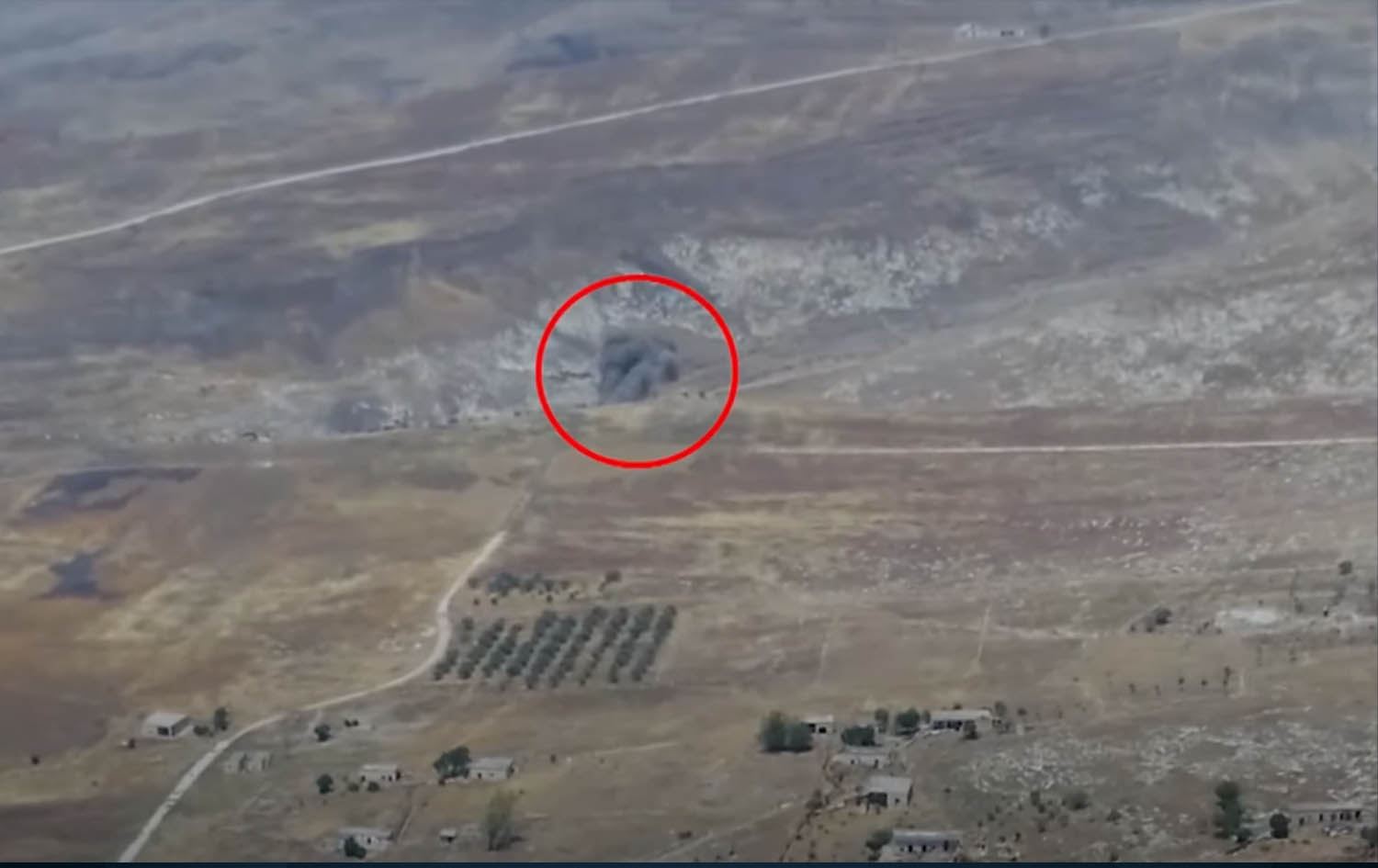
A screengrab from a video published by the Syrian defense ministry shows Syrian air and artillery strikes attacking position of rebel groups in the countryside on August 23, 2023. Photo: screengrab/Syrian defense ministry
ERBIL, Kurdistan Region - The Syrian army carried out against “terrorist headquarters” in the provinces of Aleppo, Latakia, and Hama in response to attacks by jihadist groups on the area, the defense ministry said on Wednesday.
Syria and top ally Russia have conducted several air and artillery strikes against “terrorist headquarters, missile and drone launchers, and ammunition depots, which led to the destruction of most of them and the killing and wounding of dozens of these terrorists,” the Syrian defense ministry said in a statement.
The assaults were carried out “in response to the repeated attacks launched by terrorist organizations on safe villages and towns” in Aleppo, Latakia, and Hama provinces, according to the statement.
Half of Idlib province, as well as parts of Aleppo, Hama, and Latakia, are the last rebel-held bastions in Syria after President Bashar al-Assad, with Russian and Iranian support, seized back swathes of territory over the course of the brutal Syrian civil war, which erupted in 2011.
Jihadist group Hay’at Tahrir al-Sham (HTS), the former Syrian branch of al-Qaeda, is the prominent force among dozens of different rebel factions operating in the area. It has been internationally recognized as a terrorist organization.
Russia has been Assad’s strongest ally throughout the war that initially began as an uprising and later disintegrated into a brutal civil war.
On Monday, at least eight HTS members were killed when Russian airstrikes targeted their base on the outskirts of Idlib city.
The Syrian Observatory for Human Rights, a war monitor, said that Russian strikes have killed 13 civilians and 28 jihadists in Syria since June.
In June, artillery shells by Syrian government forces killed three civilians in rebel-held areas of Aleppo province.
Over 13 million Syrians have been displaced since the start of the civil war, more than six million of which are refugees who have fled the war-torn country, according to a report from the United Nations High Commissioner for Refugees (UNHCR).
Syria and top ally Russia have conducted several air and artillery strikes against “terrorist headquarters, missile and drone launchers, and ammunition depots, which led to the destruction of most of them and the killing and wounding of dozens of these terrorists,” the Syrian defense ministry said in a statement.
The assaults were carried out “in response to the repeated attacks launched by terrorist organizations on safe villages and towns” in Aleppo, Latakia, and Hama provinces, according to the statement.
Half of Idlib province, as well as parts of Aleppo, Hama, and Latakia, are the last rebel-held bastions in Syria after President Bashar al-Assad, with Russian and Iranian support, seized back swathes of territory over the course of the brutal Syrian civil war, which erupted in 2011.
Jihadist group Hay’at Tahrir al-Sham (HTS), the former Syrian branch of al-Qaeda, is the prominent force among dozens of different rebel factions operating in the area. It has been internationally recognized as a terrorist organization.
Russia has been Assad’s strongest ally throughout the war that initially began as an uprising and later disintegrated into a brutal civil war.
On Monday, at least eight HTS members were killed when Russian airstrikes targeted their base on the outskirts of Idlib city.
The Syrian Observatory for Human Rights, a war monitor, said that Russian strikes have killed 13 civilians and 28 jihadists in Syria since June.
In June, artillery shells by Syrian government forces killed three civilians in rebel-held areas of Aleppo province.
Over 13 million Syrians have been displaced since the start of the civil war, more than six million of which are refugees who have fled the war-torn country, according to a report from the United Nations High Commissioner for Refugees (UNHCR).


Comments
Rudaw moderates all comments submitted on our website. We welcome comments which are relevant to the article and encourage further discussion about the issues that matter to you. We also welcome constructive criticism about Rudaw.
To be approved for publication, however, your comments must meet our community guidelines.
We will not tolerate the following: profanity, threats, personal attacks, vulgarity, abuse (such as sexism, racism, homophobia or xenophobia), or commercial or personal promotion.
Comments that do not meet our guidelines will be rejected. Comments are not edited – they are either approved or rejected.
Post a comment