


Syria

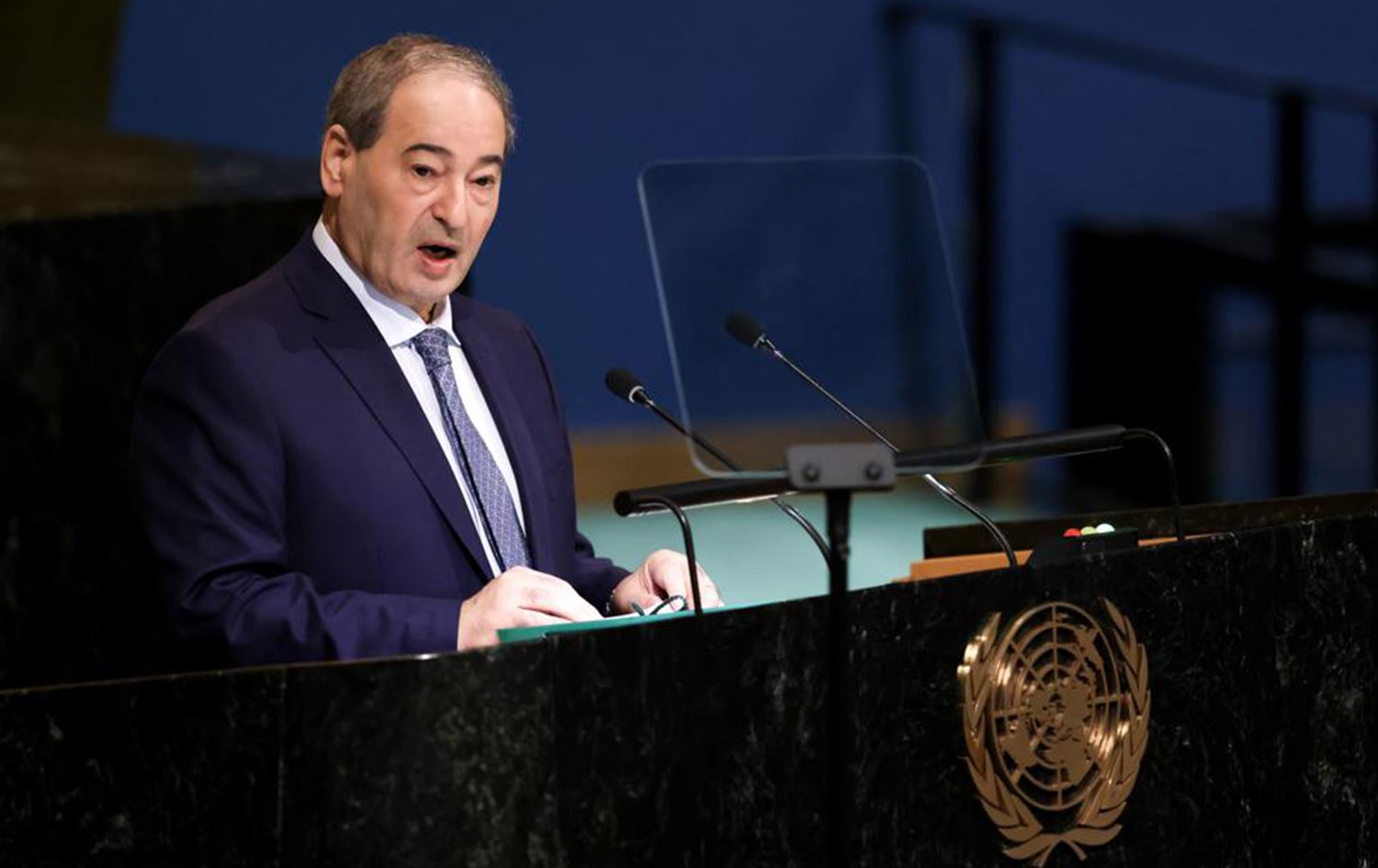
Minister for Foreign Affairs of Syria Fayssal Mekdad addresses the 77th session of the United Nations General Assembly, Monday, Sept. 26, 2022, at the U.N. headquarters. Photo: Julia Nikhinson/AP
NEW YORK, United States - Syria’s top diplomat demanded Monday that a U.S.-led military coalition to get out of his country and told the U.N. General Assembly meeting of world leaders that Damascus wants compensation for losses suffered by its oil and gas industry during a civil war that has been going on for 11 years.
Hundreds of U.S. troops are stationed in eastern Syria to help the Kurdish-led Syrian Democratic Forces fight the Islamic State militant group. Syrian Foreign Minister Faisal Mekdad said the coalition’s presence contradicts international law and “should end immediately, without conditions.”
“Fighting terrorism does not happen through an illegitimate international coalition that violates Syria’s sovereignty and destroys towns and villages,” he said on the closing day of the U.N. General Assembly, arguing that battling terrorism can’t work without “coordination” with Syrian President Bashar Assad’s government.
The civil war began in 2011 with anti-government protests demanding democratic reforms but quickly escalated into fighting. Hundreds of thousands of people have been killed, large parts of the country have been destroyed and half the country’s prewar population has been displaced.
Amid the chaos, the Islamic State group took over significant parts of Syria. Though the group in 2019 lost the last sliver of land its fighters controlled, its sleeper cells are still active.
Mekdad said “direct and indirect” losses in Syria’s oil and gas sector have reached $107 billion since the conflict began. He added that Damascus will demand compensation for these losses, an apparent reference to the U.S.- SDF control of much of the oil fields in eastern Syria.
Amid the war, the U.S., some other countries and the European Union have imposed sanctions on Syria’s government and oil industry. Mekdad complained that his country has been “economically besieged” by powers bent on imposing their will and retaining their wealth.
“The war against Syria, ultimately, was an attempt by the West to maintain control over the world,” he said.
The U.N. General Assembly’s so-called general debate, the annual gathering of leaders who address issues of concern to their countries, ends later Monday after six days of speeches.
The first few days last week were reserved for the highest-ranking officials like heads of state and government; by Monday, foreign minister- and U.N.-ambassador-level speakers were taking the podium and the colossal security cordon around the United Nations had been largely dismantled.
On the final day, many speakers still spoke emphatically about how important the world body remains in a fragmented world.
“We need more of the U.N., not less,” Canadian Foreign Minister Mélanie Joly said.


Comments
Rudaw moderates all comments submitted on our website. We welcome comments which are relevant to the article and encourage further discussion about the issues that matter to you. We also welcome constructive criticism about Rudaw.
To be approved for publication, however, your comments must meet our community guidelines.
We will not tolerate the following: profanity, threats, personal attacks, vulgarity, abuse (such as sexism, racism, homophobia or xenophobia), or commercial or personal promotion.
Comments that do not meet our guidelines will be rejected. Comments are not edited – they are either approved or rejected.
Post a comment