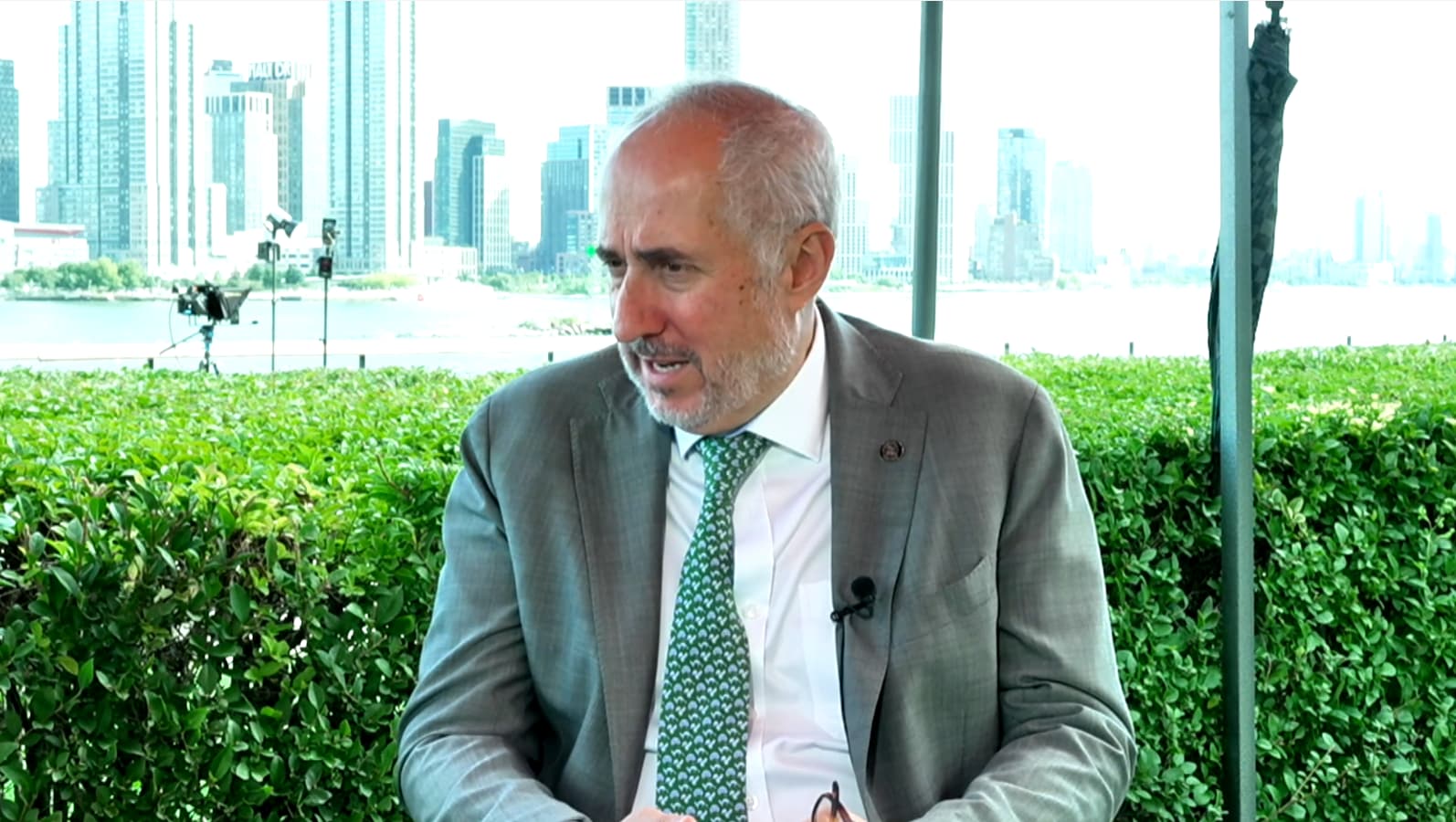
ERBIL, Kurdistan Region - Kurds and Yazidis displaced from the Kurdish city of Afrin in northwest Syria are afraid to return as militia members accused of atrocities control the area, a prominent American religious freedom advocate told Rudaw.
“There’s no way they [Kurds and Yazidis] could stay if they were under these Islamists. They had to flee from the Syrian National Army [SNA] when they invaded Afrin. So all those IDPs are looking and saying, ‘wait, we’ve done this before. It didn’t go so well,’” Nadine Maenza, president of the International Religious Freedom (IRF) Secretariat and former chair of the US Commission on International Religious Freedom (USCIRF), told Rudaw on April 23.
Maenza highlighted that Syrian minorities are concerned about the centralized rule of Syrian interim President Ahmed al-Sharaa’s government.
In 2018, Turkey and its allied Syrian militias seized control of Afrin, a Kurdish enclave in northwest Syria. Thousands of Kurds fled, many moving to the nearby Shahba region, and families displaced from elsewhere in Syria moved into Afrin.
“The Syrian National Army, some of the very people that were committing the atrocities against the Yazidis, Kurds, Christians that were there and had to flee, are now, instead, he [Sharaa] couldn't get rid of them. It seems like they were put in positions, some government positions,” Maenza lamented.
International organizations have recorded numerous human rights violations against Afrin’s Kurdish population since 2018, including killings, kidnappings, looting of agricultural crops, cutting down olive trees, and imposing taxes on farmers.
Syria’s interim President Ahmed al-Sharaa visited Afrin in mid-February and met with locals, the majority of whom were Kurds. He pledged to remove armed groups and put an end to the violations, a representative from the Kurdish National Council (ENKS/KNC), who attended the meeting, told Rudaw.
Maenza said dozens of Yazidi families remain unable to return to their homes in northwest Syria, citing fears of living under officials accused of “committing atrocities”, according to her meetings with Yazidis.
“Dozens of families can't go back because they wouldn't feel safe being governed by people that committed atrocities against them. It would be like saying, you know, ISIS is now going to be the governor of your, or the mayor of your city,” she said.
Maenza stressed that locals must govern their own communities and that the SNA must not be in charge of Afrin.
In March, ENKS Afrin local council head Ahmed Hassan told Rudaw that more than 600 settler families have left Afrin, while 400 Kurdish families have returned to their homes.
The ENKS is a coalition of Kurdish political parties that is considered the main opposition in northeast Syria (Rojava).
Kurds have been increasingly returning to Afrin since the collapse of Bashar al-Assad’s regime. These Kurds had been displaced to other parts of Syria after Turkey-backed militia groups invaded the Kurdish-majority city. With the militants losing their grip on Afrin to Damascus-affiliated forces, many have been able to return.
No official Syrian government decision has been made to support the return of Afrin’s residents. Some families come back on their own, while others return through aid from the ENKS
Maenza stressed the difficulty of removing Turkish-backed militias given Turkey’s support for interim president Sharaa, despite some apparent differences between them, particularly regarding Afrin.
She noted that under Assad, Yazidis were legally classified as Muslims, marginalizing their identity and leaving them vulnerable to being labeled as “apostates”.
“Because their ID card says they're Muslims, but they're claiming to be [Yezidi]. So it just makes them all the more vulnerable to these extremists,” she said.
Regarding the international community’s reaction to Syria’s potential centralization under Sunni dominance, Maenza believes that it will be unlikely for sanctions on the conflict-hit country to be lifted.
“If he's [Sharaa] going to push away the minorities and say, nope, we're Syrian Republic, everyone else move aside, only the Sunnis sit at the front table, everyone else at the back table, it's going to send all sorts of messages to the international community. I don't see them being willing to lift sanctions anytime soon in that scenario,”she said.
Maenza stated it is in Syria’s best interest to maintain sanctions with conditions, arguing that lifting them unconditionally would leave the government without justification for making reforms, risking backlash from its base.
Several Western countries have warned that the lifting of some sanctions imposed on Assad's regime is conditional on the new authorities forming an inclusive government.