ERBIL, Kurdistan Region - A Canadian lawmaker said Wednesday if Damascus wants to be recognized and sanctions lifted by Ottawa, it will have to acknowledge Syrian Kurds as "the de facto" authorities in regions they rule in the country's north and east.
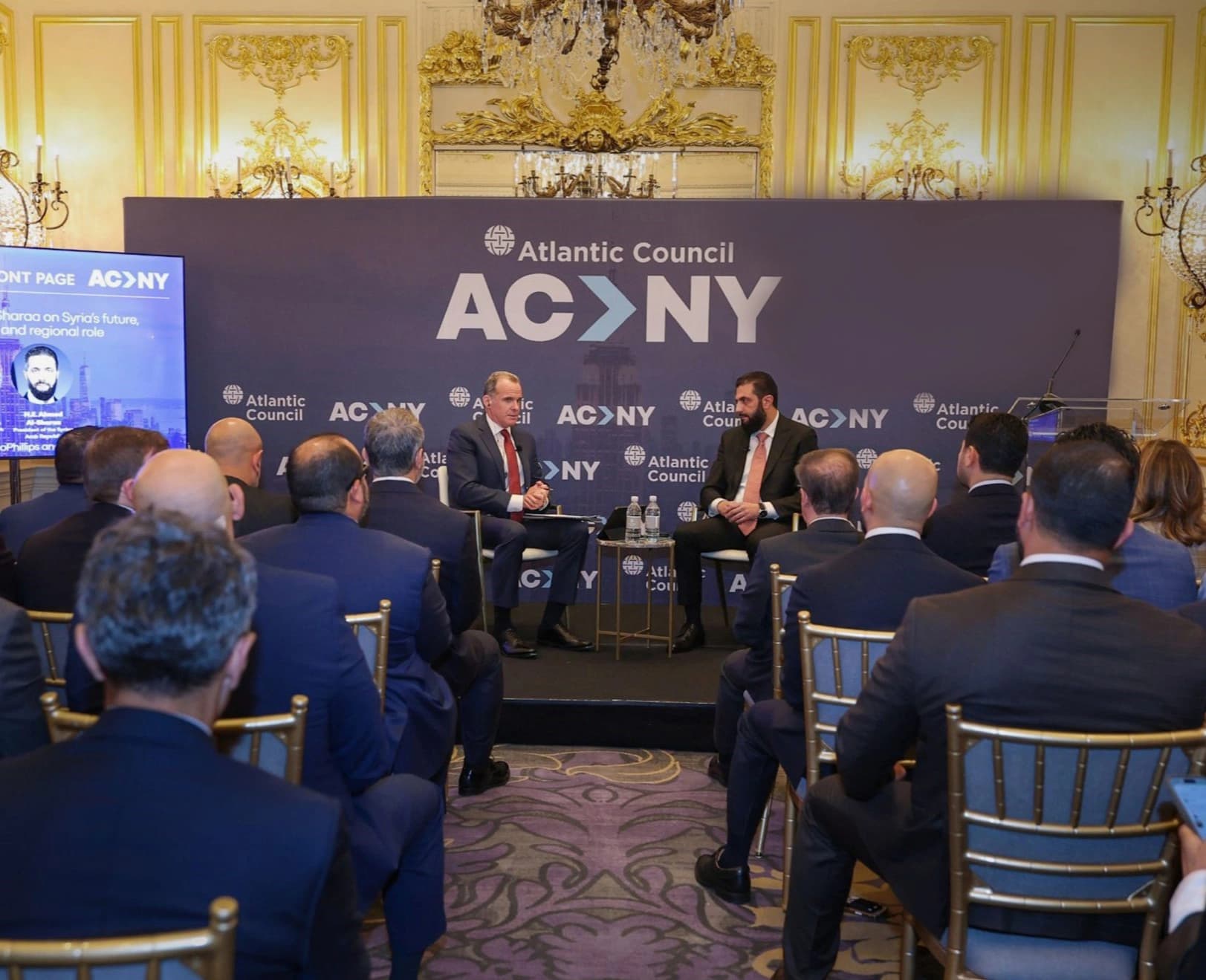
On March 10, Kurdish-led Syrian Democratic Forces (SDF) chief Mazloum Abdi and Syria’s interim president Ahmed al-Sharaa signed a landmark agreement to integrate “all civil and military institutions” in Rojava under the administration of the Syrian state, a deal which never materialized.
However, the two sides remain at odds over the interpretation of the term integration. While the SDF seeks to join the Syrian forces as a unified bloc, Damascus prefers to individually absorb and assimilate Kurdish fighters into the Syrian army.
"They need to reach some kind of settlement if they expect Western sanctions to be lifted — especially from countries like Canada, which still has not recognized Syria’s new government. If they want recognition and the end of sanctions, they must establish a neutral, inclusive state that acknowledges the Kurds in Rojava as the de facto authorities on the ground," Tom Kmiec, deputy speaker of the Canadian House of Commons, told Rudaw's Namo Abdulla.
Backed by the United States, the SDF functions as the de facto military force in the Kurdish-majority northeast Syria (Rojava). It remains a key partner of the US-led Global Coalition to Defeat the Islamic State (ISIS).
The Syrian government and the SDF are currently engaged in trading accusations against one another, with each side blaming the other for recent attacks on their respective positions.
Asked about whether or not Kurds would demand autonomy from the central government in Damascus, Kmiec replied " that’s ultimately for Syrians to decide."
"The debate within Syrian civic society will be about how much autonomy, and in what form. The real question is whether they can coexist. The Kurds in Bashur (Iraqi Kurdistan) proved it was possible with Baghdad, and I’m confident the Kurds in Rojava can figure out a path forward too," he said.
Tensions have further intensified as the new government of Syria decided to postpone elections in Kurdish-majority provinces, citing security concerns, a move that has drawn sharp criticism from Kurdish groups, describing the planned vote as “exclusionary and undemocratic."
The Kurdish-led administration says steps taken in Syria since the fall of the Ba’ath regime in early December as contradictory to “the objectives of the Syrian revolution, which called for justice, democracy, equality, and freedom for all components of Syria." It thus urged the international community and the United Nations to reject the electoral process.
The deputy speaker of the Canadian parliament said all sides in Syria will have to get together and pass a new constitution, to represent the country's diverse ethnic and religious backgrounds.
"Obviously, all sides should be trying to negotiate some type of solution...It’s in everyone’s best interest to reach a settlement that allows for a neutral civic framework, from which they can renegotiate and pass a new constitution," he said.
He detailed that the new constitution "has to include all people. It cannot simply preserve the old structures or name of the state. If it does, Syria risks repeating the mistakes of the past under Bashar al-Assad and his father, Hafez. Too many people have been killed, too many imprisoned or tortured under the regime’s oppressive system. Repeating that cycle would be a tragedy."
CORRECTION: A previous version of this article referred to Kmiec as a Canadian governmental official.