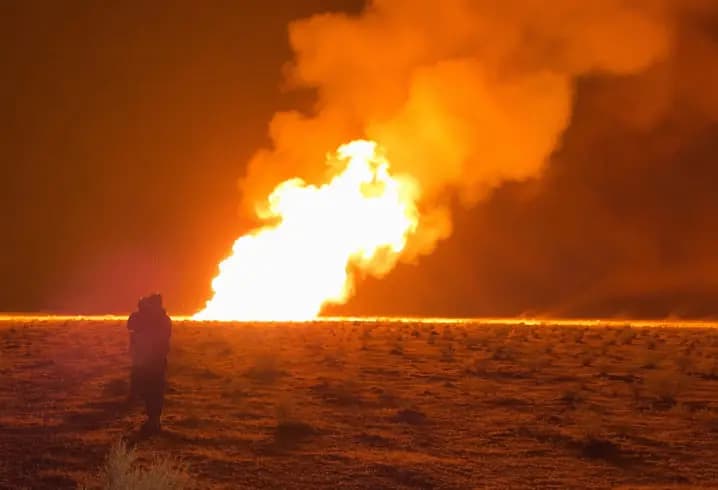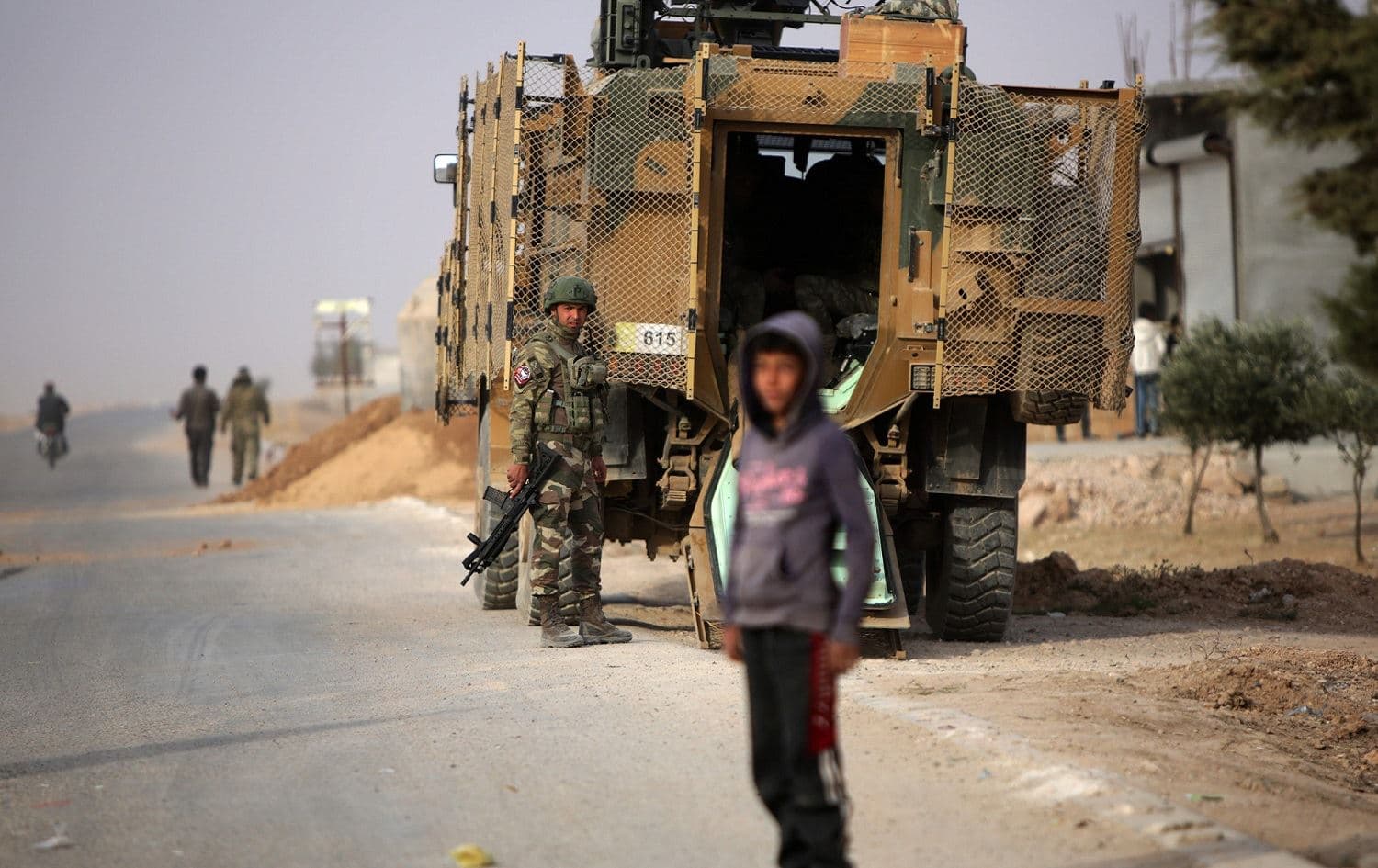

ERBIL, Kurdistan Region – Turkey’s Operation Peace Spring in the Kurdish-controlled region of northern Syria will continue until all its goals are met, Turkey’s National Security Council said Tuesday following a meeting chaired by Turkish President Recep Tayyip Erdogan.
Turkey launched its operation on October 9 with the stated aim of expelling the Kurdish-led Syrian Democratic Forces (SDF) from Turkey’s southern border.
The operation has largely come to a halt since the United States brokered a ceasefire followed by a security deal with Turkey brokered by Russia.
Clashes have continued, however, in areas like Ain Issa, the administrative capital of the Kurdish-led Autonomous Administration, and the Christian-majority town of Tel Tamr.
In its meeting, chaired by Erdogan at the Presidential Palace, the National Security Council said Turkey would continue its operation.
Turkey’s incursion “which contributes to peace and stability in the region, will continue until it reaches its goals, while taking all precautions to prevent harm to civilians”, a council statement read, according to the state-run Anadolu Agency.
Kurdish forces were compelled to withdraw from the border areas to a depth of 32 kilometers under the US and Russian-brokered deals. The Turkish council said it “expects” both the US and Russia to implement the agreements and have Kurdish-led forces removed from northern Syria, Manbij, and Tel Rifat.
“We call on the international community to support Turkey, which aims for the safe and voluntary return of Syrians to their country without any discrimination based on ethnicity or religion,” the council added.
Turkey’s operation has been widely condemned by European and American observers.
Turkey insists the Kurdish People’s Protection Units (YPG), which makes up the backbone of the SDF, is affiliated with Kurdistan Worker’s Party (PKK), an armed group fighting for greater cultural and political rights for Kurds in Turkey.
Ankara is reportedly furious with its NATO allies for failing to back its Syria offensive.
Turkey has reportedly been dragging its feet on its support for NATO’s military plans in the Baltic and Poland, demanding NATO’s support for its Syria operation in exchange.
The 29-member NATO alliance is trying to get its members to approve a military plan for the defense of Poland, Lithuania, Latvia, and Estonia in the event of a Russian attack, but Turkey is refusing to sign on to the plan without support in return, four senior NATO officials told Reuters.
“They (the Turks) are taking eastern Europeans hostage, blocking approval of this military planning until they get concessions,” one of the diplomatic sources told Reuters.
“Everyone is criticizing them (the Turks), but if they give in, it will be at the cost of non-interference in their Syria strategy,” one of the diplomatic sources said.
After their withdrawal in early October, US troops are now back in northern Syria, with the stated aim of securing the oil fields to prevent them falling into the hands of the Islamic State (ISIS).
Russia is unhappy with the continued US presence. Sergey Lavrov, the Russian foreign minister, said Tuesday that Kurdish authorities are not fully committed to the Russia-Turkey deal brokered in Sochi.
“I would advise Kurdish political leaders to stick to their word. Right after the memorandum had been signed [in Sochi] on October 22, we obtained Syrian President Bashar al-Assad’s consent to implement it, and Kurdish leaders vigorously assured us that they would cooperate,” Lavrov told a press conference.
“However, in just a few days the United States changed its position and said that when withdrawing troops from Syria, they [the Americans] had forgotten about the need to protect oil fields to make sure that the Syrian government did not take control of them, and the Kurdish leadership immediately lost enthusiasm for cooperation in accordance with the Sochi agreement and once again opted to rely on the United States’ support,” the Russian FM added.
Concerning claims by Kurdish forces that Turkey is violating the Sochi agreement, Lavrov said he did not have information.
On Wednesday, however, the Foreign Relations Department of the Kurdish-led authorities claimed Turkey is violating both the ceasefire with the US and the Sochi agreement, refuting claims of the Russian Foreign Minister that the US presence has caused them to backtrack on the Sochi deal.
“Since the start of the Turkish attack on Northern and Eastern Syria on October 9, up to now, the Turkish state has not committed to any of the attempts or measures that have been agreed upon, especially the ceasefire that the US Vice President announced on October 17, and also the Sochi agreement,” said the Foreign Relations Department, claiming there are “relentless attacks” against Kurdish-controlled areas.
Responding to Lavrov’s comments, the Foreign Relations Department insisted it is serious about dialogue, has adhered to ceasefire agreements, and has withdrawn from the border area.
“What we see now is that the Russian guarantor role needs to be more effective as it does not suit the current role in light of the understandings that have been reached,” the department said.
“We are keen on stability and the necessity to stop the Turkish aggression, and our readiness today lies in that we haven’t turned our backs to or violated any understandings, and our seeking serious and frank dialogue is not bent on any change or the American presence on the ground. Our stance on dialogue is always clear,” the department added.