Syria
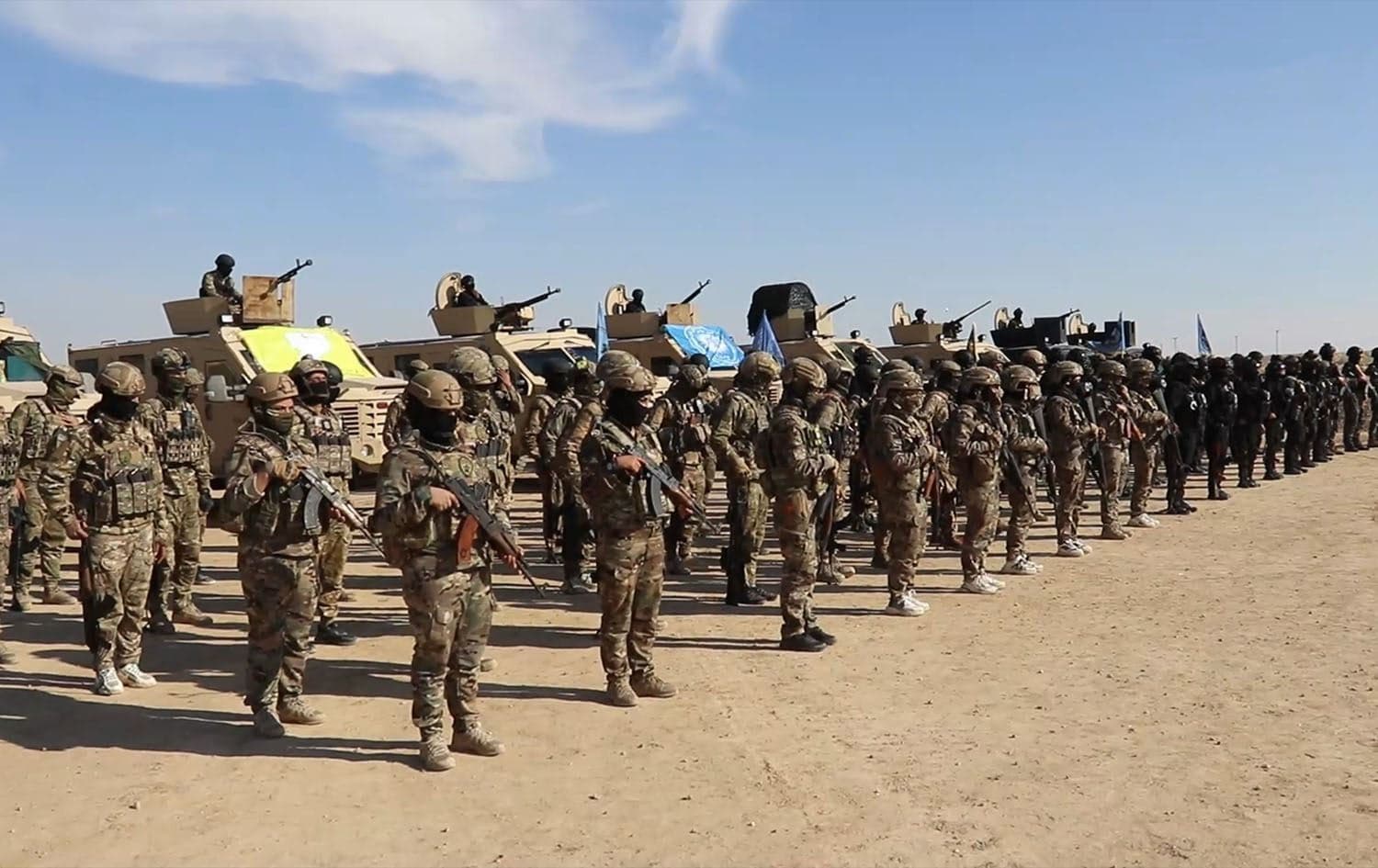
Fighters of the Syrian Democratic Forces (SDF) and partner forces standing in formation in northeast Syria (Rojava) on November 12, 2024. Photo: Screengrab/SDF press
ERBIL, Kurdistan Region - US-backed forces in Syria are preparing to launch a large-scale military operation against Islamic State (ISIS) cells, a spokesperson for a faction aligned with the Kurdish-led Syrian Democratic Forces (SDF) told Rudaw on Saturday. The campaign comes amid a growing threat from ISIS across the country, especially in northeast Syria (Rojava).
Mahmoud Habib, spokesperson for the North Democratic Forces - a component of the SDF - said the campaign is in response to a recent uptick in ISIS activities. “The details of the operation are not yet known. We do not know when it will be launched, what its nature will be, or which forces will take part alongside the SDF and coalition troops,” Habib stated.
The US-backed SDF functions as the de facto military force in Rojava and is the primary local partner of the Washington-led Global Coalition to Defeat ISIS. The North Democratic Forces operate mainly in northern Syria and share the SDF’s objective of combating terrorism.
According to Habib, the upcoming operation may see the participation of other US-backed groups, namely, the Syrian Free Army (SFA). He noted that the campaign aims not only to dismantle ISIS cells but also to prevent potential attacks on major population centers, including the capital Damascus, its surrounding countryside, and the central Homs province.
The SFA, originally a broad rebel coalition, has evolved over the past decade from earlier US-backed groups such as the New Syrian Army (NSA) and the Revolutionary Commando Army (RCA). These factions were trained and supported by the US and have operated primarily from the al-Tanf garrison - a strategically located US military base near the Syrian, Iraqi, and Jordanian borders - carrying out counter-ISIS operations.
Following the fall of Syrian dictator Bashar al-Assad in early December, the SFA is reportedly being integrated into the newly established 70th Division of the unified Syrian army, currently being formed by the incumbent transitional government.
Importantly, Habib noted that the upcoming operation follows recent intelligence reports indicating that ISIS cells are planning attacks near urban areas. “The goal of the operation is to stop these kinds of attacks,” he said.
ISIS rose to power in 2014, seizing large swaths of territory in Syria and declaring a so-called “caliphate.” The group was territorially defeated in 2019. However, in recent months, the group has seemingly been trying to make a comeback, capitalizing on the shifting security landscape following Assad’s ouster.
Last week, a deadly bombing struck the Mar Elias Church in Damascus during Sunday mass. Two assailants opened fire on worshippers before detonating an explosive vest, killing 25 people and injuring 63 others, according to the Syrian health ministry’s final toll.
On Tuesday, the Syrian interior ministry attributed the attack to an ISIS cell. Ministry spokesperson Noureddine al-Baba claimed the two suicide bombers were “non-Syrian” and had infiltrated the capital from al-Hol camp, located in SDF-controlled northeast Syria (Rojava).
Al-Hol camp houses thousands of individuals, many of whom are family members of suspected ISIS militants.
However, the SDF swiftly rejected the ministry’s claims, emphasizing that al-Hol primarily shelters women and children rather than foreign fighters. The SDF also noted that any individuals released from the camp in recent months, were freed at the request of Damascus authorities.
Notably, the upcoming military campaign also comes amid a surge of ISIS attacks across SDF-controlled areas, with both civilians and security forces increasingly being targeted.
In mid-May, the UK-based Syrian Observatory for Human Rights (SOHR) reported that it had documented 84 ISIS operations in Rojava since the beginning of 2025. These included armed assaults, targeted assassinations, and bombings.
SDF chief Mazloum Abdi has consistently warned of the enduring threat posed by ISIS. In January, he emphasized the urgent need to sustain counterterrorism efforts against ISIS “if we don’t want to see it make a comeback.”
Mahmoud Habib, spokesperson for the North Democratic Forces - a component of the SDF - said the campaign is in response to a recent uptick in ISIS activities. “The details of the operation are not yet known. We do not know when it will be launched, what its nature will be, or which forces will take part alongside the SDF and coalition troops,” Habib stated.
The US-backed SDF functions as the de facto military force in Rojava and is the primary local partner of the Washington-led Global Coalition to Defeat ISIS. The North Democratic Forces operate mainly in northern Syria and share the SDF’s objective of combating terrorism.
According to Habib, the upcoming operation may see the participation of other US-backed groups, namely, the Syrian Free Army (SFA). He noted that the campaign aims not only to dismantle ISIS cells but also to prevent potential attacks on major population centers, including the capital Damascus, its surrounding countryside, and the central Homs province.
The SFA, originally a broad rebel coalition, has evolved over the past decade from earlier US-backed groups such as the New Syrian Army (NSA) and the Revolutionary Commando Army (RCA). These factions were trained and supported by the US and have operated primarily from the al-Tanf garrison - a strategically located US military base near the Syrian, Iraqi, and Jordanian borders - carrying out counter-ISIS operations.
Following the fall of Syrian dictator Bashar al-Assad in early December, the SFA is reportedly being integrated into the newly established 70th Division of the unified Syrian army, currently being formed by the incumbent transitional government.
Importantly, Habib noted that the upcoming operation follows recent intelligence reports indicating that ISIS cells are planning attacks near urban areas. “The goal of the operation is to stop these kinds of attacks,” he said.
ISIS rose to power in 2014, seizing large swaths of territory in Syria and declaring a so-called “caliphate.” The group was territorially defeated in 2019. However, in recent months, the group has seemingly been trying to make a comeback, capitalizing on the shifting security landscape following Assad’s ouster.
Last week, a deadly bombing struck the Mar Elias Church in Damascus during Sunday mass. Two assailants opened fire on worshippers before detonating an explosive vest, killing 25 people and injuring 63 others, according to the Syrian health ministry’s final toll.
On Tuesday, the Syrian interior ministry attributed the attack to an ISIS cell. Ministry spokesperson Noureddine al-Baba claimed the two suicide bombers were “non-Syrian” and had infiltrated the capital from al-Hol camp, located in SDF-controlled northeast Syria (Rojava).
Al-Hol camp houses thousands of individuals, many of whom are family members of suspected ISIS militants.
However, the SDF swiftly rejected the ministry’s claims, emphasizing that al-Hol primarily shelters women and children rather than foreign fighters. The SDF also noted that any individuals released from the camp in recent months, were freed at the request of Damascus authorities.
Notably, the upcoming military campaign also comes amid a surge of ISIS attacks across SDF-controlled areas, with both civilians and security forces increasingly being targeted.
In mid-May, the UK-based Syrian Observatory for Human Rights (SOHR) reported that it had documented 84 ISIS operations in Rojava since the beginning of 2025. These included armed assaults, targeted assassinations, and bombings.
SDF chief Mazloum Abdi has consistently warned of the enduring threat posed by ISIS. In January, he emphasized the urgent need to sustain counterterrorism efforts against ISIS “if we don’t want to see it make a comeback.”
Comments
Rudaw moderates all comments submitted on our website. We welcome comments which are relevant to the article and encourage further discussion about the issues that matter to you. We also welcome constructive criticism about Rudaw.
To be approved for publication, however, your comments must meet our community guidelines.
We will not tolerate the following: profanity, threats, personal attacks, vulgarity, abuse (such as sexism, racism, homophobia or xenophobia), or commercial or personal promotion.
Comments that do not meet our guidelines will be rejected. Comments are not edited – they are either approved or rejected.
Post a comment