


Syria

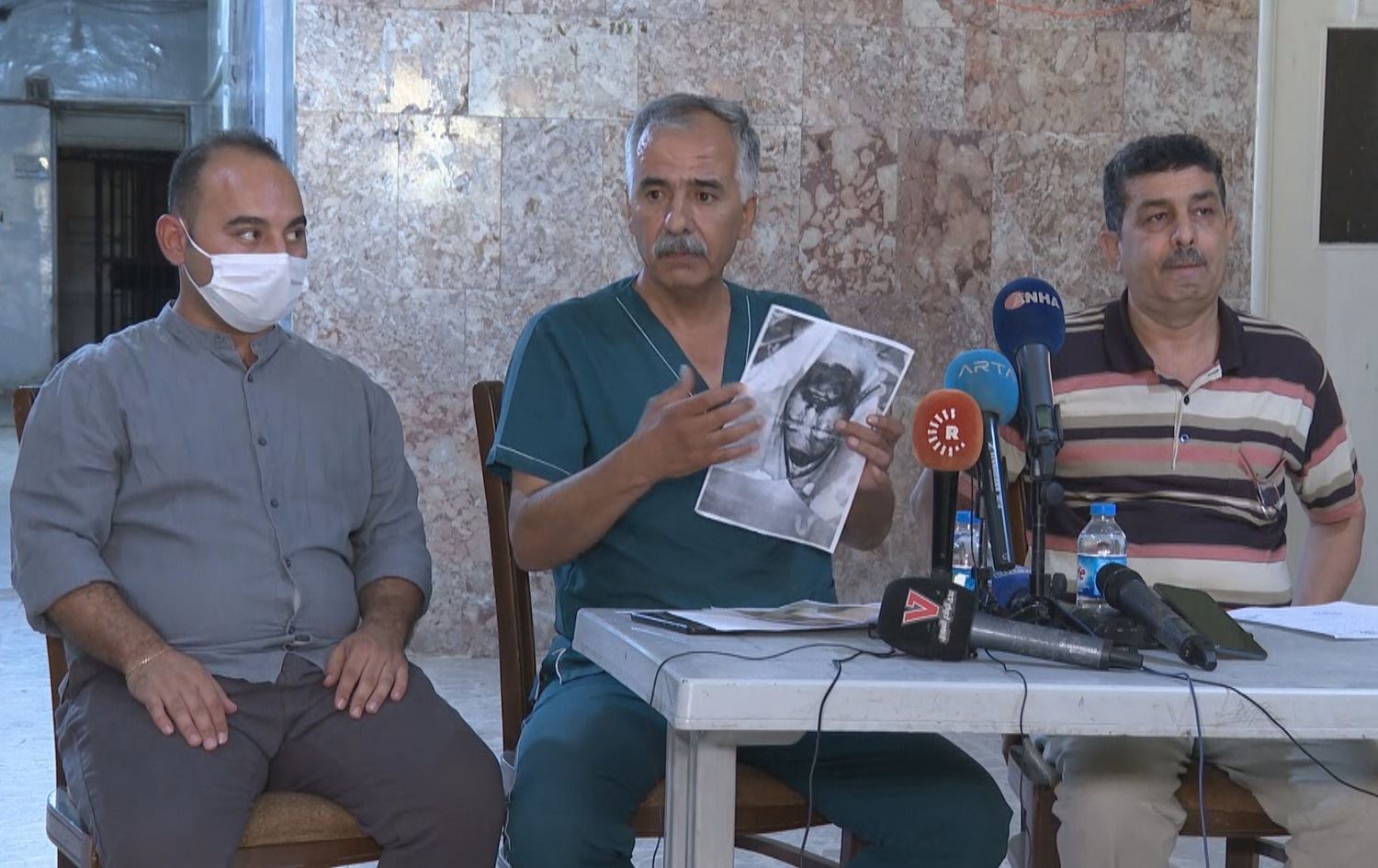
A Rojava medic holds up a photo of deceased prisoner Amin Issa Ali in a press conference on June 30, 2021 in Hasaka. Photo: Rudaw
ERBIL, Kurdistan Region — Kurdish authorities in northeast Syria (Rojava) dismissed as “baseless” claims that a prisoner died under torture in one of their jails, saying medical teams concluded the cause of death was stroke. The family said they are holding the Kurdish authorities responsible for his death.
“We assure the public opinion that what was circulated through social media sites and channels of incitement is baseless,” read a statement from the Autonomous Administration of North and East Syria on Tuesday.
Rojava authorities said Amin Issa Ali was arrested in Hasaka on May 22 on charges of corruption and bribery.
His brother was called into hospital on June 28 and told Ali was ill. At the hospital, “he was informed that Amin had died due to a stroke, and the hospital administration refused to hand over the body” without written approval from the military, the family said in a statement on Tuesday published by the Kurdistan Democratic Party of Syria (KDP-S).
The family said they sought a second medical opinion from another doctor who found nine signs of torture on Ali’s body. Photos published of Ali’s body appear to show burn marks, swelling, and bleeding.
The Rojava authorities said that Ali “was suffering from previous health problems” when he was arrested and claimed the purpose of the torture allegations is to “create sedition and distort” the image of the Syrian Democratic Forces (SDF) and Rojava.
They also said the photos were “fabricated.”
Ali’s cousin, Hazhar Amin, told Rudaw on Tuesday that he took the photos and washed the body himself. “There are torture marks on my cousin’s shoulders,” he said.
The forensic team who first examined Ali’s body, in a press conference on Wednesday, confirmed the cause of death as stroke and said they did not notice any burn marks on his body, but are ready to do a re-examination.
Ali was a member of the KDP-S. The party on Tuesday called on the US and international human rights organizations to intervene and “investigate the circumstances of this heinous crime.”
“We assure the public opinion that what was circulated through social media sites and channels of incitement is baseless,” read a statement from the Autonomous Administration of North and East Syria on Tuesday.
Rojava authorities said Amin Issa Ali was arrested in Hasaka on May 22 on charges of corruption and bribery.
His brother was called into hospital on June 28 and told Ali was ill. At the hospital, “he was informed that Amin had died due to a stroke, and the hospital administration refused to hand over the body” without written approval from the military, the family said in a statement on Tuesday published by the Kurdistan Democratic Party of Syria (KDP-S).
The family said they sought a second medical opinion from another doctor who found nine signs of torture on Ali’s body. Photos published of Ali’s body appear to show burn marks, swelling, and bleeding.
The Rojava authorities said that Ali “was suffering from previous health problems” when he was arrested and claimed the purpose of the torture allegations is to “create sedition and distort” the image of the Syrian Democratic Forces (SDF) and Rojava.
They also said the photos were “fabricated.”
Ali’s cousin, Hazhar Amin, told Rudaw on Tuesday that he took the photos and washed the body himself. “There are torture marks on my cousin’s shoulders,” he said.
The forensic team who first examined Ali’s body, in a press conference on Wednesday, confirmed the cause of death as stroke and said they did not notice any burn marks on his body, but are ready to do a re-examination.
Ali was a member of the KDP-S. The party on Tuesday called on the US and international human rights organizations to intervene and “investigate the circumstances of this heinous crime.”


Comments
Rudaw moderates all comments submitted on our website. We welcome comments which are relevant to the article and encourage further discussion about the issues that matter to you. We also welcome constructive criticism about Rudaw.
To be approved for publication, however, your comments must meet our community guidelines.
We will not tolerate the following: profanity, threats, personal attacks, vulgarity, abuse (such as sexism, racism, homophobia or xenophobia), or commercial or personal promotion.
Comments that do not meet our guidelines will be rejected. Comments are not edited – they are either approved or rejected.
Post a comment