


World

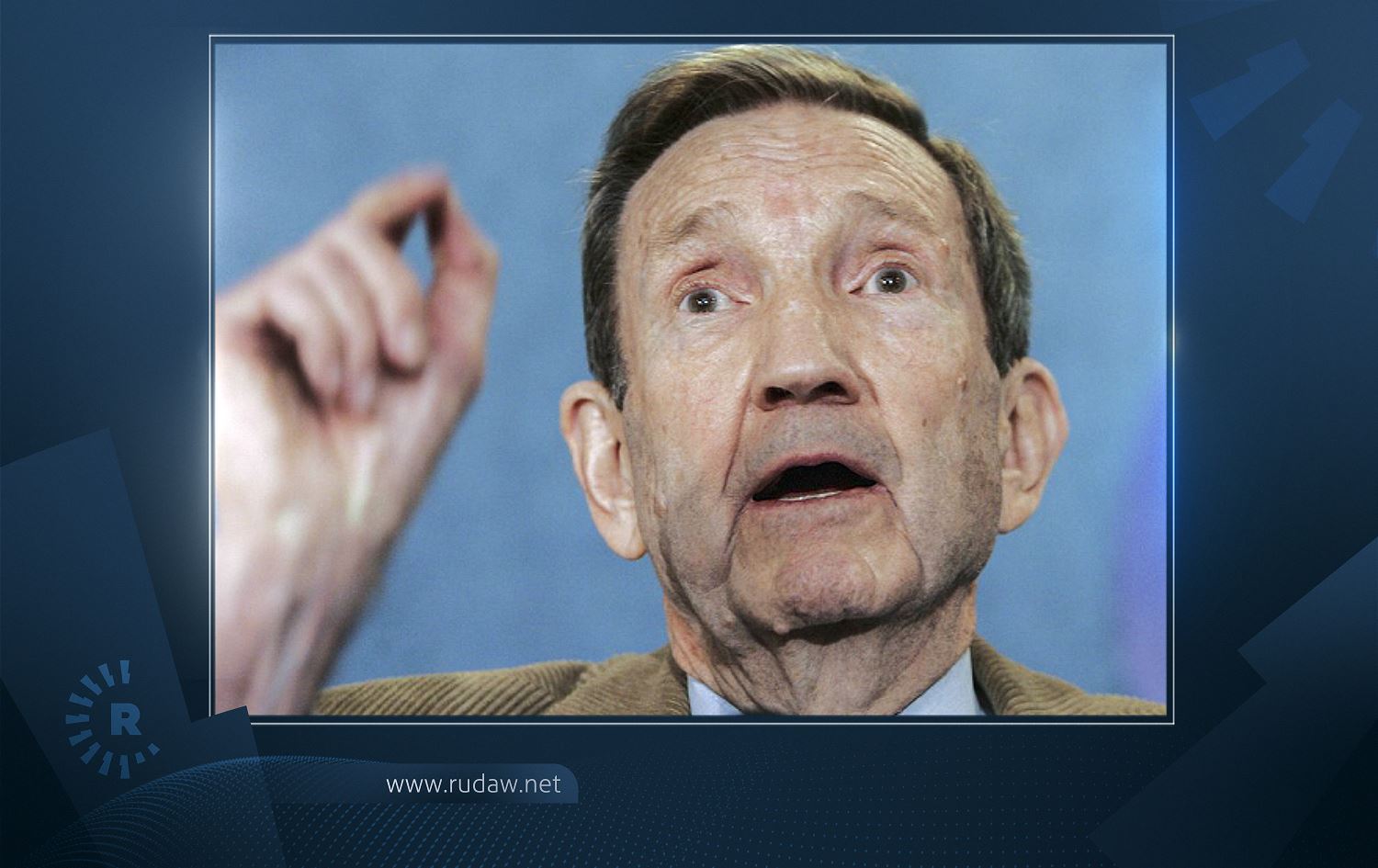
Former US Attorney General Ramsey Clark speaks during a press conference at the National Press Club in Washington on February 23, 2006. File photo: Manuel Balce Ceneta/AP
WASHINGTON — Ramsey Clark, who promoted civil rights as America's top law enforcement official in the 1960s but later helped defend Saddam Hussein and Slobodan Milosevic in court, has died at 93.
The often controversial liberal figure and former attorney general died April 9 at his home in New York City, a niece, Sharon Welch, told US media. No cause of death was given.
His political arc was extraordinary. While serving under president Lyndon Johnson, Clark's Justice Department prosecuted popular author and pediatrician Benjamin Spock for helping Vietnam War protesters evade the draft.
But he also filed the first school desegregation and voting rights suits in the US North.
Within years of leaving government in 1969, he had become a stunningly direct critic of US foreign policy, which he called "genocidal," and of military spending, which he termed "certifiably insane."
- Defender of the Unpopular -
He became a defender of unpopular figures and causes, including Saddam Hussein, Slobodan Milosevic, the ex-Yugoslav president accused of war crimes, and Mumia Abu-Jamal, a former Black Panther jailed in Pennsylvania for killing a policeman.
Everyone, however unpopular, deserved a proper defense, he insisted.
Clark's death was mourned Saturday by figures ranging from Palestinian activist Hanan Ashrawi, who tweeted that he was "an indefatigable defender of Palestinian & human rights," to Cuban President Miguel Diaz-Canel, who said Clark had "denounced the great injustices committed by his country worldwide."
Despite Clark's criticism of US policies, president Jimmy Carter turned to him to attempt to negotiate the release of the 53 American hostages held in Tehran in 1979.
Though his effort failed, Clark later returned to Iran on his own and said the continuing hostage taking was "understandable". He urged the US to apologize to Iran for misdeeds, drawing a warning from a furious Carter that he could be prosecuted for violating a travel ban.
Clark met with Communist officials in Hanoi during the Vietnam War and blasted US conduct there. He sued the US government for bombing Libya after a 1986 terror attack in Berlin, and he opposed the US wars with Iraq.
- Landmark rights law -
In 1990, then head of Amnesty USA John Healey called Clark "one of the most respected advocates for human rights in the world today."
The late civil rights leader Roy Wilkins once called Clark "the first powerful white man I had ever seen who took poor black people seriously."
Born in Dallas in 1927, Clark joined the Marine Corps in 1945 and served as a courier in Europe, where he witnessed the devastation wrought by the war.
Returning to the US, he earned a law degree from the University of Chicago. His father had been a Supreme Court justice who resigned to avoid an appearance of conflict of interest.
In 1961, Ramsey Clark went to work for Robert Kennedy's Justice Department, gaining a reputation as an efficient administrator, and in 1967 was named by Johnson, a fellow Texan, to head the department.
He was involved in drafting the landmark Civil Rights Act of 1968; he also ordered an end to federal executions.
Clark later ran twice for the US Senate from New York.
"Thank God I didn't win," he later said. "Frankly, I would have been bored."


Comments
Rudaw moderates all comments submitted on our website. We welcome comments which are relevant to the article and encourage further discussion about the issues that matter to you. We also welcome constructive criticism about Rudaw.
To be approved for publication, however, your comments must meet our community guidelines.
We will not tolerate the following: profanity, threats, personal attacks, vulgarity, abuse (such as sexism, racism, homophobia or xenophobia), or commercial or personal promotion.
Comments that do not meet our guidelines will be rejected. Comments are not edited – they are either approved or rejected.
Post a comment