


World

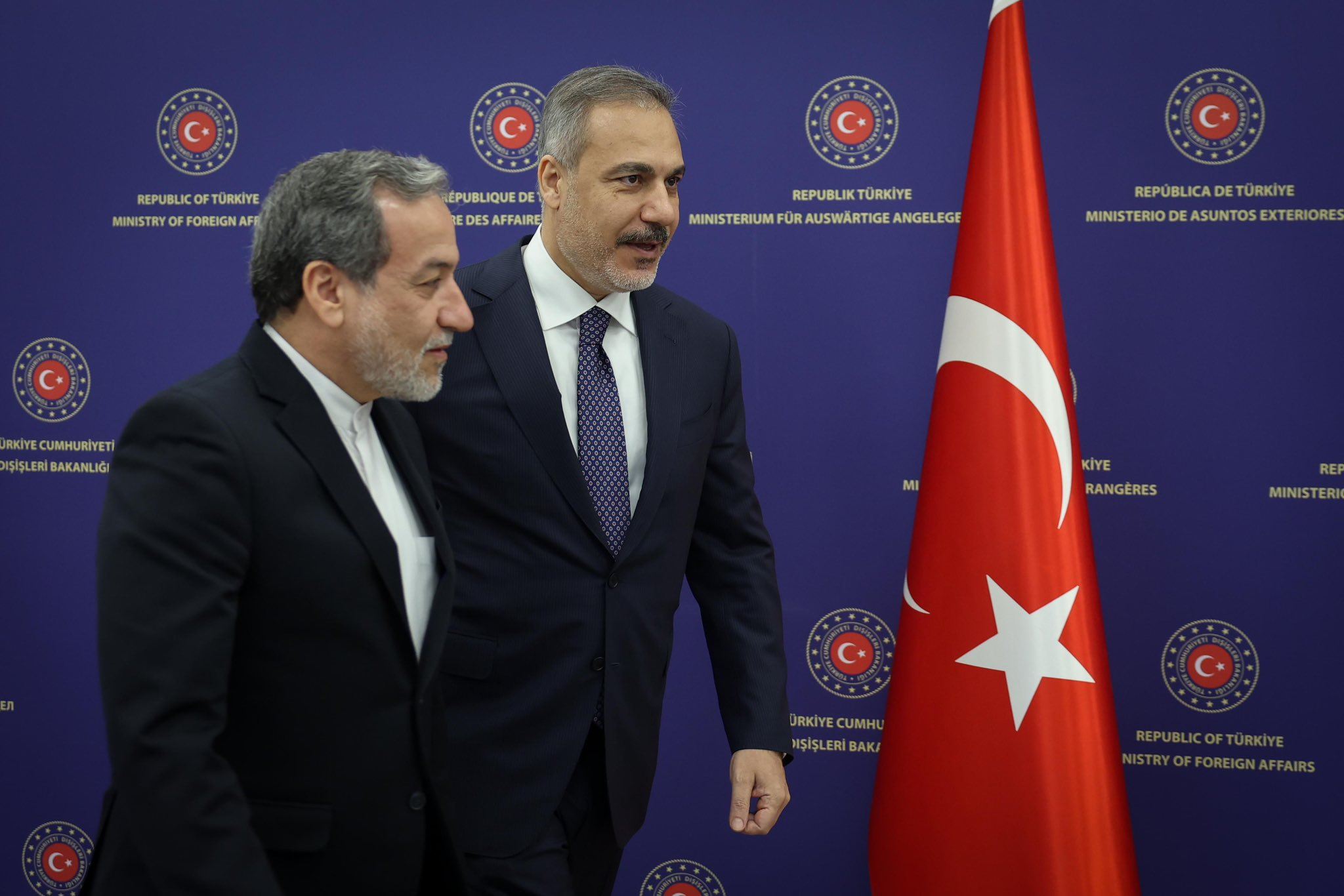
The Iranian Foreign Minister Abbas Araghchi (left) and his Turkish counterpart Hakan Fidan meeting in Ankara on December 2, 2024. Photo: Turkish foreign ministry
ERBIL, Kurdistan Region - The Iranian Foreign Minister Abbas Araghchi told his Turkish counterpart that Tehran’s right to use nuclear energy for “peaceful” purposes is “non-negotiable,” reaffirming his country’s commitment to a “win-win” deal with the US, said the Iranian foreign ministry on Monday.
The ministry said that Araghchi briefed Turkey’s Hakan Fidan on the ongoing “indirect” negotiations with the United States and the recent meeting held between Iran and the three European countries.
Araghchi reaffirmed “Iran’s right to the peaceful use of nuclear energy is inalienable and non-negotiable. He emphasized that should the other parties demonstrate genuine political will and respect for Iran’s legitimate rights under the Non-Proliferation Treaty (NPT), Iran remains ready to engage in a constructive, win-win interaction aimed at the full and effective lifting of sanctions,” according to a statement from his ministry.
For his party, Fidan reiterated Ankara’s readiness to help advance the process, added the ministry.
Indirect talks between Iran and the US over Tehran’s nuclear program began on April 12 in Oman.
The revived talks represent the most substantive engagement between the two countries since the unraveling of the 2015 nuclear deal under which Iran agreed to curb its nuclear activities in exchange for sanctions relief.
Diplomats from Iran and Europe's great powers - Britain, France and Germany - reportedly met in Istanbul on Friday. These three European countries, known as the E3, are not involved in US-Iran nuclear talks - the fourth round of which ended last week.
Speaking at the US-Saudi Investment Forum 2025 in Riyadh, the US President Donald Trump on Tuesday reiterated his warning to Iran, threatening "massive maximum pressure" if Tehran refuses to make a deal with Washington over its nuclear program and “continues to attack its neighbors.”
Iran’s Supreme Leader Ayatollah Ali Khamenei said on Saturday that the United States “must and will leave” the Middle East and described Trump’s remarks during his recent trip to the Middle East as “shameful.”
“Some of the remarks made during the US president’s trip to the region aren’t even worth a response at all. The level of those remarks is so low that they are a source of shame for the American nation,” Khamenei said on X.
US special envoy Steve Witkoff, who has led the American delegation in recent nuclear talks with Iran, told ABC News on Sunday that Iranian uranium enrichment is a "very clear redline" in the talks.
"We have one very, very clear red line, and that is enrichment. We cannot allow even 1 percent of an enrichment capability. We've delivered a proposal to the Iranians that we think addresses some of this without disrespecting them," he said.
The ministry said that Araghchi briefed Turkey’s Hakan Fidan on the ongoing “indirect” negotiations with the United States and the recent meeting held between Iran and the three European countries.
Araghchi reaffirmed “Iran’s right to the peaceful use of nuclear energy is inalienable and non-negotiable. He emphasized that should the other parties demonstrate genuine political will and respect for Iran’s legitimate rights under the Non-Proliferation Treaty (NPT), Iran remains ready to engage in a constructive, win-win interaction aimed at the full and effective lifting of sanctions,” according to a statement from his ministry.
For his party, Fidan reiterated Ankara’s readiness to help advance the process, added the ministry.
Indirect talks between Iran and the US over Tehran’s nuclear program began on April 12 in Oman.
The revived talks represent the most substantive engagement between the two countries since the unraveling of the 2015 nuclear deal under which Iran agreed to curb its nuclear activities in exchange for sanctions relief.
Diplomats from Iran and Europe's great powers - Britain, France and Germany - reportedly met in Istanbul on Friday. These three European countries, known as the E3, are not involved in US-Iran nuclear talks - the fourth round of which ended last week.
Speaking at the US-Saudi Investment Forum 2025 in Riyadh, the US President Donald Trump on Tuesday reiterated his warning to Iran, threatening "massive maximum pressure" if Tehran refuses to make a deal with Washington over its nuclear program and “continues to attack its neighbors.”
Iran’s Supreme Leader Ayatollah Ali Khamenei said on Saturday that the United States “must and will leave” the Middle East and described Trump’s remarks during his recent trip to the Middle East as “shameful.”
“Some of the remarks made during the US president’s trip to the region aren’t even worth a response at all. The level of those remarks is so low that they are a source of shame for the American nation,” Khamenei said on X.
US special envoy Steve Witkoff, who has led the American delegation in recent nuclear talks with Iran, told ABC News on Sunday that Iranian uranium enrichment is a "very clear redline" in the talks.
"We have one very, very clear red line, and that is enrichment. We cannot allow even 1 percent of an enrichment capability. We've delivered a proposal to the Iranians that we think addresses some of this without disrespecting them," he said.


Comments
Rudaw moderates all comments submitted on our website. We welcome comments which are relevant to the article and encourage further discussion about the issues that matter to you. We also welcome constructive criticism about Rudaw.
To be approved for publication, however, your comments must meet our community guidelines.
We will not tolerate the following: profanity, threats, personal attacks, vulgarity, abuse (such as sexism, racism, homophobia or xenophobia), or commercial or personal promotion.
Comments that do not meet our guidelines will be rejected. Comments are not edited – they are either approved or rejected.
Post a comment