
ERBIL, Kurdistan Region - Iraq has reaffirmed its commitment to maritime security and freedom of navigation during a United Nations Security Council session on Wednesday, warning that disruptions to key waterways pose a direct threat to its economy.
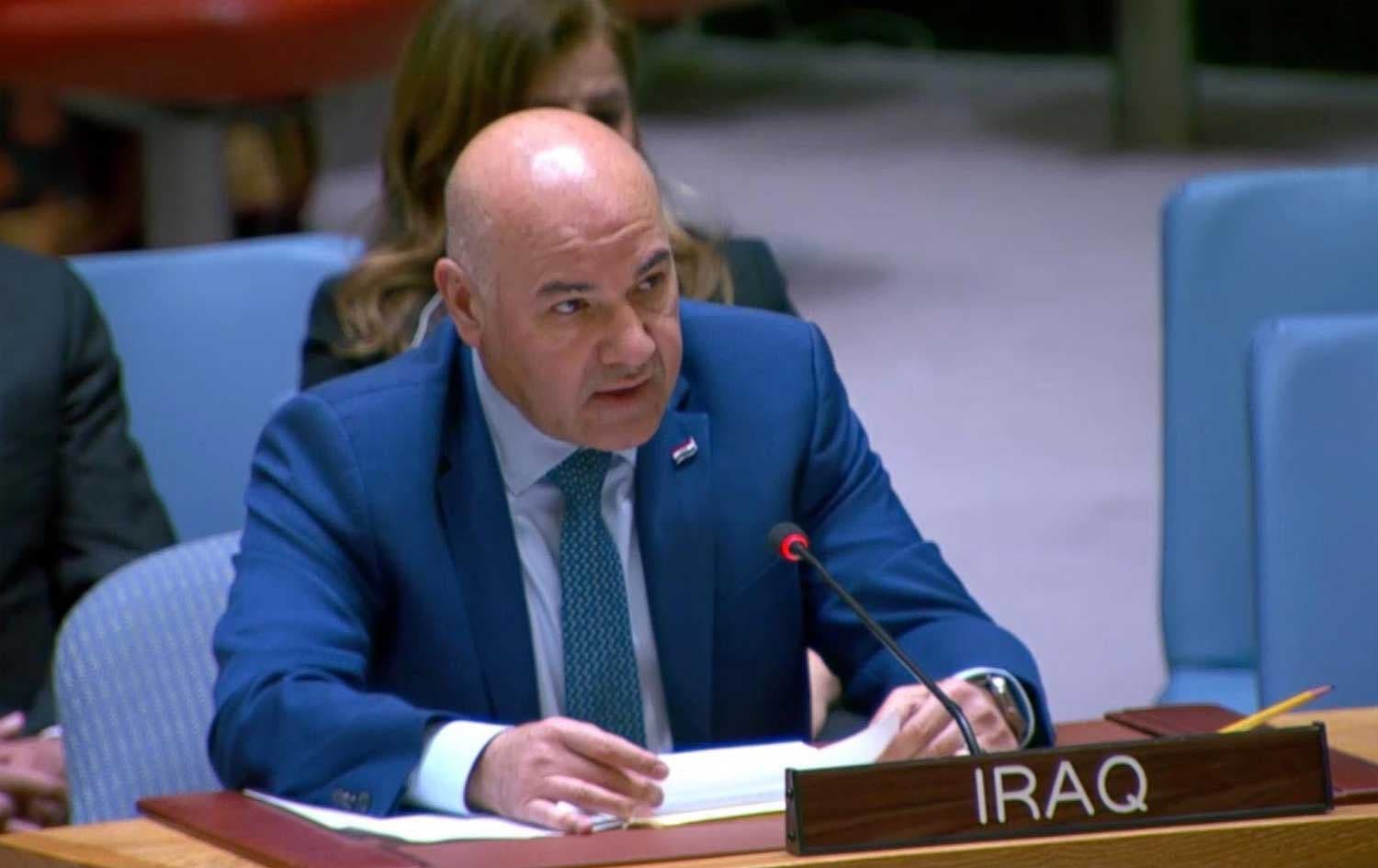
Speaking at a session on Maintenance of international peace and security: Maritime security on Wednesday, Iraq’s Permanent Representative to the United Nations, Luqman al-Faily, stressed “the paramount importance Iraq attaches to maritime security and freedom of navigation,” according to a statement from the Iraqi foreign ministry.
Faily said Iraq remains fully committed to ensuring “freedom of navigation in international waterways, particularly in the Arabian Gulf region and the Strait of Hormuz.”
He cautioned that “any threat to these waterways represents a direct risk to the stability of the Iraqi economy,” noting that they are the primary route for Iraq’s oil exports and foreign trade.
The Iraqi ambassador’s remarks come amid heightened regional tensions in the aftermath of the large-scale aerial campaign launched by the United States and Israel against Iran in late February, targeting more than 17,000 sites across the country during six weeks of hostilities.
In response, Tehran carried out thousands of drone and missile strikes across the Middle East, targeting alleged US assets - particularly in Gulf Arab states - as well as launching retaliatory attacks against Israel.
The US and Iran agreed to a Pakistan-mediated ceasefire on April 8, halting fighting to allow space for talks. While the first round of discussions ended without a final agreement on April 11, Islamabad has since stepped up efforts to facilitate a second round of negotiations between American and Iranian officials, though these efforts have yet to yield tangible results.
In parallel with the talks, Iran and the US have engaged in reciprocal maritime restrictions. In the Strait of Hormuz, Tehran has tightened controls on shipping, while Washington has enforced a naval blockade on Iranian ports, with US Central Command reporting on Wednesday that American forces have redirected 42 vessels since the embargo took effect on April 13.
Faili on Wednesday called for “the activation of dialogue and cooperation mechanisms among the coastal states of the Gulf,” noting Iraq’s rejection of “any illegal measures that would obstruct international trade” and warning that such actions have negative impacts on global supply chains and contribute to rising energy and food prices.
Prior to the six-week war, Iraq produced around 4.5 million barrels of oil per day (bpd), exporting roughly 3.5 million of them daily. Nearly 90 percent of those exports pass through the Strait of Hormuz. However, due to the disruption in the key waterway, exports fell to 18.6 million barrels in March, generating about $1.96 billion in revenue, compared with more than 99 million barrels and $6.81 billion in February.
As a result, Baghdad has in recent months been ramping up efforts to diversify export routes. Shipments via Syria began in late March, with tanker convoys transporting crude to the Mediterranean port of Baniyas. Officials say around 700 tankers per day have been moving oil through the al-Waleed border-al-Tanf crossing toward Syria.
Iraq has also explored alternative routes through Jordan and Turkey as part of a broader strategy to reduce reliance on the strait.
Despite ongoing tensions, some shipments have continued. On Friday, a tanker identified as HELGA arrived at Basra’s offshore terminals to load two million barrels of crude after receiving approval to pass through the Strait of Hormuz.
RELATED: Iraq exports limited volumes of oil through Basra ports
.jpg&w=3840&q=75)