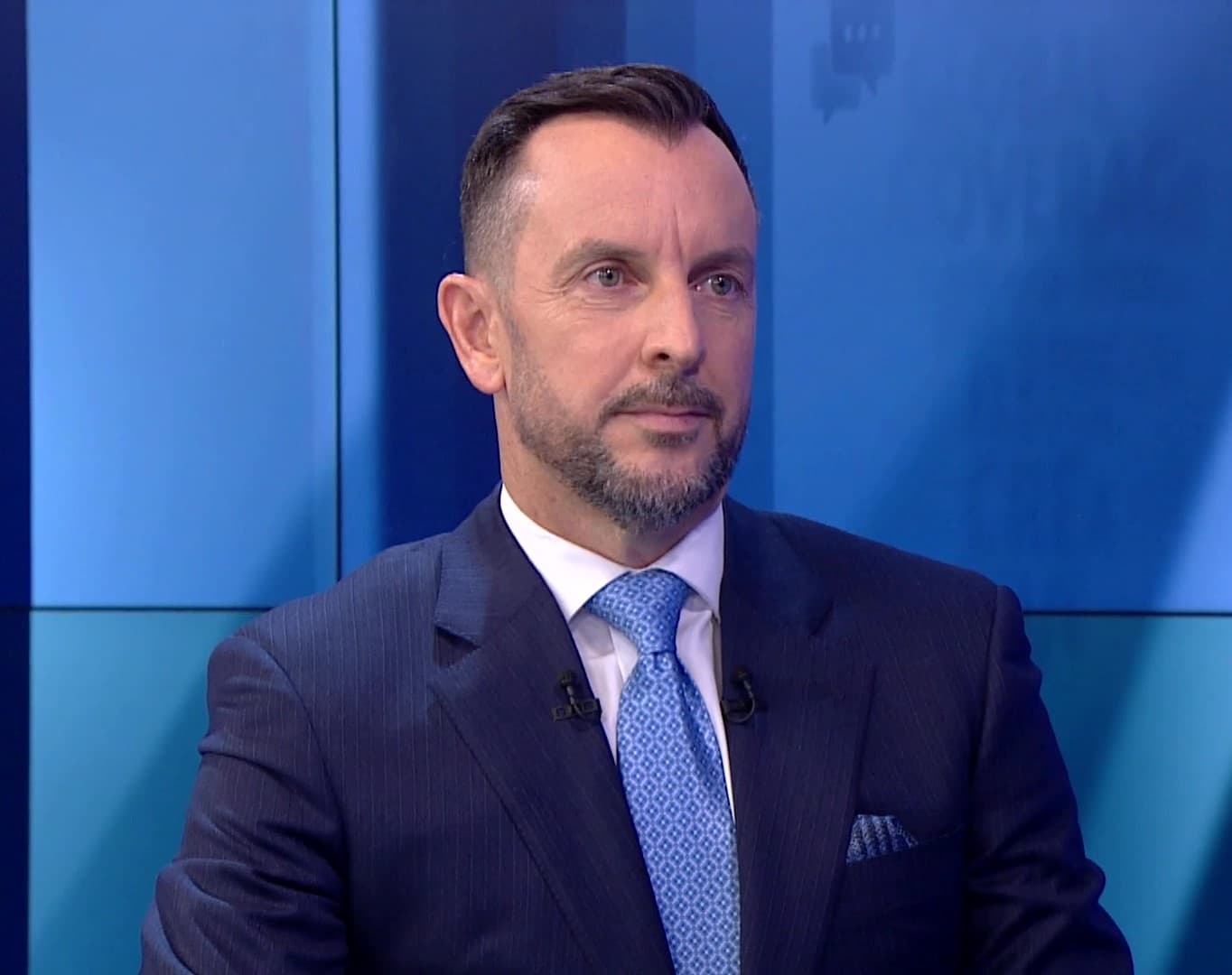
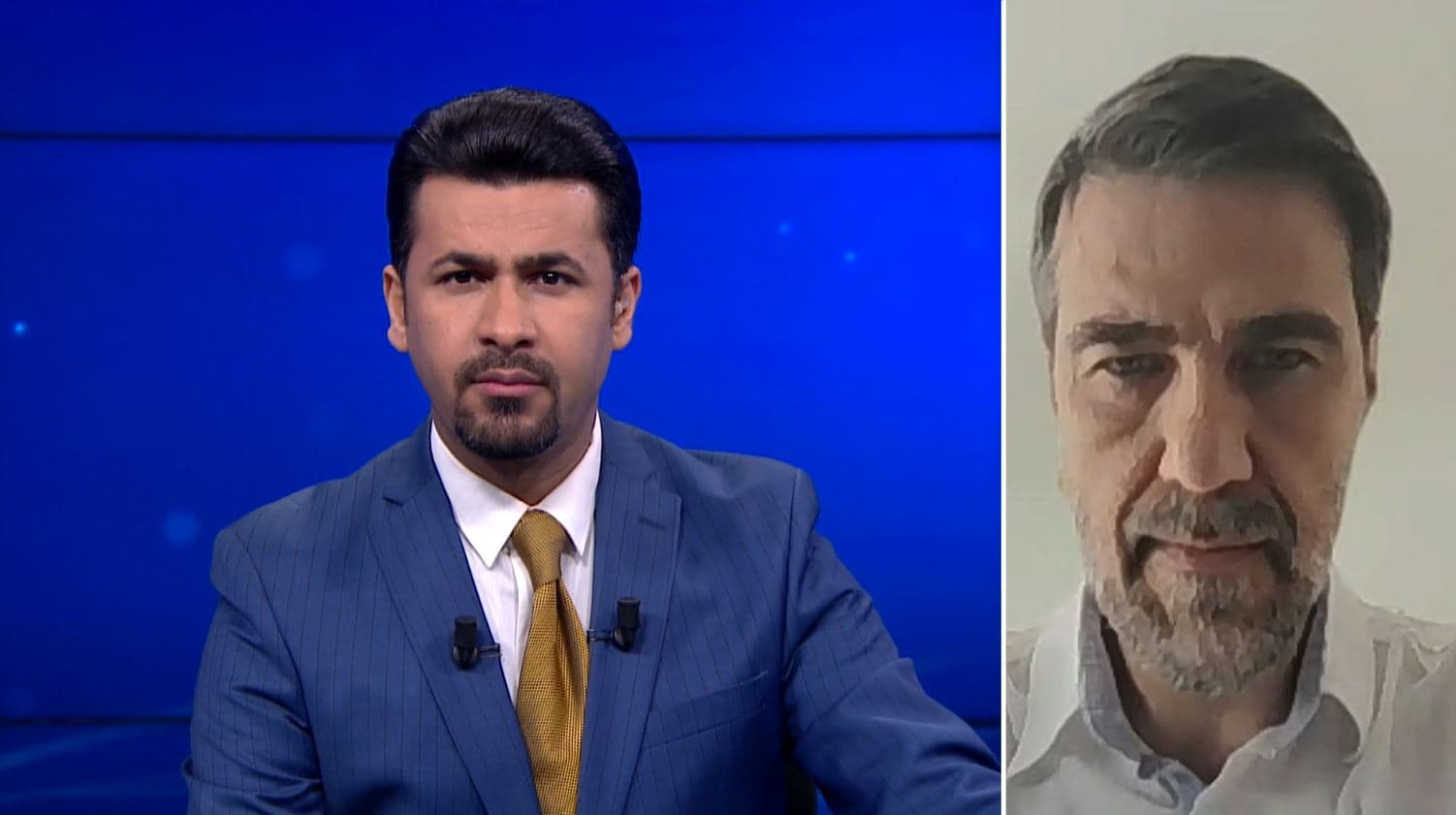
STRASBOURG, France - European Parliament Member Abir al-Sahlani called on the EU to take stronger measures to protect Kurds in northeast Syria (Rojava), warning that humanitarian suffering continues under the ongoing siege of Kurdish-majority areas.
“We are giving Syria a lot of money and I think that the EU must demand a ceasefire in Kobane and Rojava… but also to demand the de facto lifting of the siege that they have on the area causing tremendous humanitarian suffering,” Sahlani told Rudaw on Friday.
She stressed that European institutions must turn statements into action, urging the European External Action Service to enforce humanitarian guarantees.
Sahlani defended recent parliamentary resolutions on Rojava as influential tools. “We are the only institution where you have directly elected representatives… I do believe this could be very helpful,” she said, emphasizing the EU’s leverage through financial aid and diplomatic pressure.
She also warned against underestimating the ideological threat of returning the Islamic State (ISIS) fighters. “The danger of Daesh [ISIS] is real… It is a political failure of the EU to allow this fundamentalist to grow in the EU,” Sahlani said, highlighting the importance of inclusive societies both in Europe and the Middle East.
Sahlani also noted that her advocacy for the Kurdish cause is a personal fight. “I am married to a Kurdish husband… and my children are half-Kurdish. Before, it was for me an ideological fight… but now, it is a personal fight,” she said, framing her work as a defense of Kurdish rights and self-determination.
The following is a full transcript of the interview with Abir al-Sahlani:
Rudaw: Let's start with a very symbolic gesture of you this week in this building in parliament while you were debating. You wore Kurdish traditional clothing, and you did that among people who are wearing suits and there are diplomatic protocols in this building. What was your message? Why you thought it is important to wear Kurdish clothing for that day?
Abir al-Sahlani, European Parliament Member: Thank you for having me, first of all. But for me, it is much more important to support the Kurdish cause and the people of Kurdistan, much more important than following the protocols. Because of the debate did not mention at all the Kurds or the Kurdistan region at all. For me, it was important to point to the most important matter, which is the Kurds.
We also heard that you said the Kurds are always saying "our only friends are mountains," but you have us here. What does that mean in concrete actions?
For me, I think it is very important to remind the house (European Parliament) what the Kurds have been saying, what they have done, and the history of their struggle for freedom and independence. Because not everyone is aware. And to remind this house of democracy about that, the sacrifices that the Kurdish people have given for many, many decades, it's nothing new. And also to push the European Commission to take concrete actions.
We all were a little bit relieved when [Syrian interim President Ahmed] al-Sharaa came to power in Syria and we thought that okay, now when Bashar al-Assad is not there, then we might have peace. But unfortunately, that was driven by European interest, not by the interest of the people there. Because everyone understands that having a former Islamist combatant, it's not a good guarantee for democratic, inclusive societies. So if you don't have it in you as an ideology, then you won't also be able to build it. So it is important to remind the European institutions and above all the external action service that statements is actually being neutral.
You need actions, concrete actions. And now we are giving Syria a lot of money and I think that the EU must demand a ceasefire in Kobane and Rojava on one hand, but also to demand the de facto lifting of the siege that they have on the area causing tremendous humanitarian suffering.
You already voted on a resolution about Northeast Syria, and do you think such a resolution has teeth to prevent, for example, a massacre against Kurds in Syria?
I think it could be helpful.
It could be helpful.
It could be helpful because we are the only institution where you have directly elected by our citizens representatives. The commission is appointed, the council is appointed, but we are the ones that are directly elected. And the external action service, they listen a lot to the parliament and what kind of messages we are sending. So I do believe this could be very helpful.
It could be very helpful. What are the tools which the European Union has to pressure the Damascus government?
Well, we have our embassies there, we have our also representation as European Union. Above all, what we have is the money that we are paying to the government now. This is the, I mean, this is our leverage. But I think that also cooperating with like-minded countries in the UN can also exercise pressure on the government in Syria.
Which conditions and which guarantees should the Syrian government give Europe to send them the money?
Well, I mean, a ceasefire to guarantee that there are no military attacks against these areas against the Kurdish component. It will be very important lifting of the siege and letting humanitarian aid in so people do not have to starve or, you know, freeze to death. That will be very, very important. But also having welcome centra where when the Kurds are fleeing now, you know, to different neighboring countries, that you have also welcoming centra that will welcome these refugees, give them first help, like, you know, clothes, food, help them to take the next steps.
I heard from some MEPs during your debate saying, yeah, we have to give al-Sharaa a chance to build peace and stability in Syria. Why don't you give him a chance?
Well, I would love to give a chance to someone who really wants to and understands the value of having inclusive societies where all components are defended, are protected, their rights are defended and protected, and they are allowed to be there around the decision-making table on equal grounds. For that political leader, I would love to give one, two, three chances. But the Syrian leader, he has had the chance for several months now, over a year. And we have been paying money for over a year. And still, we are seeing these atrocities committed against the Kurdish population, but also some other components as well. So maybe he is either incompetent or they, the government does not believe in what we are demanding.
I am also hearing from people in European media or Western media saying, yeah, the left parties and the Christian parties are exaggerating when it comes to returning of ISIS fighters to Europe because they are already controlled by Damascus, by the Iraqi government, and also still by SDF, and in the future maybe also by the Kurdistan region. So the fear is not real and you are just using it like, to make a show in parliaments. What's your reaction about that?
Well, I think those who say this are just afraid of refugees coming here. You have to understand that there are many politicians who are to the right who are just wanting to do everything that it takes, even a massacre, even a genocide, to prevent people from the Middle East coming as refugees to Europe. That is how afraid they are of people from the Middle East. They don't really care. But the danger of Daesh is real. We know it's not only a military danger, it's an ideological danger. And one of the proofs for what I'm saying is that from Sweden, there were 300 Daesh fighters who were born, raised, went to school, kindergarten, married, had all their lives in Sweden. What were they doing fighting for Daesh? How come? Because it is a political failure of the EU to allow this fundamentalist to grow in the EU. To not build inclusive societies in Europe where also we, who come from the Middle East, feel welcome, feel part of the democracy, feel protected by the law.
You mentioned migration, and they are also saying by giving a chance to Ahmed al-Sharaa and his government, we are preventing more migrants to come to Europe.
Exactly. Not only that.
Stability in Syria means no migrants.
Not only that, not only that. They are not only preventing, but they are also planning on building refugee centra that they can deport people to.
Migration zones, let's say, yeah.
So I mean, I think this is how cynical the far right is in Europe. And we have to be very, very aware that the far right is really that cynical. That they will rather support an extremist than actually build it through democracy.
Okay, let's go back to your roots, to Basra. A beautiful city, of course, with a very rich history. And I also know a little bit about the history of your family, real fighters for freedom and against dictatorship. Is that, besides you are, I know also in Europe you are fighting for human rights, for rights of women, and it is not the first time that you are supporting a Kurdish, let's say, case in the parliament and also outside. Does that have anything to do with where you come from, from Basra, or it's more than that?
Maybe no, no, it's not maybe Basra, but the fact that my...
I mean also your political background.
Of course, my father, my uncles, and my mother. I remember I was four years old and my parents bought me the first traditional dress from the Middle East ever. And it was a Kurdish one. And we are Arabs, I mean, we don't really have any background in Kurdistan. And the fight for the self-determination of the Kurdish people has always been a part of my family's discussions around the dinner table. I mean, it was always part of my history. But also my present, because I am married to a Kurdish husband, he's from Duhok. And my children are half-Kurdish.
So before, it was for me an ideological fight, you know, I really believe in people's right to self-determination. But now, it is a personal fight, because my children are half-Kurds and my husband is Kurdish and my family is now Kurdish as well. So, besides that, but there is a symbolic... the Kurds really symbolize how people have been treated throughout from colonialism to modern history. And how a forgotten people, how their destiny can be shaped and how they can be forgotten or used for European or white people's purposes.