Middle East
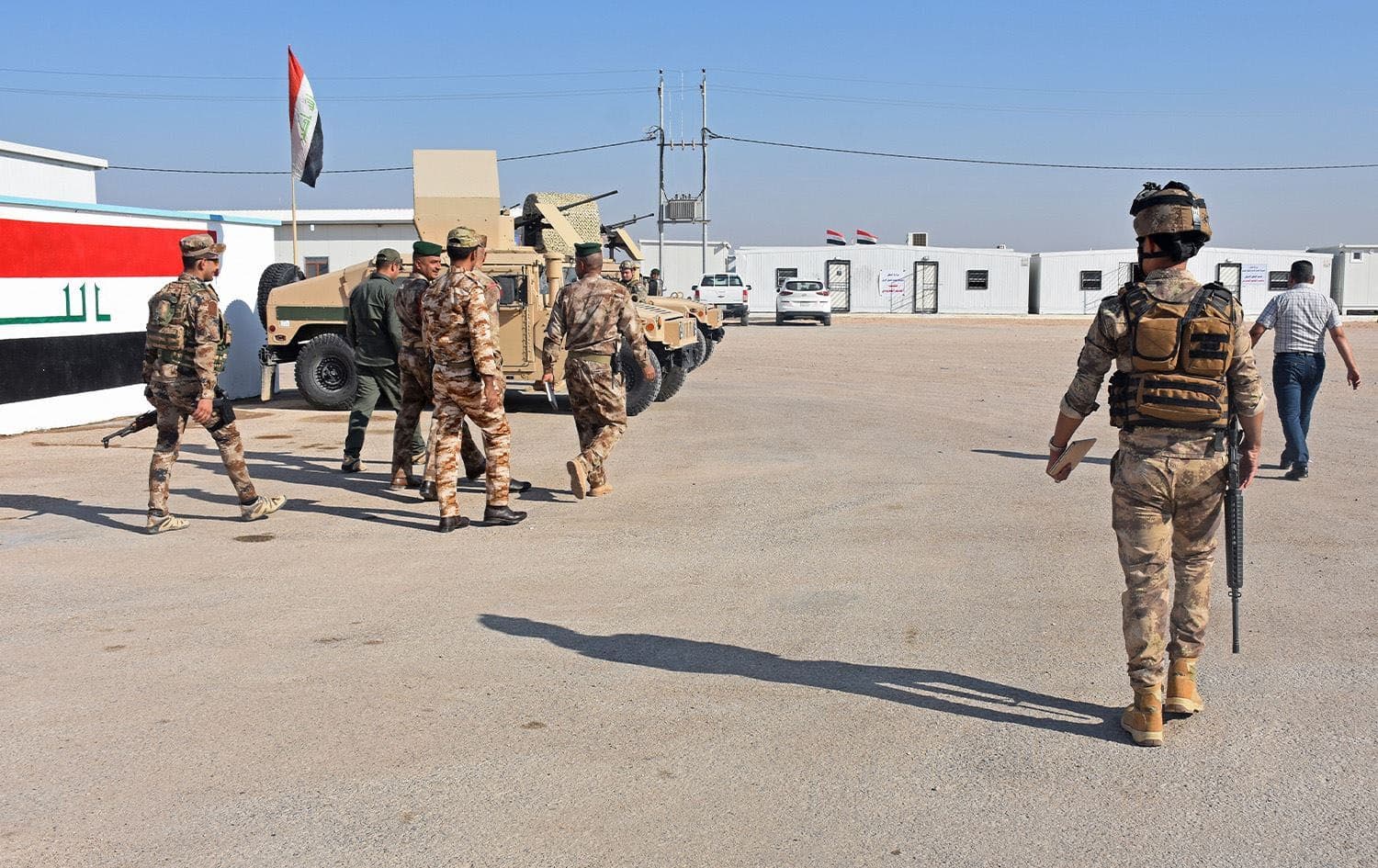
Iraqi security forces walk on the Iraqi side of the border-crossing between al-Qaim in Iraq and al-Bukamal in Syria, on September 30, 2019. Photo: AFP
ERBIL, Kurdistan Region - Syria’s border authority announced Thursday that the main Syria-Iraq border crossing will be reopened Saturday. It was closed late last year after the ouster of Bashar al-Assad’s regime.
“The authority confirms the readiness of its personnel and all service facilities at the crossing and calls upon travelers and truck drivers to comply with approved instructions and procedures to ensure smooth movement and safe passage,” read a statement from the Syrian border authority.
The crossing lies in Syria’s al-Bukamal city, southeast of Deir ez-Zor province, across from Iraq’s al-Qaim town, northwest of Anbar.
Turki al-Khalaf, the district mayor of Qaim, told Rudaw on Thursday that he was aware that the crossing would officially be reopened on Saturday for travelers, trade, and cargo vehicles. He added that preparations are complete and, barring any unforeseen incidents, the reopening will proceed as planned.
The Qaim crossing is one of Iraq’s “important crossings,” Khalaf said, adding that its reopening will have a significant impact on Iraq’s commercial and economic movement in general and on Anbar province in particular.
Alaadin al-Qaisi, spokesperson for Iraq’s border ports authority, said that they have not yet received official confirmation. “We are aware of that announcement by the Syrian side; this is specific to them, but until now we have not officially received anything [official letter],” he told Rudaw on Thursday.
Iraq immediately closed its western border and tightened security in late November when the now-dissolved Islamist group Hay’at Tahrir al-Sham (HTS) made a dramatic grab for territory in northern Syria before toppling dictator Assad’s regime in December.
Ahmad al-Sharaa - who led the HTS during the anti-Assad offensive - has declared himself the interim president of Syria. He is also mending ties with Iraq, which used to be one of the regional allies of Assad.
On Monday, Sharaa received Iraq’s veteran politician Izzat al-Shabandar in Damascus as Iraqi Prime Minister Mohammed Shia' al-Sudani's special envoy.
Shabandar later told Rudaw that his meeting with Sharaa was "very beneficial for building economic, political, and social relations between Iraq and Syria.
The aim of the visit was "to discuss matters that contribute to bringing viewpoints closer and strengthening relations between the two brotherly countries," Shabandar added.
However, Sudani’s office has not commented on the meeting.
In April, Sharaa met with Sudani for the first time in Qatar. At the time, Sudani urged Sharaa to take “practical and serious” steps in the fight against the Islamic State (ISIS), which HTS was part of in 2012 until splitting from the group in 2013.
The two leaders had discussed border security and the resumption of trade between the neighboring countries, according to the Syrian presidency.
Syria and Iraq have another border crossing controlled by Kurdish administrations from both sides.
“The authority confirms the readiness of its personnel and all service facilities at the crossing and calls upon travelers and truck drivers to comply with approved instructions and procedures to ensure smooth movement and safe passage,” read a statement from the Syrian border authority.
The crossing lies in Syria’s al-Bukamal city, southeast of Deir ez-Zor province, across from Iraq’s al-Qaim town, northwest of Anbar.
Turki al-Khalaf, the district mayor of Qaim, told Rudaw on Thursday that he was aware that the crossing would officially be reopened on Saturday for travelers, trade, and cargo vehicles. He added that preparations are complete and, barring any unforeseen incidents, the reopening will proceed as planned.
The Qaim crossing is one of Iraq’s “important crossings,” Khalaf said, adding that its reopening will have a significant impact on Iraq’s commercial and economic movement in general and on Anbar province in particular.
Alaadin al-Qaisi, spokesperson for Iraq’s border ports authority, said that they have not yet received official confirmation. “We are aware of that announcement by the Syrian side; this is specific to them, but until now we have not officially received anything [official letter],” he told Rudaw on Thursday.
Iraq immediately closed its western border and tightened security in late November when the now-dissolved Islamist group Hay’at Tahrir al-Sham (HTS) made a dramatic grab for territory in northern Syria before toppling dictator Assad’s regime in December.
Ahmad al-Sharaa - who led the HTS during the anti-Assad offensive - has declared himself the interim president of Syria. He is also mending ties with Iraq, which used to be one of the regional allies of Assad.
On Monday, Sharaa received Iraq’s veteran politician Izzat al-Shabandar in Damascus as Iraqi Prime Minister Mohammed Shia' al-Sudani's special envoy.
Shabandar later told Rudaw that his meeting with Sharaa was "very beneficial for building economic, political, and social relations between Iraq and Syria.
The aim of the visit was "to discuss matters that contribute to bringing viewpoints closer and strengthening relations between the two brotherly countries," Shabandar added.
However, Sudani’s office has not commented on the meeting.
In April, Sharaa met with Sudani for the first time in Qatar. At the time, Sudani urged Sharaa to take “practical and serious” steps in the fight against the Islamic State (ISIS), which HTS was part of in 2012 until splitting from the group in 2013.
The two leaders had discussed border security and the resumption of trade between the neighboring countries, according to the Syrian presidency.
Syria and Iraq have another border crossing controlled by Kurdish administrations from both sides.
Comments
Rudaw moderates all comments submitted on our website. We welcome comments which are relevant to the article and encourage further discussion about the issues that matter to you. We also welcome constructive criticism about Rudaw.
To be approved for publication, however, your comments must meet our community guidelines.
We will not tolerate the following: profanity, threats, personal attacks, vulgarity, abuse (such as sexism, racism, homophobia or xenophobia), or commercial or personal promotion.
Comments that do not meet our guidelines will be rejected. Comments are not edited – they are either approved or rejected.
Post a comment