ERBIL, Kurdistan Region – Syria’s permanent envoy to the United Nations on Tuesday called on the Iraqi and Lebanese governments to deploy official state forces along Syrian borders and prevent the spread of militia groups there, amid ongoing regional instability.
Addressing a UN Security Council meeting on the situation in the Middle East, Ibrahim Olabi said Damascus welcomes extending the US-Iran ceasefire to Lebanon, adding that Syria has “always supported efforts aimed at preserving Lebanon’s unity, sovereignty, and territorial integrity, as well as protecting its security and the safety of its people.”
He also called on neighboring Beirut and Baghdad to deploy state forces to their borders with Syria.
“We also support limiting weapons to the hands of the state in Iraq and call on both brotherly countries, Iraq and Lebanon, to deploy forces in the border areas with Syria and prevent militias from spreading there,” Olabi said.
Syria shares a roughly 600-kilometer border with Iraq, much of it stretching across remote desert areas that have long been used by armed groups and smugglers.
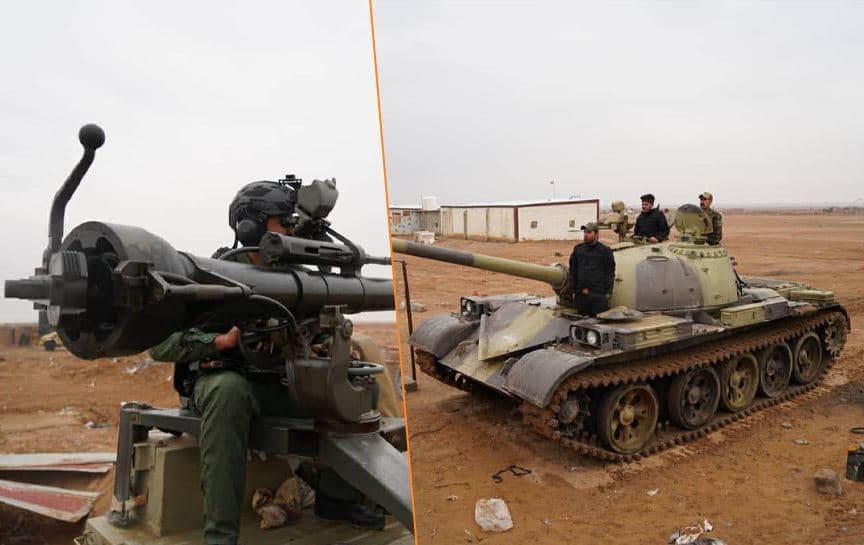
When Syrian armed groups — spearheaded by the Sunni Hay’at Tahrir al-Sham (HTS) — toppled Syrian dictator Bashar al-Assad in December 2024, the Iraqi Shiite-led Popular Mobilization Forces (PMF), a former paramilitary force now integrated into Iraq’s security apparatus, was alarmed and deployed troops to the Syrian border to prevent the crossing of “terrorists” into Iraq.
Assad is from the Alawite sect, which is considered a syncretic, esoteric branch of Shia Islam, and his government had long been backed by Iran and allied militias across the region.
The Iraqi government — dominated by Shiite parties — has largely avoided direct tensions with the new authorities in Damascus. However, some Iran-aligned armed groups in Iraq have issued threats against the now-dissolved HTS and warned against instability spilling across the border.
Calls to restrict weapons to state control have gained renewed attention in both Iraq and Lebanon, where powerful non-state armed groups continue to operate alongside official security forces, complicating efforts to fully centralize military authority.
This story was updated at 10:58 am