
Iran entered a conflict with the US and Israel during a deep economic recession, standing on the ruins of a 10-year economic crisis that the International Monetary Fund (IMF) in its October 2025 report described as a prolonged recession. According to forecasts, Iran's economic growth for 2025 was between 0.3 percent and 0.6 percent, which is a very low rate. The World Bank had warned that in 2026, Iran's economy would move toward a deepening recession.
Iran's economic statistics are alarming: the average inflation rate at the end of 2025 reached 48.6 percent, and food prices rose by 70 percent. The most dangerous aspect of the crisis is the collapse of the currency's value. While before the Islamic republic of Iran came to power in 1979, the price of one dollar was 7 tomans, in December 2025, it rose to 175,000 tomans.
The International Monetary Fund, in its latest report, indicated that for Iran to maintain a budget balance, it needs the price of each barrel of oil to be $163, which is double the global price.
Oil and sanctions
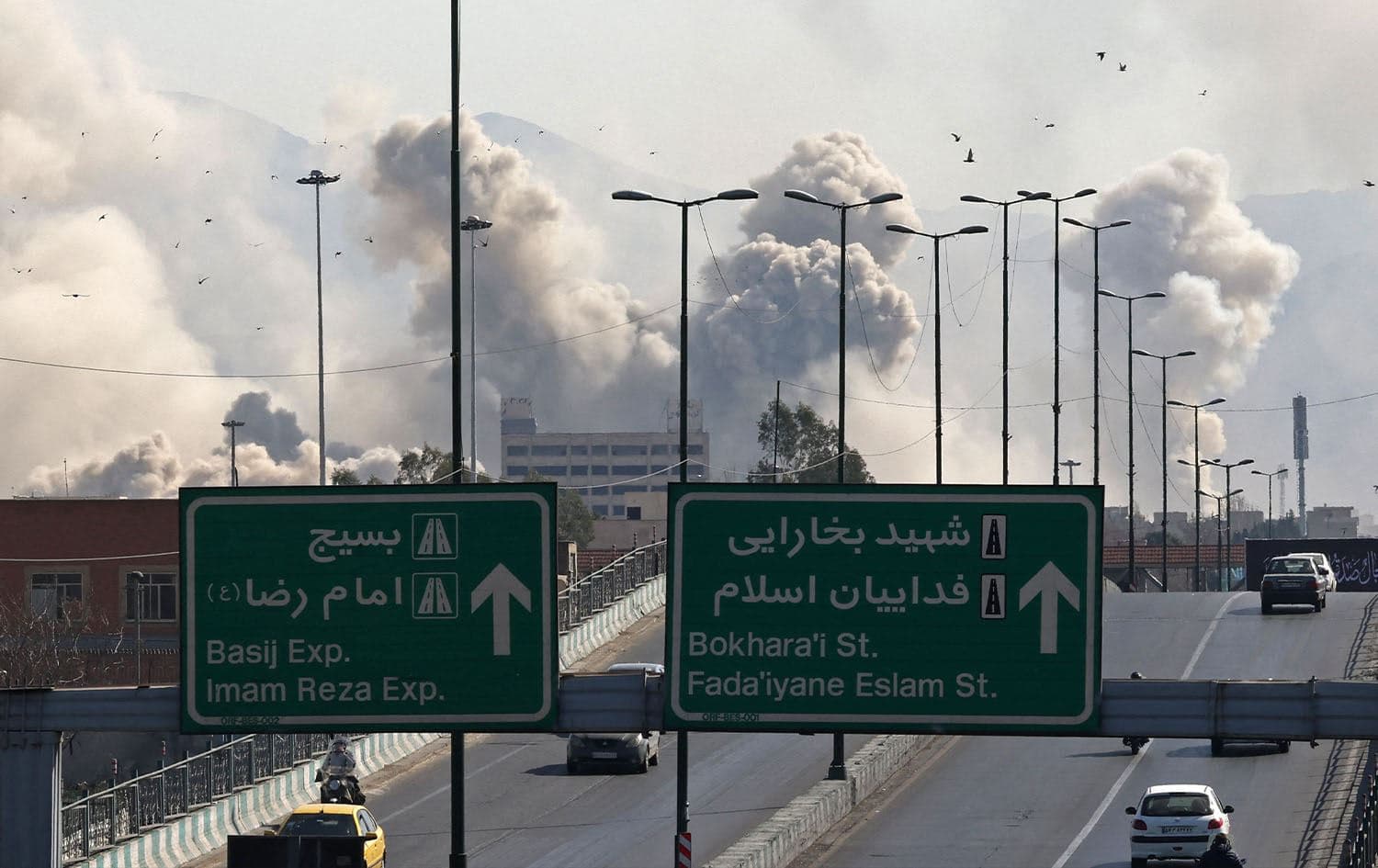
Oil, which is Iran's economic backbone, has become the main cause of the collapse. According to the budget table and several different sources, the Iranian government allocated 51 percent of oil and gas revenues to the Iranian Revolutionary Guard Corps (IRGC) and related military and security apparatus in the 2025 budget, leaving a small portion for public services. Sanctions from 2018 until now have cost Iran's oil revenues nearly $450 billion. With the start of the war on February 28, Iran's oil exports fell from 1.5 million barrels to only 102,000 barrels per day.
This situation has put pressure on people's livelihoods. Iran's Ministry of Labor and Social Affairs announced in 2024 that 57 percent of people suffered from malnutrition. Power cuts, rising medicine prices, and the collapse of the national currency's value at the end of 2025 caused widespread discontent in 31 provinces of Iran, considered the largest demonstrations since the 1979 revolution, and according to some sources, more than 36,000 people were killed in them.
The cost of war
The Institute for Policy Studies on Tuesday estimated the cost of US operations at $60 million per day. Turkish state-media Anadolu Agency on Monday, put the total US expenditures only in the first 24 hours at $779 million, including the $630 million spent on military preparations before the attack. Kent Smetters, an American economist and director of a budget research center, estimates that in the worst case, the total economic cost of the war for the US could reach $210 billion. The Costs of War project at Brown University estimated US expenditures related to Iran-related conflicts from October 2023 until now at approximately $33 billion. Israel's costs are proportionally higher. The Aaron Institute for Economic Policy in Israel estimated Israel's daily war cost at $725 million. Israel spent nearly $55 billion on regional conflicts in 2025 alone. Christopher Preble at the Stimson Center on Tuesday said that "The focus of the US and Israelis now is to blunt or degrade — as quickly as they can — the offensive capabilities of the Iranians."
The cost of war for Iran is the revenue it loses because of the war. According to estimates and calculations of lost oil revenues and considering the IRGC’s annual budget, it is estimated that the daily cost of war for Iran is $100 to $150 million in different scenarios.
Andrew Phillips, a political analyst, believes that militarily, Iran can wage a low-intensity war for a long time through the army, drones, and pro-aligned armed groups, because the weapons it uses are cheap, but economically and politically, the country cannot withstand an intense, prolonged war. The Oxford Economics institution predicts the intense phase of war will last at most two months. Also, US President Donald Trump, on Mopnday said the war might last four to five weeks.
After the killing of Ali Khamenei on Sunday, Iran's new leadership council indicated readiness for negotiations, which is a sign that Tehran now puts survival ahead of military victory, although Ali Larijani, Iran’s top security official, said Monday, “We will not negotiate with the United States.”
Indications are that Iran cannot continue in an intense war for more than a few weeks. An economy that had 48.6 percent inflation before the war and half of its population below the poverty line cannot withstand more pressure. It is expected that the intense phase of war will end between two and five weeks, and then recourse will be made to negotiations
.
Iran is trying to gain diplomatic gains through the Strait of Hormuz card before its economy completely collapses. The truth is that Iran entered the war with a broken economy, and now the war is taking this country into a stage from which there is no return.