
ERBIL, Kurdistan Region - A week after the US and Israel began airstrikes on Iran that killed Supreme Leader Ayatollah Ali Khamenei, Tehran is grappling with the urgent task of choosing a new leader.
To manage state affairs, a three-member interim leadership council was formed to carry out the Leader's duties. However, this council does not possess the full powers of the Supreme Leader and cannot fulfill the role of a Marjaa (religious authority) in Iran. Consequently, the issue of electing a new leader as soon as possible to navigate the state of war is considered the most critical internal issue in Iran.
Assembly of Experts: A leader has not yet been chosen
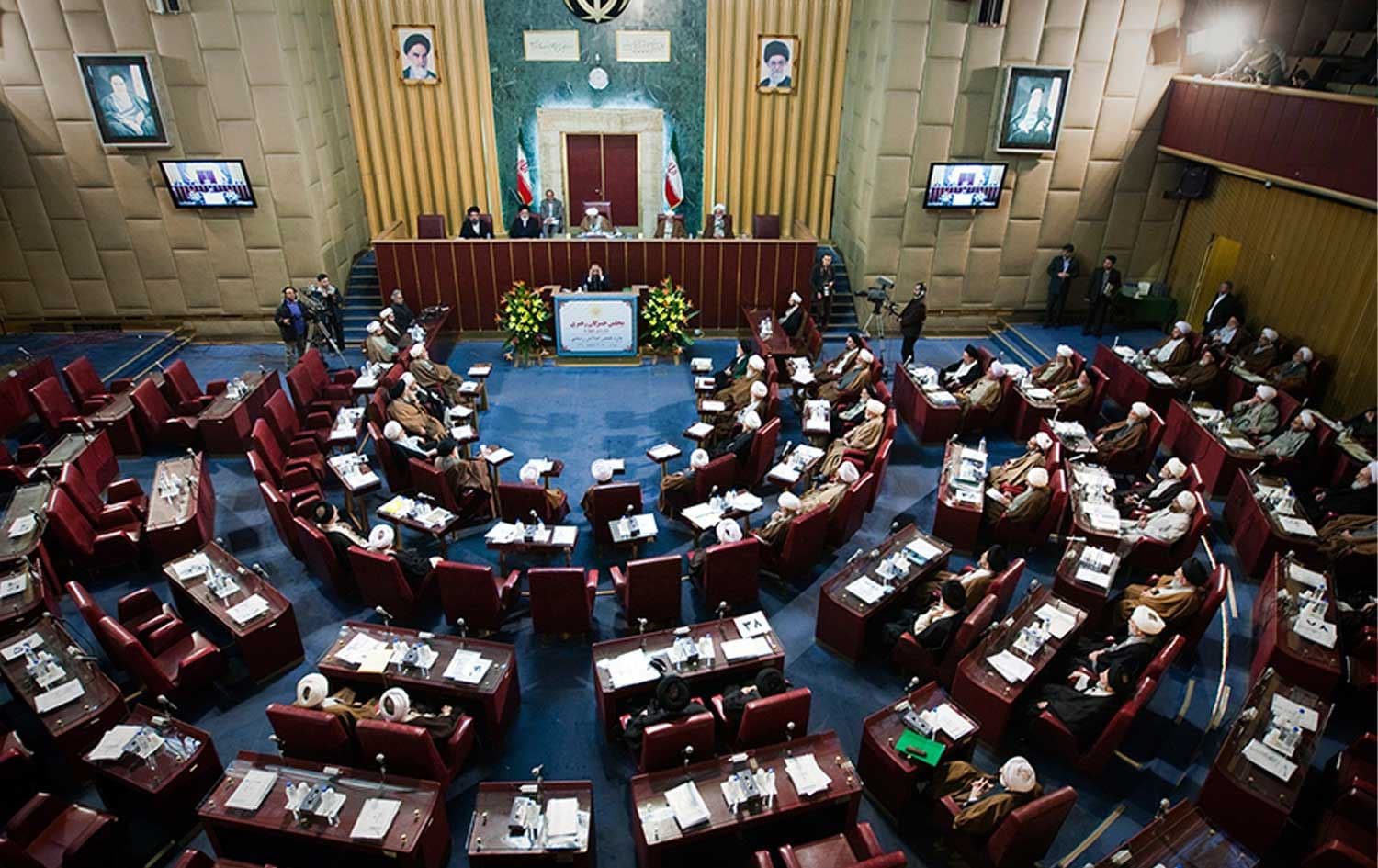
A member of the presidium of Iran’s Assembly of Experts states that a new leader has not yet been elected, but the Assembly is busy identifying a successor and may reach a final conclusion soon.
Mohsen Qomi, a member of the presidium of the Assembly of Experts, stated on Thursday that "the process of electing the new leader is nearing completion." He added that all reports published so far are inaccurate and based on speculation rather than information.
Sadeq Larijani, Chairman of the Expediency Discernment Council, also said in an interview with Iranian media the same day that a new leader for the Islamic Republic has not yet been chosen. Larijani stated, "According to the constitution, a leader must be elected as soon as possible. However, because there is currently a war, 'as soon as possible' means whenever the Assembly of Experts is able to convene and make a decision."
Media outlets affiliated with the Revolutionary Guard (IRGC) previously quoted informed sources saying, "Due to the state of war, the meeting of the Assembly of Experts may not take place in a normal manner."
These clarifications came after several global media outlets reported that Mojtaba Khamenei, the son of Ali Khamenei, had been elected by the Assembly of Experts as the third Supreme Leader of the Islamic Republic. For years, rumors have circulated that preparations were being made for Mojtaba Khamenei to succeed his father; however, since the start of the war, Mojtaba Khamenei's whereabouts remain unknown.
The Assembly of Experts has not yet disclosed the names of the individuals it is vetting for the leadership, nor is it clear how many candidates are under consideration.
Moderates and reformists issue warnings
As discussions intensify regarding the election of a new leader, conservatives are calling for strict adherence to the decisions of the Assembly of Experts, while some moderates are demanding a leader who is acceptable to all political factions.
Mojtaba Akbari, spokesperson for the Sharyan Front - a coalition of Iranian conservative forces - said on Thursday that "all political movements, parties, and factions must support the decision of the Assembly of Experts regarding the election of the leader."
In contrast to the conservatives, reformists and moderates within the Iranian establishment warned on Thursday against appointing someone who only represents one faction of power.
Mahmoud Vaezi, head of the political bureau of the Moderate and Development Party and a close associate of former President Hassan Rouhani, stated: "The future of the Islamic Republic is tied to the election of the third leader," adding that someone must be chosen who "strengthens unity and holds the trust of the people."
Furthermore, Hossein Marashi, Secretary-General of the Construction Executives Party (Kargozaran), stated: "A leader must be elected who is agreed upon by everyone, who can bridge the gap between the people and the authorities, and who can lead Iran out of this crisis."
Potential for deepening internal conflict
Some Iranian officials and experts are warning of internal rifts, arguing that in this situation, the President should be the primary figure in the country and everyone should be under his command.
Abbas Akhoundi, former Minister of Roads and Urban Development, posted a message on social media on Thursday stating: "Today, [Masoud] Pezeshkian is the President, as well as the head of the Leadership Council and the Commander-in-Chief of the Armed Forces. He must lead the war effort, manage the government, and determine foreign policy."
According to Akhoundi, "fighting a war with the United States and its immense capabilities is no easy task; focus must not shift from the war to internal issues."
The significance of Akhoundi’s remarks stems from his long history in high-ranking positions - serving as a minister and senior official from 1987 to 2018. He was close to Ali Akbar Hashemi Rafsanjani and is currently close to Hassan Rouhani and the moderate conservative faction, maintaining strong ties with Ali Akbar Nateq-Nouri, an influential figure among moderate conservatives and establishment reformists.
Authority to end the war granted to the Interim Leadership Council
Mohsen Dehnavi, spokesperson for the Expediency Discernment Council, announced on Thursday that they have decided to grant the authority to declare war, declare a ceasefire, and appoint senior military officials to the Interim Leadership Council. He stated that it is not necessary to refer back to the Expediency Council for these decisions.
According to the Iranian constitution, decisions on such matters are typically not within the sole power of the Interim Leadership Council and require a three-quarters majority vote from the members of the Expediency Discernment Council.
The Expediency Discernment Council consists of 44 members: 35 are appointed by the Supreme Leader, while others are members by virtue of their positions, including the President, the Speaker of Parliament, the Head of the Judiciary, the Secretary of the Supreme National Security Council, and the Chief of Staff of the Armed Forces.
The Council's primary duty is to decide on matters concerning the interests of the state and to resolve disputes between Parliament and the Guardian Council. It was this Council that selected Alireza A'rafi from among the members of the Guardian Council to serve as a member of the interim leadership.
On the other hand, US President Donald Trump, in an eight-minute telephone interview with the Axios, stated that the election of Mojtaba Khamenei as a successor to Ali Khamenei is "unacceptable" to him.
Trump added that "they are wasting their time. Khamenei’s son is a lightweight. I have to be involved in the appointment [of the leader]," exactly like what was done for the appointment of Delcy Rodriguez in Venezuela.