


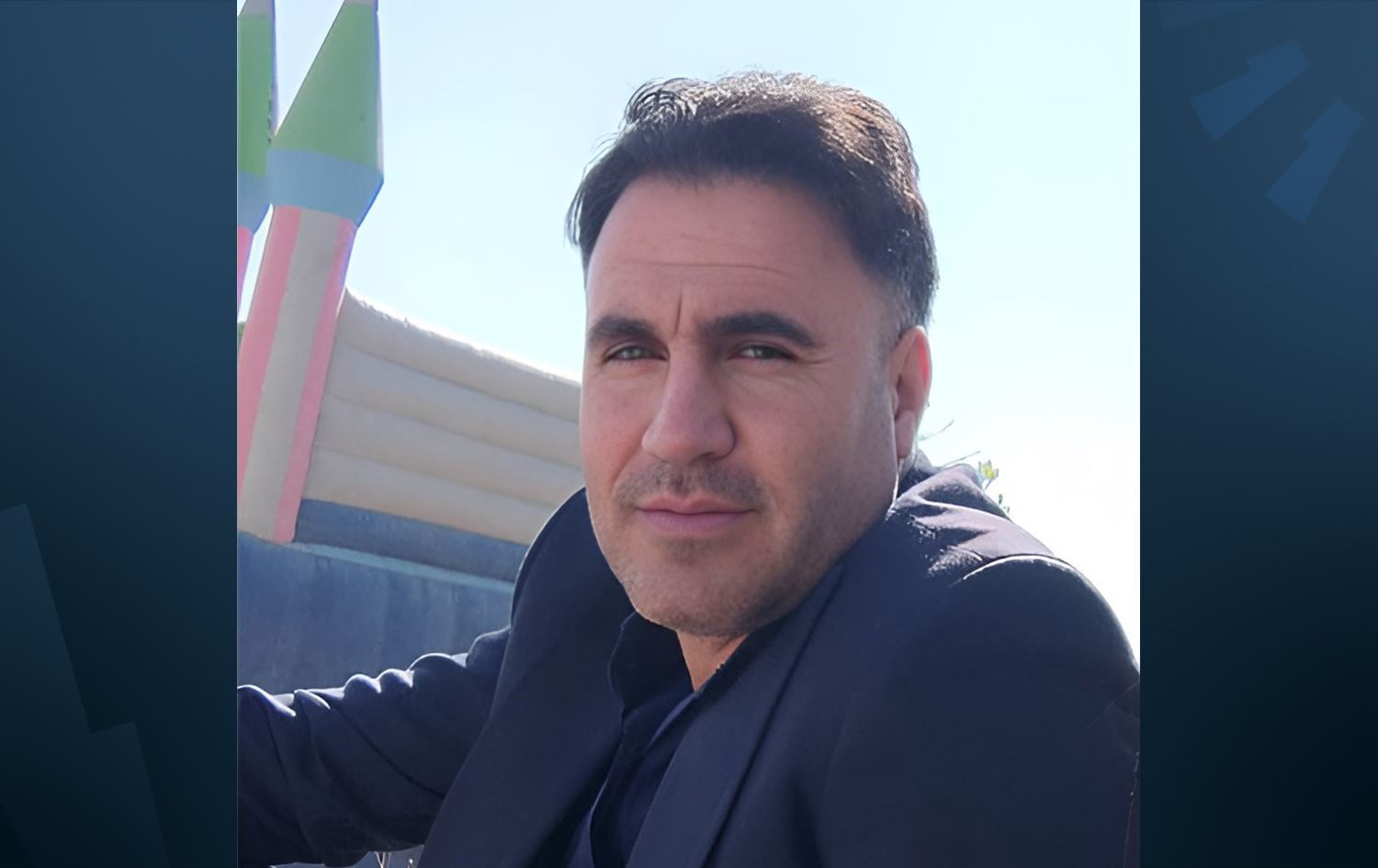
ERBIL, Kurdistan Region - The United Nations on Wednesday called on Iran to reveal the burial location of a Kurdish political prisoner executed in April after he was accused of allegedly assisting in the killing of eight border guards in a clash with a Kurdistan Workers’ Party (PKK) offshoot eight years ago.
Hamid Hoseinnezhad Heidaranlou, 40, from West Azerbaijan province in western Iran (Rojhelat), was executed in April after a trial condemned by rights organizations as sham and following alleged forced confessions. He was convicted of “baghi” (Persian for “armed rebellion”) in connection with his alleged membership in the PKK’s Iranian offshoot - the Free Life Party of Kurdistan (PJAK).
“The trial process violated his basic rights, including access to adequate legal counsel and interpretation. There are also serious allegations that his confession was obtained under torture,” Mai Sato, the UN’s special rapporteur on human rights in Iran, said on X.
Heidaranlou’s family at the time repeatedly urged international human rights organizations to intervene to stop his execution, asserting that the confessions were obtained under duress and that Heidaranlou was outside the country at the time of the deadly clash between suspected PJAK fighters and Iranian border guards.
The family has also repeatedly requested authorities to either return his body or reveal his burial location - a request that has been denied.
“This denial violates the family’s right to know the truth and to mourn and bury their loved one according to their religious and cultural traditions,” Sato said.
Responding to a request from the UN, Iran asserted that the “necessary information has been provided in this regard.”
“The burial was also determined and carried out in an appropriate place, taking into account considerations and respecting human dignity,” Iran’s permanent mission to the UN said in the letter, dated July 23.
But Sato affirmed that the report “fails to state what these considerations entailed.”
“This case illustrates that the death penalty extends far beyond the execution itself. The refusal to return remains denies families the right to properly memorialise and bury their loved one, constituting an additional form of cruel punishment. It compounds the family's suffering, leaving them to question what condition the body may be in that necessitates such concealment,” she stressed.
In its response, Tehran claimed that Heidaranlou “enjoyed all legal rights,” including lawyer access, family visits, medications, and hospital visits.
He was arrested on April 13, 2023, near the Chaldoran border by security forces, nearly six years after the deadly clash between PJAK and Iranian border guards.
Iran executed an estimated 909 people in 2024, with Kurds making up 20 percent of the total number, according to Hengaw. Human rights organizations have criticized Tehran’s use of the death penalty, especially for minority groups and people who protest against the Iranian government.
Iran ranks second globally for known executions, according to Amnesty International.
Hamid Hoseinnezhad Heidaranlou, 40, from West Azerbaijan province in western Iran (Rojhelat), was executed in April after a trial condemned by rights organizations as sham and following alleged forced confessions. He was convicted of “baghi” (Persian for “armed rebellion”) in connection with his alleged membership in the PKK’s Iranian offshoot - the Free Life Party of Kurdistan (PJAK).
“The trial process violated his basic rights, including access to adequate legal counsel and interpretation. There are also serious allegations that his confession was obtained under torture,” Mai Sato, the UN’s special rapporteur on human rights in Iran, said on X.
Heidaranlou’s family at the time repeatedly urged international human rights organizations to intervene to stop his execution, asserting that the confessions were obtained under duress and that Heidaranlou was outside the country at the time of the deadly clash between suspected PJAK fighters and Iranian border guards.
The family has also repeatedly requested authorities to either return his body or reveal his burial location - a request that has been denied.
“This denial violates the family’s right to know the truth and to mourn and bury their loved one according to their religious and cultural traditions,” Sato said.
Responding to a request from the UN, Iran asserted that the “necessary information has been provided in this regard.”
“The burial was also determined and carried out in an appropriate place, taking into account considerations and respecting human dignity,” Iran’s permanent mission to the UN said in the letter, dated July 23.
But Sato affirmed that the report “fails to state what these considerations entailed.”
“This case illustrates that the death penalty extends far beyond the execution itself. The refusal to return remains denies families the right to properly memorialise and bury their loved one, constituting an additional form of cruel punishment. It compounds the family's suffering, leaving them to question what condition the body may be in that necessitates such concealment,” she stressed.
In its response, Tehran claimed that Heidaranlou “enjoyed all legal rights,” including lawyer access, family visits, medications, and hospital visits.
He was arrested on April 13, 2023, near the Chaldoran border by security forces, nearly six years after the deadly clash between PJAK and Iranian border guards.
Iran executed an estimated 909 people in 2024, with Kurds making up 20 percent of the total number, according to Hengaw. Human rights organizations have criticized Tehran’s use of the death penalty, especially for minority groups and people who protest against the Iranian government.
Iran ranks second globally for known executions, according to Amnesty International.


Comments
Rudaw moderates all comments submitted on our website. We welcome comments which are relevant to the article and encourage further discussion about the issues that matter to you. We also welcome constructive criticism about Rudaw.
To be approved for publication, however, your comments must meet our community guidelines.
We will not tolerate the following: profanity, threats, personal attacks, vulgarity, abuse (such as sexism, racism, homophobia or xenophobia), or commercial or personal promotion.
Comments that do not meet our guidelines will be rejected. Comments are not edited – they are either approved or rejected.
Post a comment