


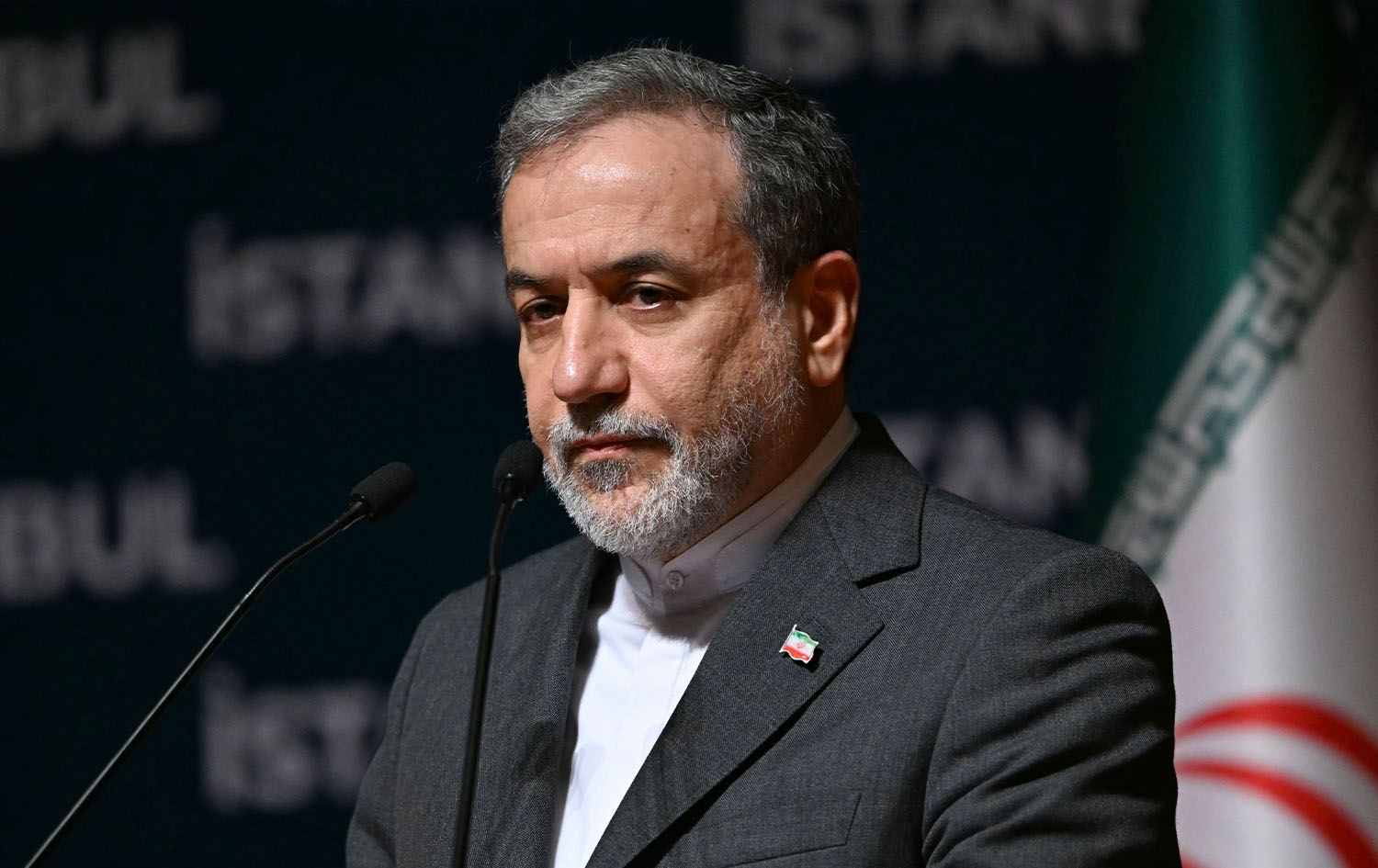
ERBIL, Kurdistan Region - A senior official from the United Nations nuclear watchdog is set to visit Iran on Monday to discuss a new framework for cooperation between the International Atomic Energy Agency (IAEA) and Tehran, Iran’s foreign minister confirmed on Sunday. The visit comes after weeks of tensions that saw Iran's parliament pass a law suspending cooperation with the agency.
Tehran’s state-run news agency (IRNA) quoted Foreign Minister Abbas Araghchi as stating that a deputy to IAEA Director-General Rafael Grossi “will visit Tehran tomorrow [Monday].” Talks will focus on developing a “new framework for cooperation,” Araghchi stated, while reiterating that there would be “no open inspection program.”
“We have not yet reached an agreement on the new framework, and cooperation will not begin until such an agreement is reached,” the senior Iranian diplomat stressed, adding that any framework would be strictly based on the law passed by parliament in late June.
The law mandates the suspension of “all forms of cooperation with the IAEA that go beyond the country’s core obligations under the Nuclear Non-Proliferation Treaty (NPT)." This includes halting implementation of the Additional Protocol, which had previously permitted intrusive, short-notice inspections by the agency.
The legislation further conditions any future cooperation on guarantees for the “security and safety of Iran’s nuclear facilities and personnel,” as well as “formal international recognition of Iran’s right to a peaceful nuclear program.” It also explicitly prohibits IAEA inspectors from visiting nuclear sites, with non-compliance deemed a criminal offense for Iranian officials.
Parliament Speaker Mohammad Bagher Ghalibaf in late June defended the legislation, accusing the IAEA of having become “a political instrument,” blaming it for the flare up of the 12-day conflict between Iran and Israel, which also drew in the United States.
On June 13, Israel launched a series of airstrikes on Iranian territory, targeting nuclear facilities and killing several high-ranking military commanders and nuclear scientists. Iran retaliated with missile and drone strikes against Israeli targets.
Tensions escalated further when the United States conducted airstrikes on June 22 against Iran’s Fordow, Isfahan, and Natanz nuclear sites. In response, Iran fired ballistic missiles at the US-operated al-Udeid Air Base in Qatar. A ceasefire, brokered by Washington on June 24, has since held.
Notably, the Israeli strikes came just one day after the IAEA Board of Governors passed a resolution on June 12 declaring Iran in violation of its nuclear non-proliferation commitments.
Tehran rejected the resolution as “politically motivated,” accusing Israel of supplying “forged” intelligence to the agency.
Iran’s Atomic Energy Organization (AEOI) also condemned the resolution, claiming Grossi had abandoned the agency’s principle of impartiality.
Despite the intensifying rhetoric, Grossi in early July expressed cautious optimism about mending fences with Tehran, saying he was “encouraged” by Iran’s willingness to host an IAEA delegation.
Stalled nuclear talks
On broader nuclear negotiations, Araghchi confirmed Sunday that no new round of talks with the US has been scheduled.
“A new round of negotiations has not yet been scheduled, and nothing has been finalized,” he said. “Indirect negotiations have also not been confirmed so far, and I am not confirming any country in this regard.”
Mediated by Oman, indirect US-Iran nuclear talks resumed on April 12, with five rounds held - the latest on May 23. These discussions marked the most serious engagement since the 2015 Joint Comprehensive Plan of Action (JCPOA), under which Iran curbed its nuclear activities in exchange for sanctions relief.
The sixth round of talks, planned for June 15 in Muscat, was canceled following the outbreak of the Israel-Iran conflict two days earlier.
Since the June 24 ceasefire, negotiations have stalled.
Araghchi previously demanded “financial compensation” from the US for its strikes on Iranian nuclear facilities, a request dismissed by Washington as “ridiculous.” Meanwhile, the US has continued imposing new sanctions, including fresh measures last Thursday targeting Iran’s oil and shipping sectors.
E3 pressures mount as ‘snapback’ looms
Commenting on ongoing talks between Iran and the E3 - France, Germany, and the UK - Araghchi on Sunday stated that discussions remain “ongoing,” but dismissed their ability to trigger the JCPOA’s snapback mechanism.
“From our perspective, 'snapback' is not a relevant issue, and Europe cannot take such an action. Given the positions they have taken, in our view, the Europeans are essentially no longer considered participants in the JCPOA,” he stated.
At the core of the dispute between Iran and the E3 is a high-stakes standoff driven by Iran’s accelerating nuclear program and the E3’s use of the looming snapback mechanism - a powerful diplomatic tool embedded in the JCPOA, which allows for the automatic re-imposition of UN Security Council sanctions on Iran if it violates its nuclear commitments.
Any of the remaining signatories of the 2015 deal - the E3 (France, Germany, and the UK), China, and Russia - can trigger this mechanism set to expire on October 18, 2025.
The E3 recently voiced alarm over Iran’s enrichment of uranium in what drastically shortens Iran’s breakout time to a nuclear weapon.
The European countries have further set an ultimatum, warning they will trigger a "snapback" mechanism by the end of August 2025 if Iran doesn't show a "firm, tangible, and verifiable commitment" to a nuclear deal.
French Foreign Minister Jean-Noel Barrot has stated that the E3 "will not hesitate for a single second to reapply all the sanctions" if European security is threatened by Iran's nuclear activities.
Whether diplomacy can be salvaged or a new phase of sanctions and confrontation awaits remains to be seen.


Comments
Rudaw moderates all comments submitted on our website. We welcome comments which are relevant to the article and encourage further discussion about the issues that matter to you. We also welcome constructive criticism about Rudaw.
To be approved for publication, however, your comments must meet our community guidelines.
We will not tolerate the following: profanity, threats, personal attacks, vulgarity, abuse (such as sexism, racism, homophobia or xenophobia), or commercial or personal promotion.
Comments that do not meet our guidelines will be rejected. Comments are not edited – they are either approved or rejected.
Post a comment