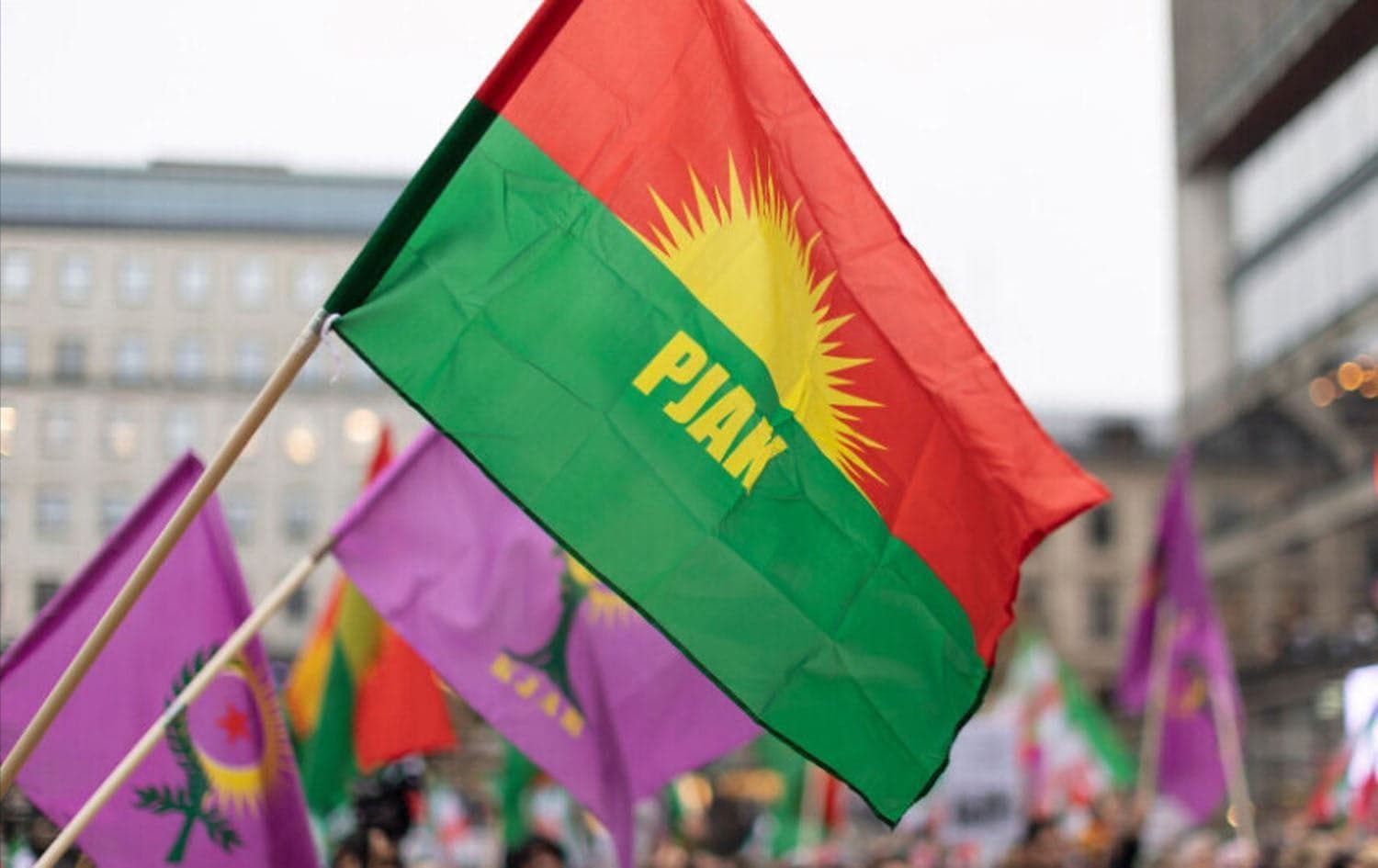

ERBIL, Kurdistan Region - An Iranian Kurdish opposition party on Saturday called for a new phase of the Jin, Jiyan, Azadi (Woman, Life, Freedom) protests, taking advantage of Israel’s attacks on Iran.
“We call on all forces, parties, and civil society organizations - with Iranian women at the forefront - to launch a new phase of the ‘Jin, Jiyan, Azadi’ revolution. We declare our readiness to help initiate it,” said the Free Life Party of Kurdistan (PJAK).
PJAK is an Iran-based armed group widely believed to be an offshoot of the Kurdistan Workers’ Party (PKK).
The nationwide Jin, Jiyan, Azadi protests, sparked by the September 2022 death of a Kurdish woman in the custody of Iran’s morality police, posed an existential threat to the Islamic republic.
With Israel’s attacks on Iran’s nuclear sites and assassinations of many top military commanders, PJAK said it was time to transition to a “Democratic Republic of Iran.”
“This war is a final ultimatum from the global power system to the Iranian regime and will continue until the regime is completely restructured and neutralized,” it said.
Iran retaliated on Friday night, launching Operation True Promise III and targeting dozens of Israeli military sites and air bases.
PJAK criticised the Iranian government for its role in a “war of power and conflicting interests, not a war of liberation.”
“The people of Iran should not be forced to choose between war and accepting a dictatorial regime,” it said.
The high civilian death toll, particularly among women and children in Iran and Israel, underscores the grim reality that “states hold little value for people's lives,” the group said.
PJAK said it would defend all peoples of Iran “against any form of repression or threat of massacre,” vowing to act “within the framework of legitimate self-defense.”
Two other Iranian Kurdish parties, the Kurdistan Democratic Party of Iran (KDPI) and the Komala Party of Iranian Kurdistan, on Friday also made statements in support of ending the Islamic republic regime.