


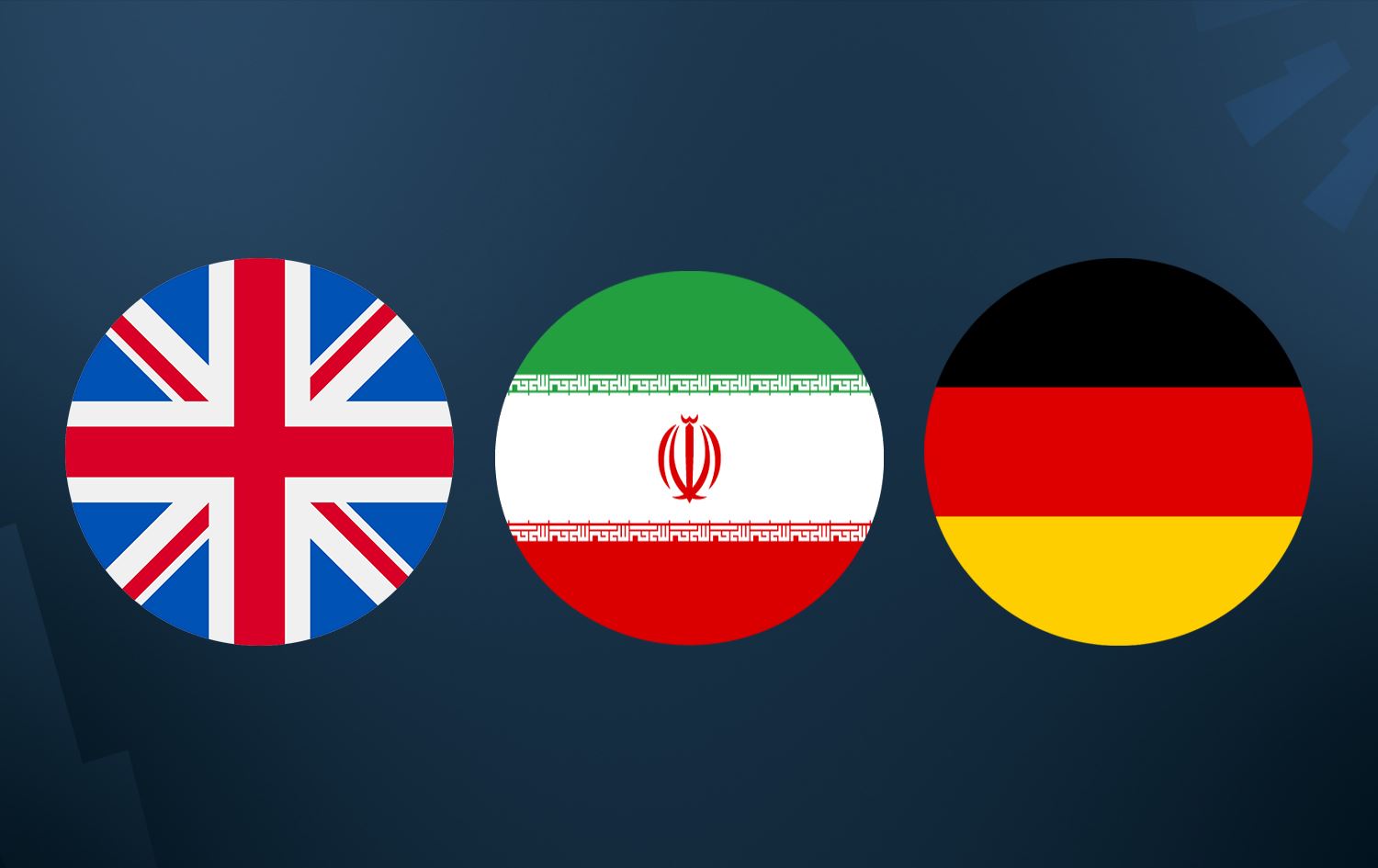
ERBIL, Kurdistan Region - European powers on Wednesday called on Iran to cooperate in talks over its nuclear program, stressing that Tehran cannot have a nuclear weapon and that imposing the UN-mandated “snapback” mechanism is still on the table.
“Regarding the Iranian nuclear program, a sustainable and verifiable diplomatic solution that addresses the security interests of the international community is essential. If such a solution is not achieved by the end of the summer, the snapback mechanism will remain an option for the E3,” a German Federal Foreign Office spokesperson told Rudaw.
The snapback mechanism is a powerful diplomatic tool embedded in the 2015 nuclear deal between Iran and world powers - formally known as the Joint Comprehensive Plan of Action (JCPOA) - which allows for the automatic reimposition of UN Security Council sanctions on Iran if it violates its nuclear commitments.
The United Kingdom also called on Iran to provide “credible assurances” to the international community and to resume negotiations with the United States and the UN’s nuclear watchdog.
“We remain committed along with the US and partners, to finding a diplomatic agreement to address Iran’s nuclear programme and have made clear that we will consider all options, including through triggering snapback or through the extension of the snapback deadline,” the UK’s Foreign, Commonwealth, and Development Office told Rudaw.
Both Berlin and London stressed that Tehran cannot possess a nuclear weapon.
Britain, France, and Germany - collectively known as the E3 - sent a joint letter to the UN on Wednesday, warning that they are ready to activate the snapback mechanism.
“If Iran continues to violate its international obligations, France and its German and British partners will reimpose the global embargoes on arms, nuclear equipment, and banking restrictions that were lifted 10 years ago at the end of August,” French Foreign Minister Jean-Noel Barrot said on X.
The European powers have upped their pressure on Tehran to adhere to nuclear commitments ever since Israel and Iran’s 12-day war in June, which ended when the US launched its own strikes on Iran’s nuclear facilities and subsequently brokered a ceasefire.
Before the war with Israel, Iran had five rounds of Oman-mediated indirect nuclear talks with the US, which pulled out of the nuclear deal in 2018.
A senior official from the UN’s International Atomic Energy Agency (IAEA) is also expected in Iran in the coming days, following a major diplomatic rift between Tehran and the IAEA that saw the Guardian Council ratify a legislation passed by the parliament in late June to formally suspend cooperation with the agency.
Under a 2015 nuclear deal with world powers, Iran agreed to curb its nuclear enrichment program in exchange for much-needed relief from crippling sanctions.
But the deal began unraveling in 2018 when Washington, under President Donald Trump’s first term, unilaterally withdrew from the accord and reimposed biting sanctions on the Islamic republic, which in turn began rolling back on its nuclear commitments.
Iran’s top leadership has repeatedly stressed that atomic weapons have no place in the Islamic republic’s doctrine.
Niyaz Mustafa contributed to this report.
“Regarding the Iranian nuclear program, a sustainable and verifiable diplomatic solution that addresses the security interests of the international community is essential. If such a solution is not achieved by the end of the summer, the snapback mechanism will remain an option for the E3,” a German Federal Foreign Office spokesperson told Rudaw.
The snapback mechanism is a powerful diplomatic tool embedded in the 2015 nuclear deal between Iran and world powers - formally known as the Joint Comprehensive Plan of Action (JCPOA) - which allows for the automatic reimposition of UN Security Council sanctions on Iran if it violates its nuclear commitments.
The United Kingdom also called on Iran to provide “credible assurances” to the international community and to resume negotiations with the United States and the UN’s nuclear watchdog.
“We remain committed along with the US and partners, to finding a diplomatic agreement to address Iran’s nuclear programme and have made clear that we will consider all options, including through triggering snapback or through the extension of the snapback deadline,” the UK’s Foreign, Commonwealth, and Development Office told Rudaw.
Both Berlin and London stressed that Tehran cannot possess a nuclear weapon.
Britain, France, and Germany - collectively known as the E3 - sent a joint letter to the UN on Wednesday, warning that they are ready to activate the snapback mechanism.
“If Iran continues to violate its international obligations, France and its German and British partners will reimpose the global embargoes on arms, nuclear equipment, and banking restrictions that were lifted 10 years ago at the end of August,” French Foreign Minister Jean-Noel Barrot said on X.
The European powers have upped their pressure on Tehran to adhere to nuclear commitments ever since Israel and Iran’s 12-day war in June, which ended when the US launched its own strikes on Iran’s nuclear facilities and subsequently brokered a ceasefire.
Before the war with Israel, Iran had five rounds of Oman-mediated indirect nuclear talks with the US, which pulled out of the nuclear deal in 2018.
A senior official from the UN’s International Atomic Energy Agency (IAEA) is also expected in Iran in the coming days, following a major diplomatic rift between Tehran and the IAEA that saw the Guardian Council ratify a legislation passed by the parliament in late June to formally suspend cooperation with the agency.
Under a 2015 nuclear deal with world powers, Iran agreed to curb its nuclear enrichment program in exchange for much-needed relief from crippling sanctions.
But the deal began unraveling in 2018 when Washington, under President Donald Trump’s first term, unilaterally withdrew from the accord and reimposed biting sanctions on the Islamic republic, which in turn began rolling back on its nuclear commitments.
Iran’s top leadership has repeatedly stressed that atomic weapons have no place in the Islamic republic’s doctrine.
Niyaz Mustafa contributed to this report.


Comments
Rudaw moderates all comments submitted on our website. We welcome comments which are relevant to the article and encourage further discussion about the issues that matter to you. We also welcome constructive criticism about Rudaw.
To be approved for publication, however, your comments must meet our community guidelines.
We will not tolerate the following: profanity, threats, personal attacks, vulgarity, abuse (such as sexism, racism, homophobia or xenophobia), or commercial or personal promotion.
Comments that do not meet our guidelines will be rejected. Comments are not edited – they are either approved or rejected.
Post a comment