


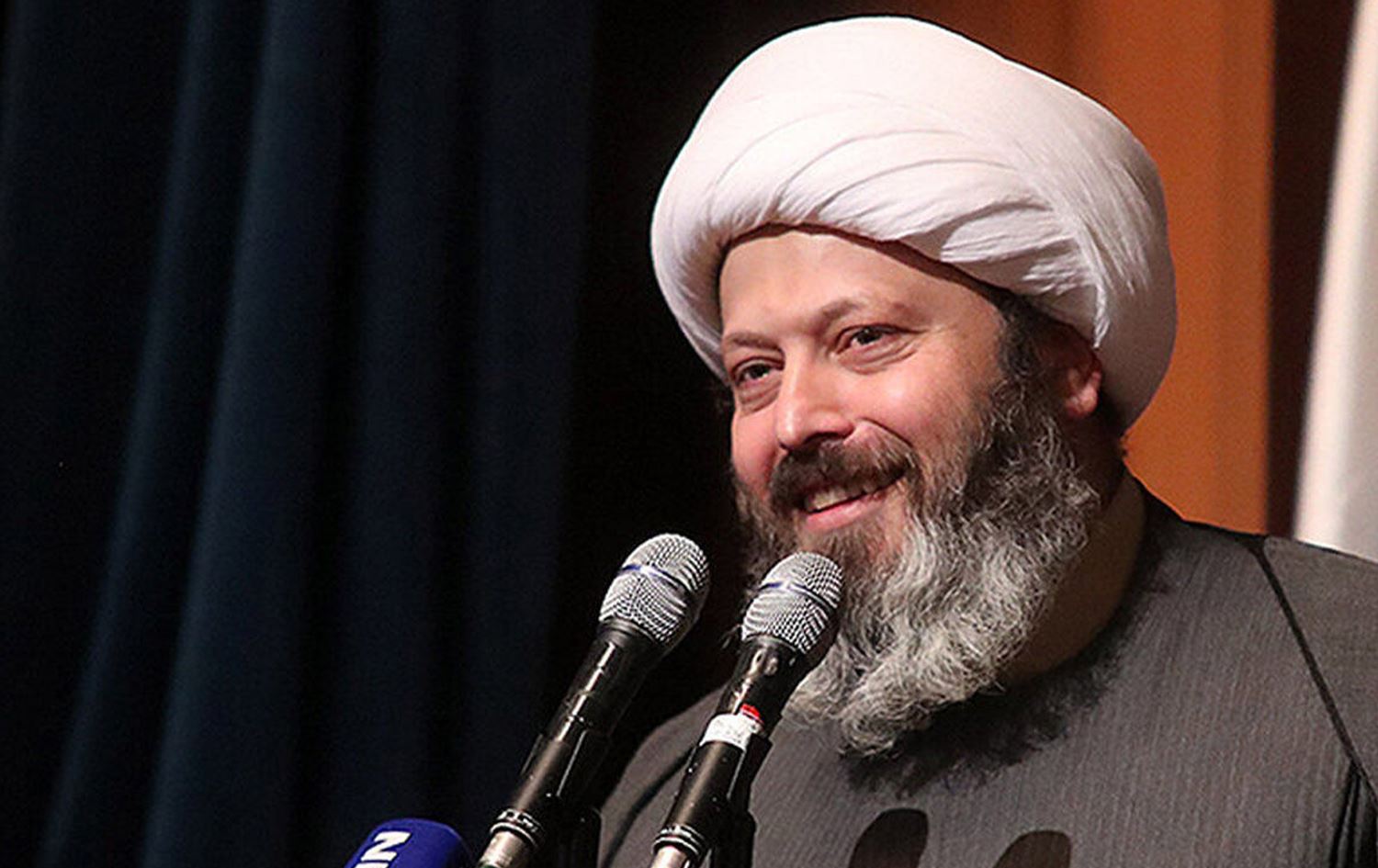
ERBIL, Kurdistan Region - A senior Iranian cleric has reportedly been arrested by Saudi authorities during the ongoing Hajj season in Mecca, shortly after posting a controversial video online sharply criticizing the alleged commercialization of the kingdom’s holy sites.
The state-owned Iranian news agency (IRNA) reported on Tuesday that Gholamreza Qassemian, identified as “an Iranian pilgrim,” was “arrested by Saudi police” in Medina, west of Saudi Arabia. IRNA quoted the Iranian Judiciary spokesperson Asghar Jahangir as describing the arrest as “unjustified and illegal,” urging “relevant authorities, including the Foreign Ministry, to pursue the matter.”
“No details were immediately available about the arrest,” IRNA concluded.
The day prior, IRNA had relayed that “Hojjat al-Islam Qassemian” was arrested after “recording a short video in the Prophet's Mosque (Masjid al-Nabawi) and following its circulation on social media networks, Saudi authorities arrested him.”
Of note, in Shia Islam, the title Hojjat al-Islam denotes a cleric who has completed advanced religious studies and attained the first level of independent legal reasoning, known as Ijtihad, ranking below an Ayatollah.
Besides his religious rank, Qassemian is closely linked to Iran’s hardliner camp, particularly to Mohammad Bagher Ghalibaf, who was re-elected as Iran’s parliament speaker on Tuesday. In 2020, Ghalibaf appointed Qassemian as director of the Parliament’s Library, Museum, and Documentation Center.
He is also a prominent figure in Iran’s religious and cultural landscape, known as a judge and host of the popular Quranic TV program "Mahfel" aired on Iran TV.
Saudi authorities have not officially confirmed Qassemian’s arrest. However, his controversial video has gone viral on social media in recent days, where he harshly criticized what he called the commercialization of Saudi holy sites.
“The merchants and exploiters of the Qibla [Kaaba - the most sacred site in Islam] have provided ideal conditions - casinos, centers of prostitution, and vulgar concerts are all in place,” Qassemian stated.
He added that “instead of traveling to [the secular city of] Antalya [in Turkey],” which is known for its beaches, historical sites and vibrant nightlife, “you can travel to Mecca and Medina,” describing these changes as “not a natural phenomenon, and not merely atheism, but the will of atheism being implemented.”
On Tuesday, IRNA quoted Majid Rezapanah, the head of the Consular and Judicial Support Department at the Iranian foreign ministry, as stating that Iran’s consular department has been actively following up on Qassemian’s detention through the Iranian consulate in Jeddah.
“From the first moments of his detention, the political and consular representation of the Islamic Republic in Saudi Arabia took action and issued an official note demanding his release,” Rezapanah said. He added that “due to the intense follow-up… the deputy consul general of the Islamic Republic in Jeddah has so far met with him [Qassemian] twice, and a third consular meeting is scheduled to take place soon.”
Qassemian’s case comes at a sensitive time in Saudi-Iranian relations. The two countries agreed to restore diplomatic ties under a landmark China-brokered accord in March 2023, ending a seven-year rupture.
Relations had broken down in 2016 after Iranian protesters stormed Saudi diplomatic missions in Tehran and Mashhad in response to Riyadh’s execution of Shiite dissident cleric Nimr al-Nimr.
Between 2021 and 2023, senior Iranian and Saudi clerics and security officials held a series of talks in Baghdad (five rounds) and Oman (five rounds), culminating in the March 2023 agreement to reopen embassies and implement cooperation accords.
Since Masoud Pezeshkian was elected Iran’s president in July 2024, relations have notably improved.
Saudi leaders, including King Salman and Crown Prince Mohammed bin Salman, congratulated Pezeshkian on his presidency and expressed a desire to deepen ties. In April 2025, Saudi Defense Minister Prince Khalid bin Salman visited Tehran, marking the highest-level Saudi visit since 1979, focusing on regional security and economic cooperation.
In his video, Qassemian criticized these diplomatic gestures, warning, “Do not let the exchange of diplomatic visits fool you,” and accused Saudi authorities of “tightening the noose on pilgrims” and “not allowing them to understand the concept of Hajj.”
Hajj is the annual Islamic pilgrimage to Mecca, one of the Five Pillars of Islam, required at least once in a lifetime for all physically and financially able Muslims. This year’s pilgrimage takes place during the Islamic month of Dhu al-Ḥijjah, from June 4 to 9.
Hajj has historically been a source of tension between Iran and Saudi Arabia.
Notable flashpoints include the 1987 Mecca incident, where over 400 people - mostly Iranians - were killed during a protest, and the 2015 Mina stampede, which caused more than 2,400 deaths, including over 460 Iranians. These events led Iran to accuse Saudi Arabia of mismanaging the pilgrimage and even called for international oversight, a proposal Saudi Arabia firmly rejected.
In 2016, amid rising tensions with Riyadh, Tehran also banned Iranian participation in the Hajj pilgrimage.


Comments
Rudaw moderates all comments submitted on our website. We welcome comments which are relevant to the article and encourage further discussion about the issues that matter to you. We also welcome constructive criticism about Rudaw.
To be approved for publication, however, your comments must meet our community guidelines.
We will not tolerate the following: profanity, threats, personal attacks, vulgarity, abuse (such as sexism, racism, homophobia or xenophobia), or commercial or personal promotion.
Comments that do not meet our guidelines will be rejected. Comments are not edited – they are either approved or rejected.
Post a comment