


Iran

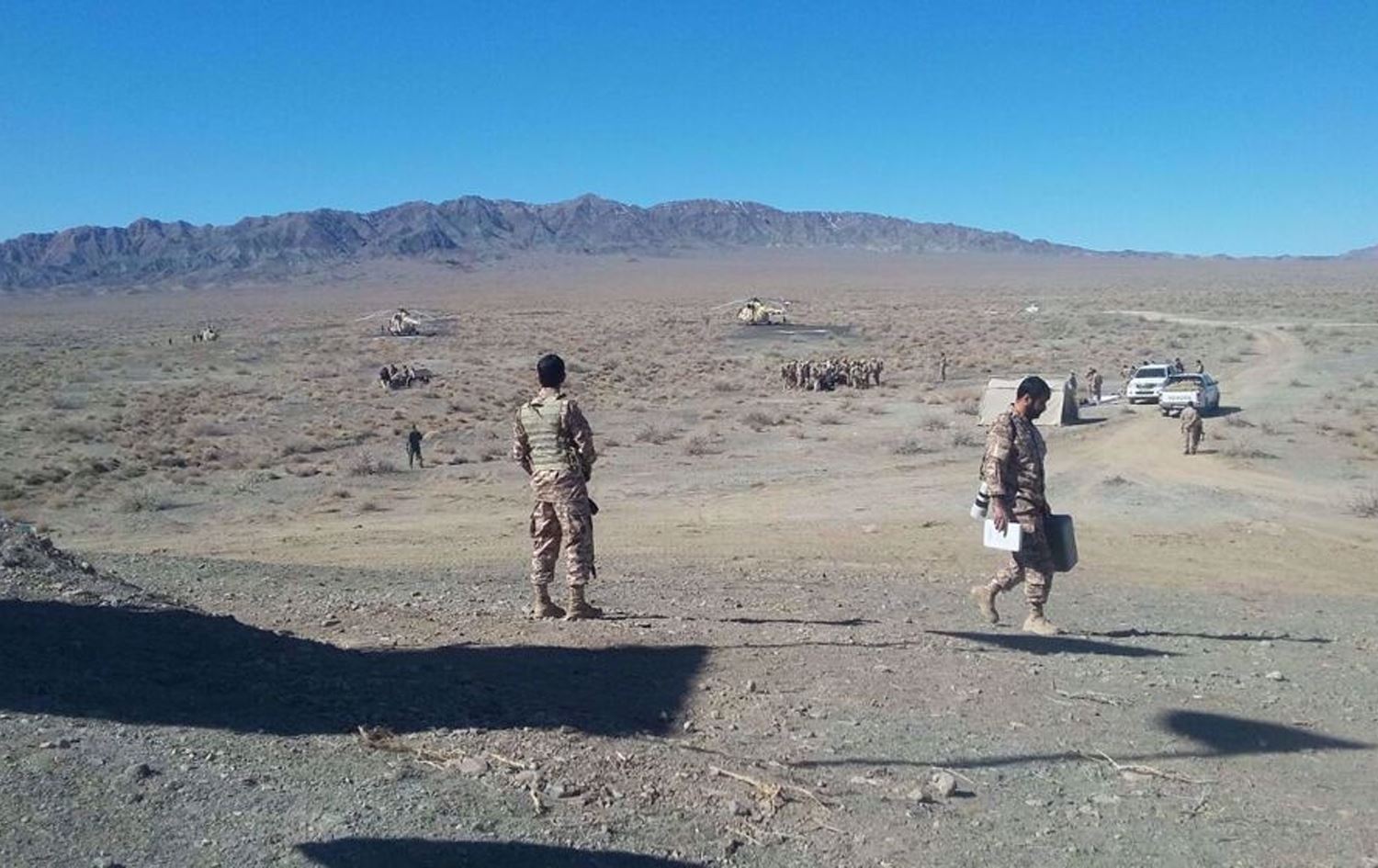
Members of the Islamic Revolutionary Guard Corps (IRGC) holding military drills in the southeastern Sistan and Baluchestan province. Photo: Press TV
ERBIL, Kurdistan Region - The Islamic Revolutionary Guard Corps (IRGC) said on Wednesday that its forces killed 13 militants in separate operations in Iran’s restive southeastern Sistan and Baluchestan province, accusing them of a recent deadly attack on a police base.
“So far, 13 terrorists have been killed and a number of others arrested,” the IRGC said, as cited by the semi-official Tasnim news agency, adding that the operations took place in the cities of Iranshahr, Khash, and Saravan.
Police spokesperson Saeed Montazeralmahdi said the attackers were behind a Friday ambush on an Iranshahr police station that killed five policemen.
Jaish al-Adl (Justice Army), a Baluchi Sunni jihadist group operating across the restive, sparsely-populated border regions, claimed responsibility for the Friday attack.
Sistan and Baluchestan province, near the Pakistani border, is one of the only Sunni-majority provinces in Shiite-dominated Iran. There are a number of Baluchi armed groups active in the area that carry out regular bombings and suicide attacks.
Attacks on Iranian security forces in Sistan and Baluchestan are frequent. Armed Baluchi groups, such as Jaish al-Adl, operate in the province that borders Afghanistan and Pakistan. They have waged an insurgency against Tehran and carried out numerous attacks against its forces, especially the IRGC.
Jaish al-Adl was added to the United States list of Foreign Terrorist Organizations in 2019 by the first administration of President Donald Trump. The designation was in response to a deadly attack by the group that killed 27 IRGC members near Sistan and Baluchestan’s provincial capital of Zahedan.
Baluchis are a mainly Sunni ethnic minority in Iran, living predominantly in the Baluchestan region near the border with Pakistan. The population was active during nationwide protests in September 2022, and hundreds of Baluchis were killed by the IRGC in a heavy crackdown.
On Sunday, Iranian forces killed six militants in Sistan and Baluchestan, with state media saying they were members of a “terrorist” group linked to Israel.
“So far, 13 terrorists have been killed and a number of others arrested,” the IRGC said, as cited by the semi-official Tasnim news agency, adding that the operations took place in the cities of Iranshahr, Khash, and Saravan.
Police spokesperson Saeed Montazeralmahdi said the attackers were behind a Friday ambush on an Iranshahr police station that killed five policemen.
Jaish al-Adl (Justice Army), a Baluchi Sunni jihadist group operating across the restive, sparsely-populated border regions, claimed responsibility for the Friday attack.
Sistan and Baluchestan province, near the Pakistani border, is one of the only Sunni-majority provinces in Shiite-dominated Iran. There are a number of Baluchi armed groups active in the area that carry out regular bombings and suicide attacks.
Attacks on Iranian security forces in Sistan and Baluchestan are frequent. Armed Baluchi groups, such as Jaish al-Adl, operate in the province that borders Afghanistan and Pakistan. They have waged an insurgency against Tehran and carried out numerous attacks against its forces, especially the IRGC.
Jaish al-Adl was added to the United States list of Foreign Terrorist Organizations in 2019 by the first administration of President Donald Trump. The designation was in response to a deadly attack by the group that killed 27 IRGC members near Sistan and Baluchestan’s provincial capital of Zahedan.
Baluchis are a mainly Sunni ethnic minority in Iran, living predominantly in the Baluchestan region near the border with Pakistan. The population was active during nationwide protests in September 2022, and hundreds of Baluchis were killed by the IRGC in a heavy crackdown.
On Sunday, Iranian forces killed six militants in Sistan and Baluchestan, with state media saying they were members of a “terrorist” group linked to Israel.


Comments
Rudaw moderates all comments submitted on our website. We welcome comments which are relevant to the article and encourage further discussion about the issues that matter to you. We also welcome constructive criticism about Rudaw.
To be approved for publication, however, your comments must meet our community guidelines.
We will not tolerate the following: profanity, threats, personal attacks, vulgarity, abuse (such as sexism, racism, homophobia or xenophobia), or commercial or personal promotion.
Comments that do not meet our guidelines will be rejected. Comments are not edited – they are either approved or rejected.
Post a comment