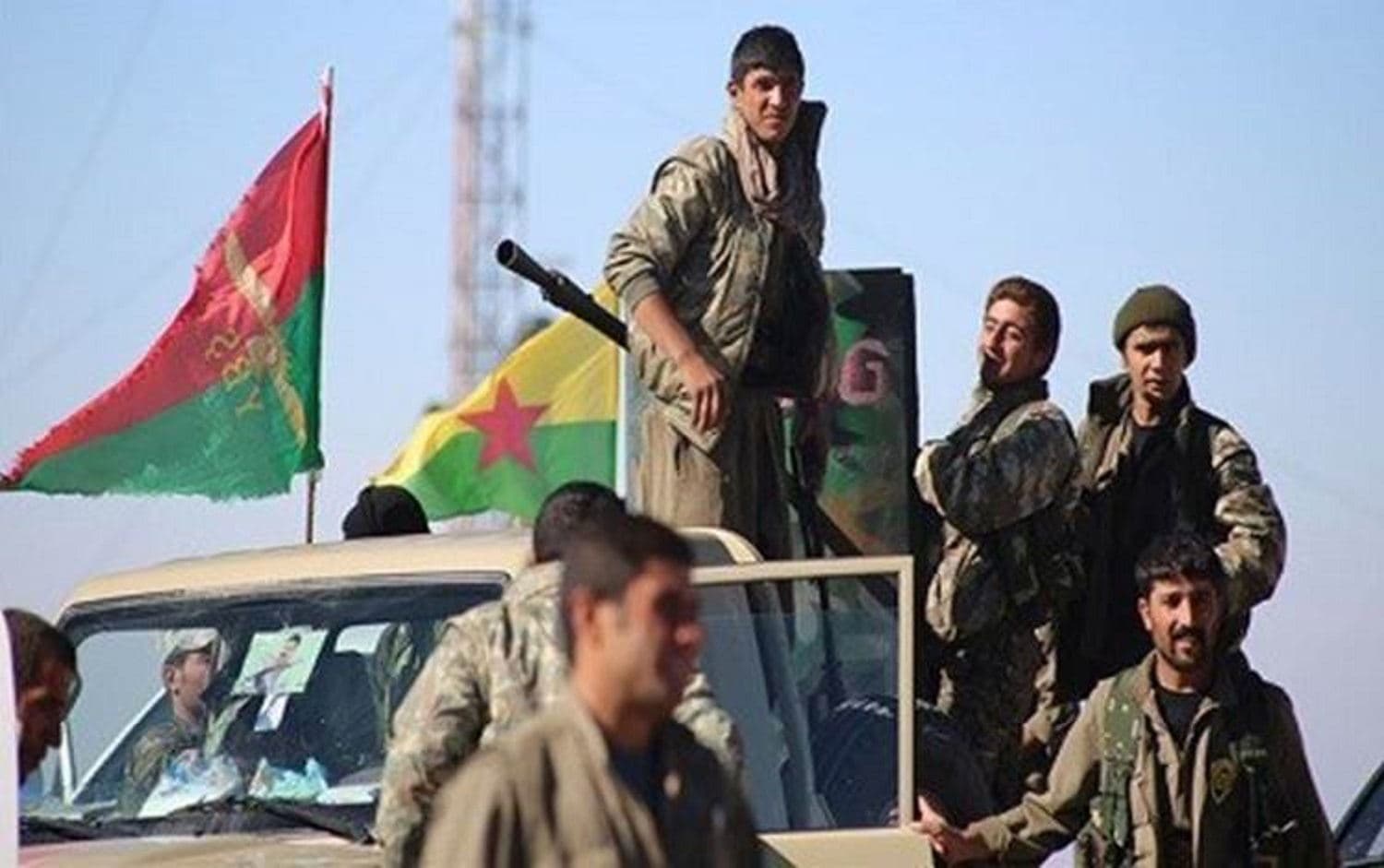
ERBIL, Kurdistan Region – The Shingal Resistance Units (YBS) have agreed to withdraw its forces from Iraq’s disputed district of Shingal (Sinjar in Arabic) and relocate their forces to Mount Shingal after meetings with Iraqi forces, several local sources confirmed to Rudaw.
As of Tuesday lunchtime there were conflicting reports of whether the forces will begin withdrawing today from the district’s key towns of Sinune and Khanasor, in addition to the town of Shingal.
Khanasor council leader Dakheel Murad told Rudaw’s Tahsin Qasim on Monday that the all-Yezidi force has agreed to comply with a governance and security deal struck in October between federal Iraq and the Kurdistan Regional Government (KRG).
Under the Erbil-Baghdad agreement, security for the troubled region will be Baghdad's responsibility. The federal government will have to establish a new armed force recruited from the local population and expel fighters from the Kurdistan Workers’ Party (PKK) and their affiliated groups, according to details released in October.
The YBS, a group affiliated with Kurdistan Workers Party (PKK) had until recently stood against the Erbil-Baghdad deal, but meetings have seemingly changed the tone of the group’s leadership. They have yet to release a public statement explaining the decision.
“The YBS has been told to end its military presence in the town of Shingal for now, Khanasor and Sinune will follow after,” Haidar Shasho, commander of the Ezidkhan Protection Force in Shingal, a separate armed group with cordial relations with the YBS, told Rudaw English on Tuesday.
This decision has also caused disagreements within the YBS forces as members of the group have reportedly refused to adhere to the agreement.
Groups of people have reportedly gathered in front of security force offices in Khanasor, Shingal, and Sinune upon hearing news of the decision, calling on the militia group to not leave the areas.
Leadership in YBS had until quite recently expressed firm resistance to the deal.
“If the agreement is implemented, Shingal could return to a period of war like it did in 2014,” Shingal Resistance Units (YBS) commander Haso Ibrahim said in an interview with Rudaw’s Tahsin Qasim on November 24.
Implementation of the agreement began last week with the deployment of some 6,000 federal police to the areas of Shingal that border Syria.
“Three brigades of Iraqi federal forces are placed on the border between Shingal and Syria in order to prevent any forces from going back and forth,” Deputy Governor of Nineveh province Sirwan Rozhbayani told Rudaw on Tuesday.
YBS is one of some six armed groups currently operating in the area.
A top analyst at the International Crisis Group (ICG) has advised against the exclusion of the armed groups from decisions about the area's future.
"There are some tensions around this as it will create a new force and this could potentially be a competition with the others. So it will be very important for the implementation of this agreement to ensure that various factions are either integrated into this force or there are other alternatives to them," the ICG's senior Iraq analyst Lahib Higel told Rudaw in October.
As of Tuesday lunchtime there were conflicting reports of whether the forces will begin withdrawing today from the district’s key towns of Sinune and Khanasor, in addition to the town of Shingal.
Khanasor council leader Dakheel Murad told Rudaw’s Tahsin Qasim on Monday that the all-Yezidi force has agreed to comply with a governance and security deal struck in October between federal Iraq and the Kurdistan Regional Government (KRG).
Under the Erbil-Baghdad agreement, security for the troubled region will be Baghdad's responsibility. The federal government will have to establish a new armed force recruited from the local population and expel fighters from the Kurdistan Workers’ Party (PKK) and their affiliated groups, according to details released in October.
The YBS, a group affiliated with Kurdistan Workers Party (PKK) had until recently stood against the Erbil-Baghdad deal, but meetings have seemingly changed the tone of the group’s leadership. They have yet to release a public statement explaining the decision.
“The YBS has been told to end its military presence in the town of Shingal for now, Khanasor and Sinune will follow after,” Haidar Shasho, commander of the Ezidkhan Protection Force in Shingal, a separate armed group with cordial relations with the YBS, told Rudaw English on Tuesday.
This decision has also caused disagreements within the YBS forces as members of the group have reportedly refused to adhere to the agreement.
Groups of people have reportedly gathered in front of security force offices in Khanasor, Shingal, and Sinune upon hearing news of the decision, calling on the militia group to not leave the areas.
Leadership in YBS had until quite recently expressed firm resistance to the deal.
“If the agreement is implemented, Shingal could return to a period of war like it did in 2014,” Shingal Resistance Units (YBS) commander Haso Ibrahim said in an interview with Rudaw’s Tahsin Qasim on November 24.
Implementation of the agreement began last week with the deployment of some 6,000 federal police to the areas of Shingal that border Syria.
“Three brigades of Iraqi federal forces are placed on the border between Shingal and Syria in order to prevent any forces from going back and forth,” Deputy Governor of Nineveh province Sirwan Rozhbayani told Rudaw on Tuesday.
YBS is one of some six armed groups currently operating in the area.
A top analyst at the International Crisis Group (ICG) has advised against the exclusion of the armed groups from decisions about the area's future.
"There are some tensions around this as it will create a new force and this could potentially be a competition with the others. So it will be very important for the implementation of this agreement to ensure that various factions are either integrated into this force or there are other alternatives to them," the ICG's senior Iraq analyst Lahib Higel told Rudaw in October.
Comments
Rudaw moderates all comments submitted on our website. We welcome comments which are relevant to the article and encourage further discussion about the issues that matter to you. We also welcome constructive criticism about Rudaw.
To be approved for publication, however, your comments must meet our community guidelines.
We will not tolerate the following: profanity, threats, personal attacks, vulgarity, abuse (such as sexism, racism, homophobia or xenophobia), or commercial or personal promotion.
Comments that do not meet our guidelines will be rejected. Comments are not edited – they are either approved or rejected.
Post a comment