


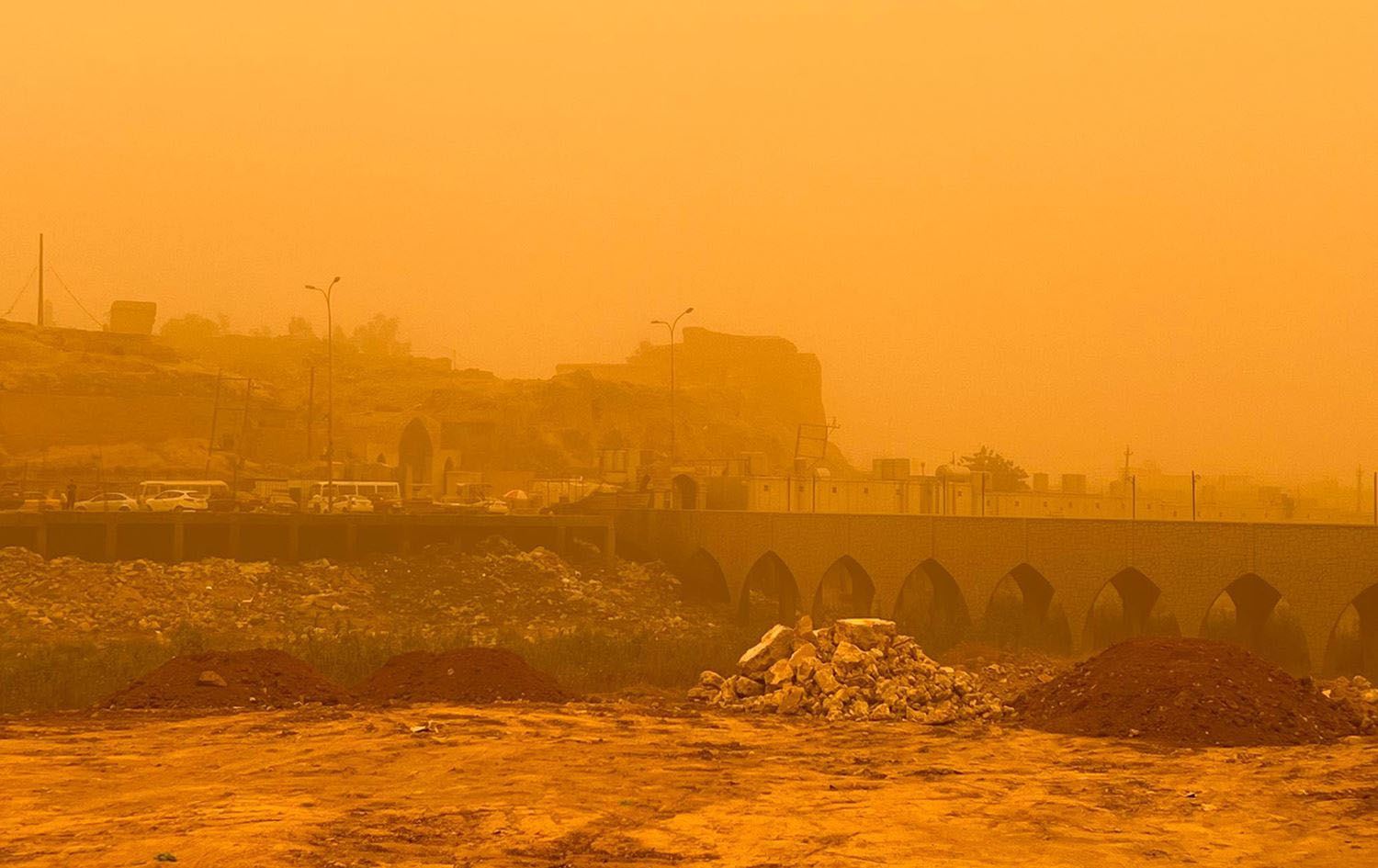
ERBIL, Kurdistan Region - Nearly 550 people have been hospitalized across Iraq on Monday as a severe dust storm swept through several provinces, causing widespread respiratory issues, health officials confirmed.
In Kirkuk, 94 people were admitted to hospitals with dust-related complications, according to Saman Yaba, spokesperson for the province’s health directorate.
In the north-central Salahaddin province, around 55 people - primarily elderly individuals and those with pre-existing respiratory conditions - were transferred to local hospitals for treatment. Rudaw has learned that the number of affected persons in the province is expected to rise further as the storm continues.
Meanwhile, in Diyala province, located in eastern Iraq, over 400 people were hospitalized due to respiratory distress. Faris al-Azzawi, spokesperson for the Diyala Health Department, told Rudaw that all medical institutions in the province are fully prepared to receive and treat additional patients.
Earlier on Monday, Amer al-Jabri, spokesperson for Iraq’s Meteorology and Seismology Directorate, reported that the dust storm is most intense in the central and western regions of Iraq,with a lesser impact anticipated in the north. He added that wind speeds could reach between 30 and 50 kilometers per hour, reducing visibility to as low as four kilometers.
Dust storms are a recurring phenomenon in Iraq, but their frequency and severity have increased due to prolonged drought, desertification, and rising temperatures.
According to Baghdad’s environment ministry, Iraq has experienced an average of 272 dusty days per year over the past two decades - a figure projected to climb to 300 days annually by 2050.
Iraq is among the countries most vulnerable to climate change. Poor water management and dam construction in upstream nations have significantly reduced the flow of the Tigris and Euphrates rivers, further exacerbating environmental degradation. The United Nations has called for urgent measures to combat Iraq’s worsening climate crisis.


Comments
Rudaw moderates all comments submitted on our website. We welcome comments which are relevant to the article and encourage further discussion about the issues that matter to you. We also welcome constructive criticism about Rudaw.
To be approved for publication, however, your comments must meet our community guidelines.
We will not tolerate the following: profanity, threats, personal attacks, vulgarity, abuse (such as sexism, racism, homophobia or xenophobia), or commercial or personal promotion.
Comments that do not meet our guidelines will be rejected. Comments are not edited – they are either approved or rejected.
Post a comment