
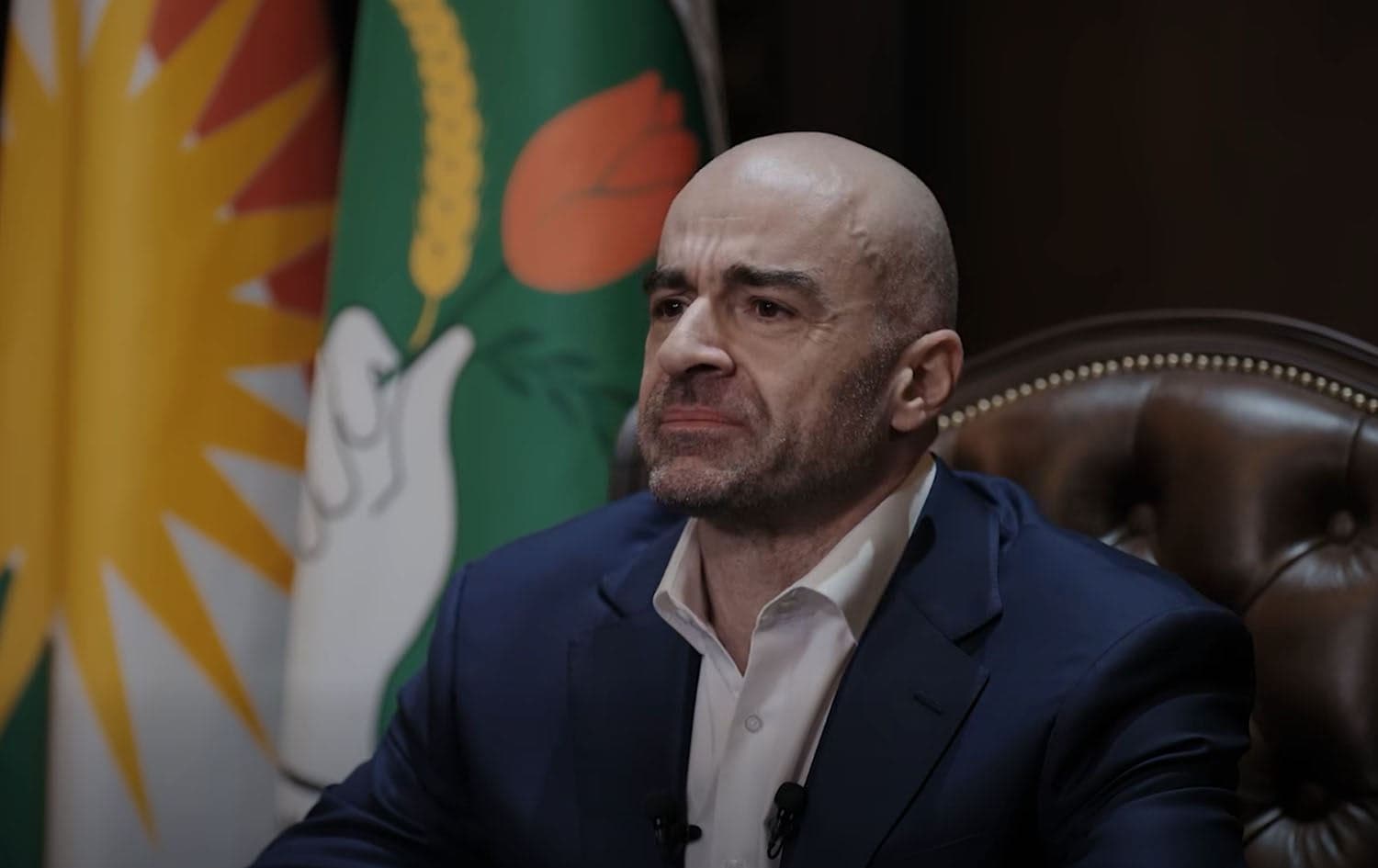

ERBIL, Kurdistan Region - Patriotic Union of Kurdistan (PUK) leader Bafel Talabani on Sunday announced the launch of his party’s campaign for Iraq’s upcoming parliamentary elections, urging voters to take the vote “seriously” and strengthen Kurdish representation in Baghdad.
“This time it’s the election for the Council of Representatives in Iraq. Whether we like it or not, many important and difficult decisions are made in Baghdad,” Talabani said in a video message announcing his party’s campaign. “I ask you [voters] to take this election seriously… go vote for who can work [make things happen] in Baghdad.”
Campaigning for Iraq’s November elections began on Friday and will continue until November 8. Security forces and other special voters will cast their ballots on November 9, followed by general voting on November 11.
“The stronger we are in Baghdad, the more beautiful we will make Kurdistan. The stronger we are in Baghdad, the better your lives will be,” Talabani said.
He further emphasized that the PUK maintains influence in Baghdad through strong political relationships. “We have good relations with all sides,” he said, referring to the various parties and components in the Iraqi parliament.
The PUK holds a long-standing alliance with the Shiite-led Coordination Framework, a coalition that forms the core of Iraq’s ruling bloc and supports Prime Minister Mohammed Shia’ al-Sudani. The partnership acts as a counterbalance to the Kurdistan Democratic Party (KDP), the PUK’s rival and partner in the Kurdistan Regional Government (KRG). The PUK also retains its hold on the Iraqi presidency, currently held by Abdul Latif Rashid, though the post is largely ceremonial.
Talabani criticized political forces that depend on foreign powers, stressing that Iraq’s challenges must be resolved internally.
“Iraq’s problem can be solved by us, by Kurds, by Iraqis, by Yazidis, by Turkmen, by Christians, by all the components of Iraq,” he said, stressing that “what Iraq needs today is a national program - an Iraqi program.
“Iraq must see its own sanctities and must not forget how great it is.”
Talabani further urged all Iraqi parties to abide by the constitution to address disputes. He described the constitution as “sacred,” emphasizing that it must be implemented in full rather than selectively applied.
On tangled issues between Erbil and Baghdad, Talabani said that Iraq’s problems go beyond the prevalent salary crisis in the Kurdistan Region.
“Our issue in Baghdad is much bigger than salaries… Our issue is Kurdistan, the rights of the Kurds, coexistence,” he said.
The federal government has repeatedly withheld full monthly transfers to the KRG for public sector salaries, conditioning payments on the Region’s compliance with the federal budget law - including resuming oil exports through the State Organization for Marketing of Oil (SOMO) and handing over an agreed share of non-oil revenues.
Although Baghdad recently released funds to cover July salaries following a limited resumption of oil transfers through Turkey’s Ceyhan port, payments for August and September remain pending. Negotiations continue over how much non-oil revenue the KRG must remit to Baghdad.
Turning to the year-long delay in forming the next Kurdistan Regional Government cabinet, Talabani reiterated that the PUK will not enter a new government without guarantees for meaningful reform and power-sharing.
The Kurdistan Region’s parliamentary elections were held last October, but the two main parties - the KDP and PUK - have yet to agree on a new cabinet. Both sides say they are committed to a “common vision,” but differences remain over key ministries and senior posts.
President Masoud Barzani, who is the leader of the KDP, and Talabani most recently met in late September after a similar meeting in July to discuss ways to break the deadlock.
.jpeg&w=3840&q=75)
.jpg&w=3840&q=75)