Iraq
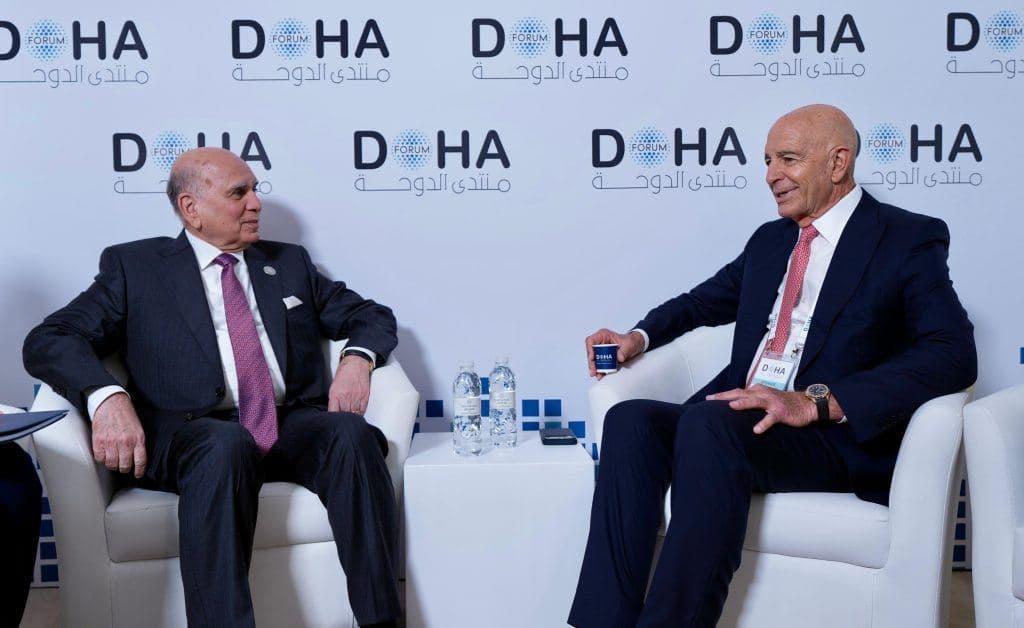
Iraqi Foreign Minister Fuad Hussein (left) meets US Special Envoy for Syria Tom Barrack in Doha, Qatar on December 7, 2025. Photo: IraqiMoFA/Facebook
ERBIL, Kurdistan Region - Iraq on Sunday expressed “astonishment” at remarks by the United States Special Envoy for Syria, Tom Barrack, who dismissed the concepts of decentralization and federalism - including in Iraq - as “illusions.” Foreign Minister Fuad Hussein reaffirmed that the country’s federal system is “indispensable.”
In a statement, the foreign ministry quoted Hussein as expressing “the Iraqi government’s astonishment at recent remarks by the US envoy about Iraq’s internal situation,” noting that “it would have been important to articulate that vision differently and in a way that reflects the political progress and relative stability the country has achieved.”
The Iraqi foreign minister, who also serves as deputy prime minister, further stressed that “the choices of the Iraqi people ought to be respected, and that democracy and the federal system - enshrined in the [Iraqi] Constitution [of 2005] - have become a firm and indispensable path despite ongoing challenges.”
Earlier in the day, the US envoy had remarked that the concepts of decentralization and federalism were “illusions.” Responding to a question from Rudaw on the sidelines of the Doha Forum about Iraq’s federal system, Barrack said, “Our view is simple; there is no community with greater education, legacy, and pedigree than the Iraqis of Mesopotamia. We leave these decisions entirely to you. Centralization, decentralization, federalization - these are all illusions created by governments.”
The foreign ministry added that Hussein and Barrack had met on the sidelines of the Doha Forum, where the Iraqi foreign minister outlined “the stages Iraq went through to solidify its democratic path after 2003 and the complex challenges that accompanied these transformations.”
“Iraq remains committed to its democratic choice, the strengthening of its institutions, and the rejection of any form of dictatorship that it endured for decades,” the statement said.
For his part, Barrack reportedly told Hussein that "the US administration views the Iraqi experience with respect and that what he stated concerns the American experience aspect in Iraq."
On the Syrian front, Barrack has repeatedly criticized efforts by Syrian Kurds and other minority groups to pursue decentralization. During the Doha Forum, he reiterated this stance, telling reporters, “Decentralization has never really worked anywhere in this region.”
During his meeting with the US diplomat, the Iraqi foreign minister emphasized Iraq’s position on “the necessity of including all components of the Syrian people in the political process and initiating a comprehensive national dialogue.” He also affirmed Baghdad’s readiness to “provide support and guidance to counterparts in Damascus and share Iraq’s experience in managing political and security challenges.”
The US envoy reportedly underscored “the importance of engaging fairly with all Syrian components and supporting efforts to find solutions to the situation, which ultimately belongs to the Syrian people.”
In a statement, the foreign ministry quoted Hussein as expressing “the Iraqi government’s astonishment at recent remarks by the US envoy about Iraq’s internal situation,” noting that “it would have been important to articulate that vision differently and in a way that reflects the political progress and relative stability the country has achieved.”
The Iraqi foreign minister, who also serves as deputy prime minister, further stressed that “the choices of the Iraqi people ought to be respected, and that democracy and the federal system - enshrined in the [Iraqi] Constitution [of 2005] - have become a firm and indispensable path despite ongoing challenges.”
Earlier in the day, the US envoy had remarked that the concepts of decentralization and federalism were “illusions.” Responding to a question from Rudaw on the sidelines of the Doha Forum about Iraq’s federal system, Barrack said, “Our view is simple; there is no community with greater education, legacy, and pedigree than the Iraqis of Mesopotamia. We leave these decisions entirely to you. Centralization, decentralization, federalization - these are all illusions created by governments.”
The foreign ministry added that Hussein and Barrack had met on the sidelines of the Doha Forum, where the Iraqi foreign minister outlined “the stages Iraq went through to solidify its democratic path after 2003 and the complex challenges that accompanied these transformations.”
“Iraq remains committed to its democratic choice, the strengthening of its institutions, and the rejection of any form of dictatorship that it endured for decades,” the statement said.
For his part, Barrack reportedly told Hussein that "the US administration views the Iraqi experience with respect and that what he stated concerns the American experience aspect in Iraq."
On the Syrian front, Barrack has repeatedly criticized efforts by Syrian Kurds and other minority groups to pursue decentralization. During the Doha Forum, he reiterated this stance, telling reporters, “Decentralization has never really worked anywhere in this region.”
During his meeting with the US diplomat, the Iraqi foreign minister emphasized Iraq’s position on “the necessity of including all components of the Syrian people in the political process and initiating a comprehensive national dialogue.” He also affirmed Baghdad’s readiness to “provide support and guidance to counterparts in Damascus and share Iraq’s experience in managing political and security challenges.”
The US envoy reportedly underscored “the importance of engaging fairly with all Syrian components and supporting efforts to find solutions to the situation, which ultimately belongs to the Syrian people.”
Comments
Rudaw moderates all comments submitted on our website. We welcome comments which are relevant to the article and encourage further discussion about the issues that matter to you. We also welcome constructive criticism about Rudaw.
To be approved for publication, however, your comments must meet our community guidelines.
We will not tolerate the following: profanity, threats, personal attacks, vulgarity, abuse (such as sexism, racism, homophobia or xenophobia), or commercial or personal promotion.
Comments that do not meet our guidelines will be rejected. Comments are not edited – they are either approved or rejected.
Post a comment