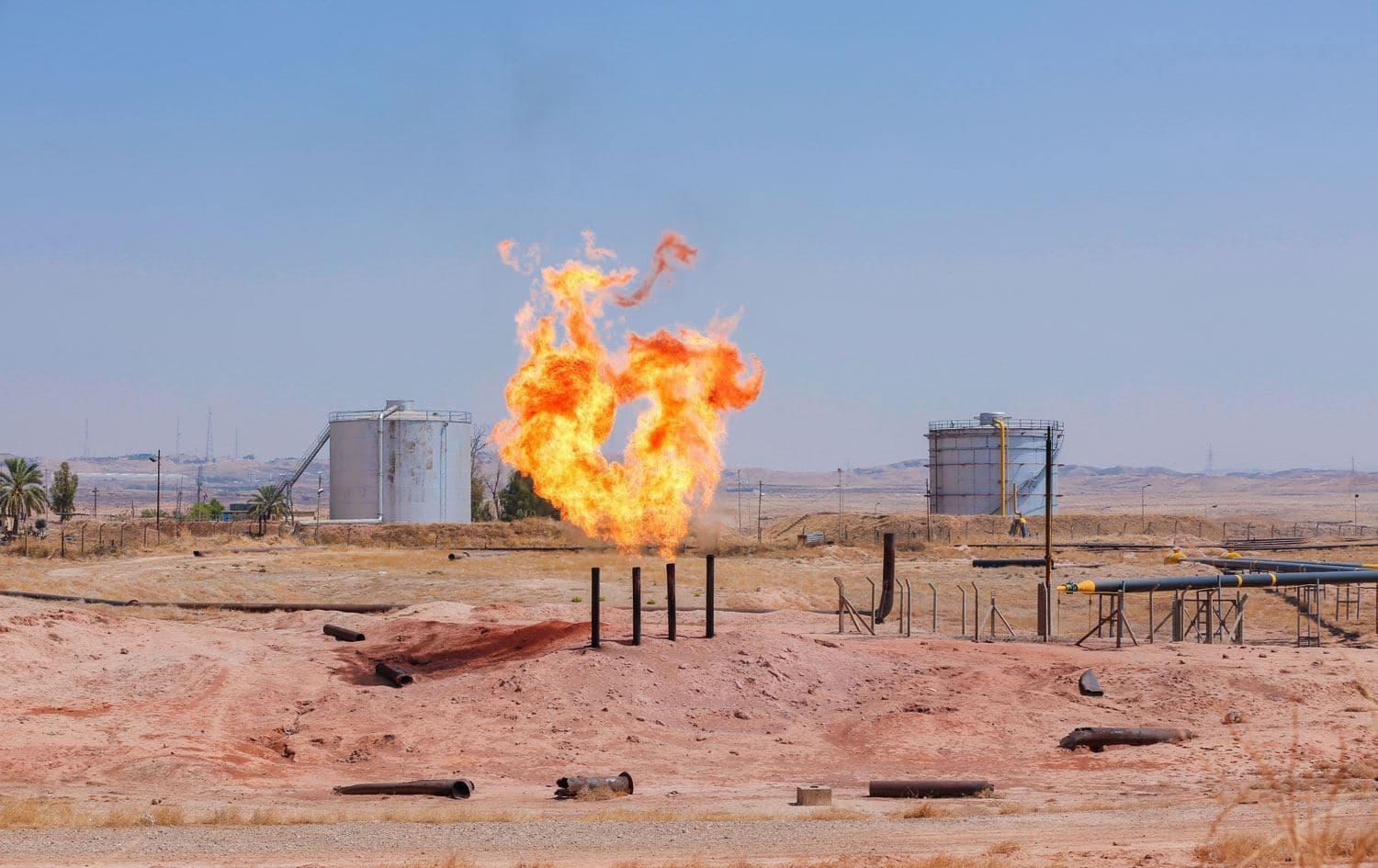

ERBIL, Kurdistan Region - Iraq’s oil ministry is seeking to export up to 250,000 barrels per day (bpd) of oil from the Kirkuk oilfields through the Kurdistan Region to Turkey’s Ceyhan port, a high-ranking source at the ministry told Rudaw on Tuesday, as Baghdad looks for alternatives to the Strait of Hormuz, where escalating military tensions between the US, Israel, and Iran have effectively disrupted the vital export route.
The official source said the federal government “has made an official request to the Kurdistan Regional Government [KRG] to allow us to export Kirkuk oil via the Region’s pipeline to Turkey, but we have yet to receive a response.”
The source added that Baghdad is keen to significantly increase shipments from the Kirkuk oilfields if approval is granted.
“The plan is to export 250,000 barrels of oil daily from the Kirkuk fields to Ceyhan,” the source said, noting that the necessary infrastructure to facilitate such exports is already in place and that the move only requires political approval from the Kurdistan Region.
“The pipeline is currently ready, and we are only waiting for the Kurdistan Region’s approval. Turkey has no objections,” the source added, explaining that currently around 40,000 barrels per day - and sometimes as little as 20,000 barrels per day - are exported to Ceyhan.”
Iraq had previously announced plans to resume some exports from Kirkuk through the Kurdistan Region.
Last week, Iraqi Oil Minister Hayan Abdul-Ghani told Rudaw that Baghdad intended to export “50,000 barrels per day from the Kirkuk fields” through the Region’s pipeline to Ceyhan in the near future.
This comes as Iraq, like many other countries in the region, is bearing the brunt of the ongoing Iran-Israel-US war, which began on February 28 and saw Washington and Tel Aviv launch a joint aerial campaign against Iran, killing several of the country’s top leaders and commanders, including longtime supreme leader Ayatollah Ali Khamenei (1939 - 2026).
For its part, Iran said on Friday that it had launched more than 2,000 drones and over 600 missiles targeting US and Israeli positions as part of its multi-front counteroffensive.
Meanwhile, the Strait of Hormuz remains effectively closed to commercial traffic after the Iranian Revolutionary Guard Corps (IRGC) recently declared it a restricted war zone, warning it would “set ablaze” any ship attempting passage.
The key chokepoint, situated between Oman and Iran that links the Persian Gulf to the Gulf of Oman and the open ocean, is often described as the world’s most critical energy artery, typically handling approximately 21 million bpd of oil per day - accounting for roughly 25 percent of all seaborne-traded oil and 20 percent of global petroleum consumption. Beyond crude oil, the Strait is the primary exit for nearly 20 percent of the world’s liquefied natural gas (LNG).
Regional oil production and global oil prices have therefore been greatly affected by the ongoing war and the disruption of shipping through the Strait of Hormuz.
According to Bloomberg, citing informed sources, Saudi Arabia has reduced daily output by between 2 and 2.5 million bpd, the United Arab Emirates by 500,000 to 800,000 bpd, Kuwait by about 500,000 bpd, and Iraq by approximately 2.9 million bpd.
Before the war, Iraq’s total oil production stood at around 4.35 million barrels per day. Officials estimate that the disruption of exports through the Strait of Hormuz is costing Iraq between $200 million and $250 million in lost revenue per day.