ERBIL, Kurdistan Region - Iraqi Prime Minister Mohammed Shia’ al-Sudani has secured the required majority support within the Shiite Coordination Framework to remain in office for another term, a senior member of the incumbent premier’s bloc told Rudaw, as the country’s ruling alliance prepares to meet on Saturday to agree on a candidate for the top post, traditionally held by a Shiite.
Khalid Walid, a leading member and representative of Sudani’s Reconstruction and Development Coalition’s (RDC) politburo, told Rudaw that the incumbent prime minister “succeeded in obtaining the support of nine parties within the [12-member] Coordination Framework, which represents the numerical and political majority needed to move forward with the formal nomination procedures.”
Walid further argued that beyond the “political acceptability he enjoys within the [Shiite] Coordination Framework,” Sudani also has backing from “the majority of political forces nationwide.”
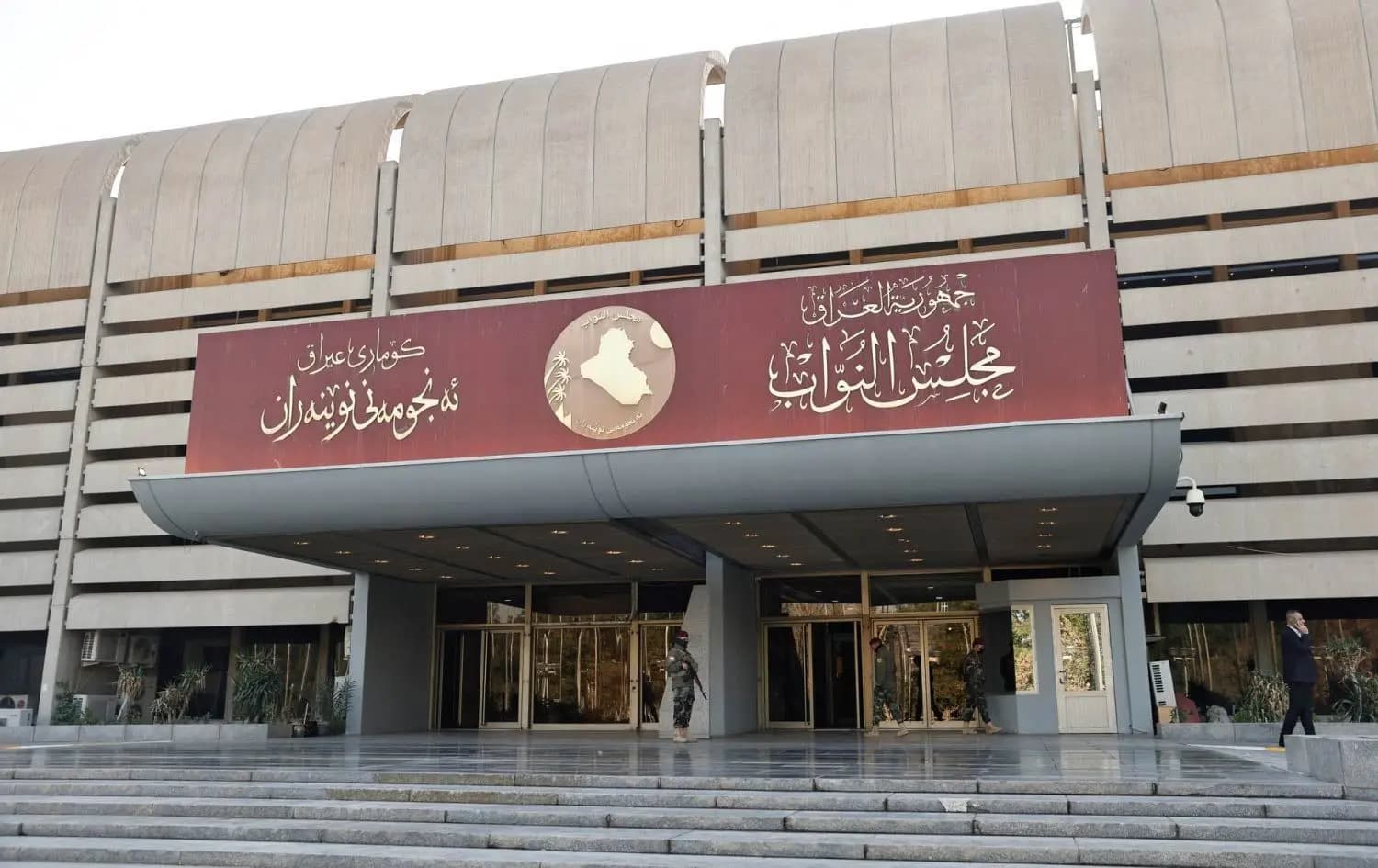
Iraq held legislative elections in early November, with Sudani’s RDC emerging as a frontrunner, securing 45 seats in the 329-member parliament. In late December, parliament elected its speaker and two deputies, and on Sunday elected the Patriotic Union of Kurdistan’s (PUK) nominee, Nizar Amedi, as president.
Under the constitution, once sworn in, the president has up to 15 days to task the nominee of the largest parliamentary bloc - the Coordination Framework - with forming a government.
Sudani has, since the pre-November election campaign, repeatedly expressed his desire for another term in office, arguing that it would allow him to continue his “service-oriented” ministerial program and complete major infrastructure projects, such as the Development Road Project and the reconstruction of Baghdad, which he claims have brought Iraq its most stable period in decades.
The incumbent premier also says he holds a clear democratic mandate to lead, positioning himself as a pragmatic technocrat capable of balancing relations between Iran and the United States.
Walid’s remarks come as the Coordination Framework is set to meet on Saturday to reach a final agreement on a prime ministerial candidate, a senior official from the alliance told Rudaw on Wednesday.
Fahd al-Jubouri, a member of the Hikma Movement - led by Shiite cleric Ammar al-Hakim and a key figure within the bloc - said the list of potential nominees includes Sudani and former prime minister Nouri al-Maliki (2006-2014), who also heads the State of Law Coalition, which holds 29 seats in the Iraqi parliament.
Another name being circulated is Bassem al-Badri, head of the Supreme National Commission for Accountability and Justice and a senior figure in the Maliki-led Islamic Dawa Party.
Haider Barzanji, an Iraqi political analyst and advisor to leading figures within the Coordination Framework, said the alliance’s selection mechanism “requires a candidate to secure at least eight out of twelve votes from its leadership to become the official nominee.”
He added that if consensus is not reached, “a secret ballot may be held to avoid internal disputes” among Shiite parties.
Importantly, the Coordination Framework had in late January nominated Maliki for the post of premier. However, the move was swiftly criticized by US President Donald Trump, who called his candidacy a “very bad choice” and warned that Washington would “no longer help Iraq” if the former prime minister returns to office.
Maliki, a longtime ally of Iran, then criticized Trump’s remarks as “blatant American interference” in Iraq’s internal affairs and rejected any divisions within the Coordination Framework over his nomination.
According to Barzanji, Maliki remains a contender, as “he has not withdrawn his candidacy. However, he is prepared to do so on the condition that Bassem al-Badri becomes the candidate,” adding that Maliki opposes the nomination of incumbent Prime Minister Sudani for another term.
Meanwhile, Amer al-Fayez, head of the Tasmim Alliance, another faction within the Coordination Framework, told Rudaw on Monday that if Maliki withdraws his candidacy, other names that may be circulated alongside Sudani and Badri include former premier Haider al-Abadi (2014-2018), former planning minister Ali al-Shukri, and Mohammed Sahib al-Darraji, a technical advisor to the Iraqi government.
As of Friday, the Coordination Framework has 10 more days to present its nominee and submit the name to the president.
Mushtaq Ramadan contributed to this report from Erbil, Kurdistan Region.