ERBIL, Kurdistan Region - The Iraqi Ministry of Defense said on Monday that federal forces and the Kurdistan Region’s Peshmerga are on full alert along the country’s border with Syria, as renewed clashes between the Syrian Arab Army and the Kurdish forces across the frontier raise concerns over the security of prisons holding Islamic State (ISIS) members.
Major General Tahsin al-Khafaji, Director of Media and Moral Guidance at Iraq’s defense ministry، told Rudaw on Monday that “federal forces and the Peshmerga are in full readiness at the borders to confront any infiltration, and we have coordination and information exchange in all fields,” he said.
He added that preparedness covers all border sectors. “Therefore, whatever situation arises - whether on the borders of the Kurdistan Region, for which the Peshmerga are responsible, or the borders under federal government authority - we are prepared to respond,” al-Khafaji said.
The defense spokesperson stressed that Iraqi forces have both the manpower and experience to deal with potential threats. “We have sufficient capability at the borders to respond to threats and to arrest or kill anyone attempting to enter the country. Our operations are ongoing, and we are closely monitoring terrorist groups,” he said.
Addressing developments in Syria and northeastern Syria (Rojava), al-Khafaji said Iraqi authorities are closely “monitoring the situation and the events occurring in Syria; at the same time, our borders are protected, and we have experience dealing with terrorist groups in the most difficult geographical terrains,” he said.
He also highlighted ongoing coordination with international partners. “Our forces continue to cooperate with the international community to combat the ISIS organization. Information exchange and the tracking of [militants] is a continuous task for us and the international community,” al-Khafaji added.
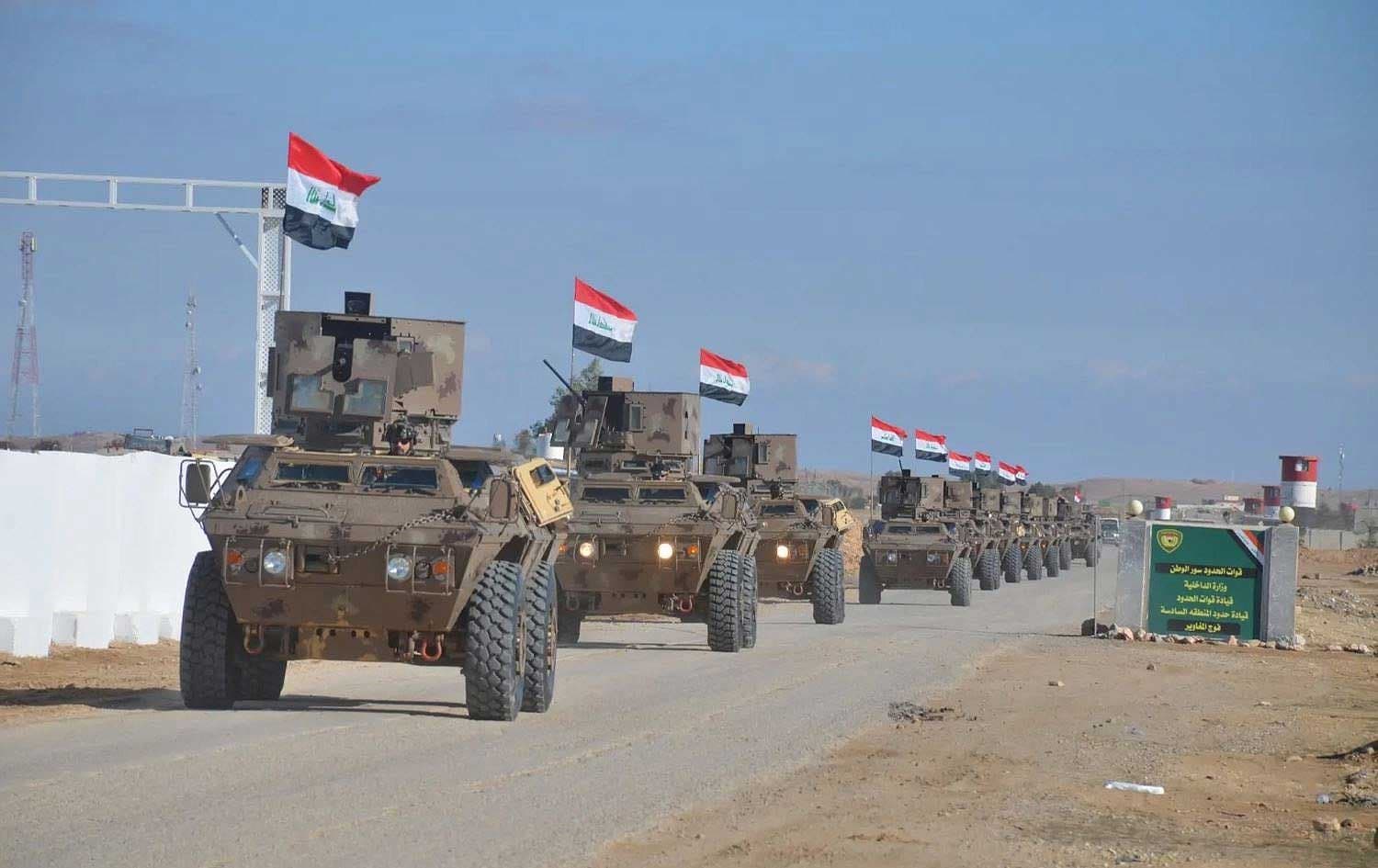
Late Sunday night, video footage circulated showing Iraqi security forces heading toward the Iraq-Syria border in Nineveh province. Mohammed Jassim Kakayi, head of the security and defense committee in the Nineveh provincial council, said the deployment was linked to developments inside Syria. “The dispatch of those security forces followed the Syrian army’s takeover of some areas previously held by the Syrian Democratic Forces [SDF]. That area contains several prisons housing ISIS members and their families,” he told Rudaw.
During clashes between the Syrian Arab Army and the SDF, Sheikhmous Ahmed, who oversees camps for internally displaced people (IDPs) and refugees in Rojava, warned of serious risks to detention facilities. “Due to attacks by Hay'at Tahrir al-Sham [HTS] militants [who are a now major part of the Syrian interim government], there is a serious threat to the camps and prisons holding ISIS militants, because those attackers are just like ISIS,” he told Rudaw.
Kakayi said reports of possible escapes prompted Iraq to bolster its border defenses. “There were reports that prisoners had escaped; therefore, the Iraqi government sent additional military support to the border to ensure that none of these individuals - should any be Iraqi - enter Iraq,” he said.
Iraq has three security lines along the border: the Border Guard Command as the first line, the Army as the second, and the Popular Mobilization Forces (PMF) as the third. Regarding the forces seen moving overnight, Kakayi said, “Those were Popular Mobilization Forces who moved to secure the borders, but nothing untoward has occurred in those border areas.”
Iraq and the Kurdistan Region share a 618-kilometer border with Rojava and Syria, a frontier that has long been a key concern in the fight against ISIS and cross-border militant infiltration.