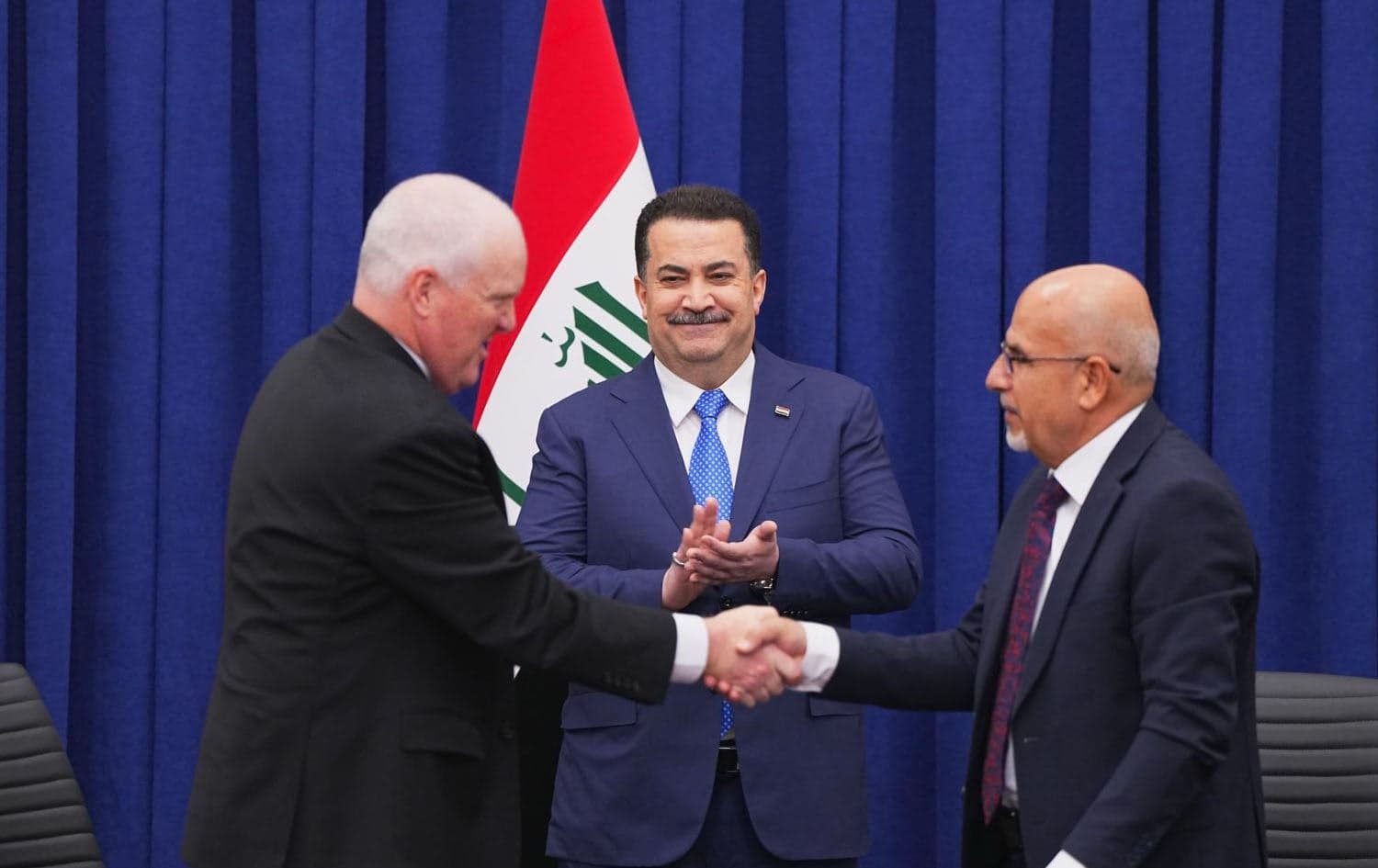

ERBIL, Kurdistan Region - Iraq’s oil ministry and US energy giant Chevron on Tuesday signed a deal to develop several oil exploration blocks in the southern Dhi Qar province and to expand work at the Balad oil field in Salahaddin province, the prime minister’s office said.
Prime Minister Mohammed Shia’ al-Sudani oversaw “the signing ceremony of a Principles Agreement between the Ministry of Oil and the American company Chevron regarding the Nasiriyah Project, which includes four exploration blocks, as well as the development of the Balad oil field, along with other producing fields and exploration blocks,” his office said in a statement.
Chevron Corporation is an American multinational energy company and one of the world's largest integrated energy companies. A direct descendant of the original Standard Oil Company, it operates globally in over 180 countries
“The government has adopted a new approach in dealing with major international oil companies and their investments in Iraq, especially American ones,” Sudani said during the ceremony.
The prime minister stated that Baghdad is working to attract more international companies to collaborate with oil production, refining, associated gas, and natural gas production, and implement the latest technologies to develop the sector.
According to the statement, Chevron Vice President Frank Mount “expressed Chevron’s aspiration to work in Iraq, describing it as a country rich in opportunities and endowed with vast natural and human resources.”
This new approach by the Iraqi government signifies a renewed effort to attract major international oil companies and diversify its energy sector.
Last month, Iraq signed a preliminary deal with US-based HKN Energy to develop the Hamrin oil field in Basra province.