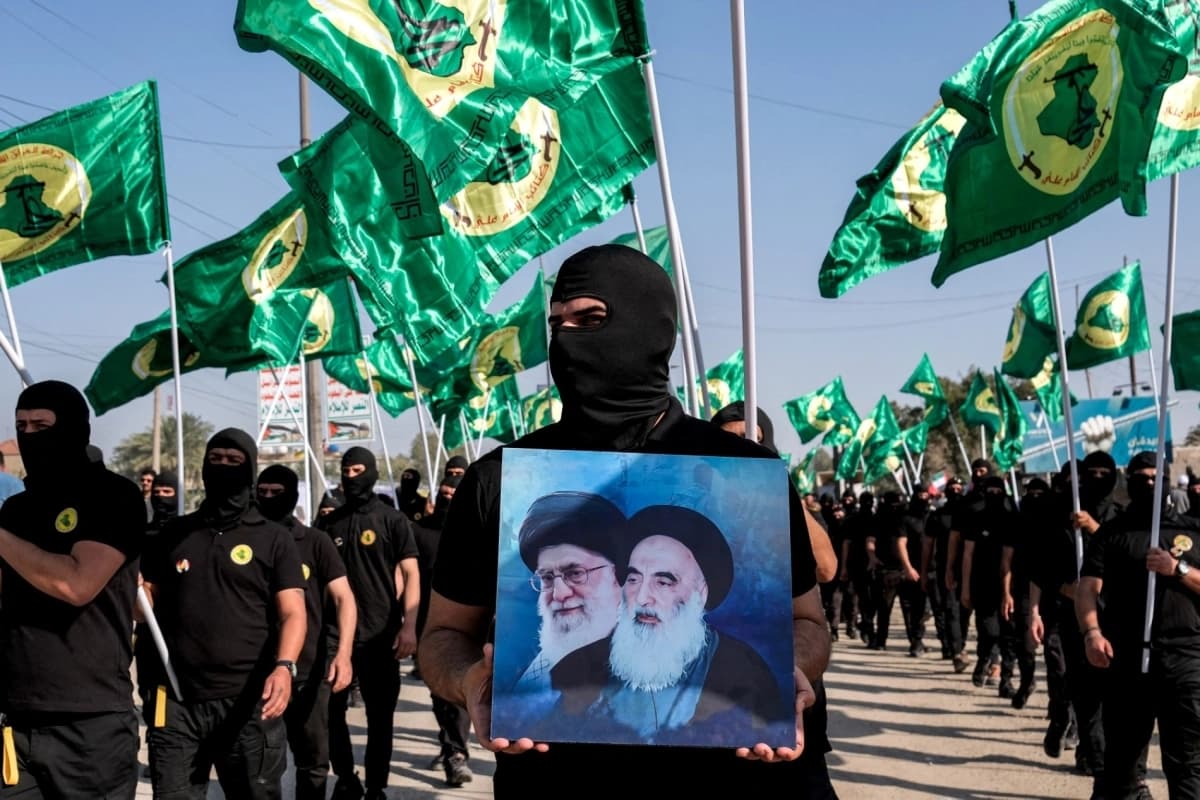
ERBIL, Kurdistan Region - Iraq’s ruling Shiite Coordination Framework has yet to agree on a single candidate for the post of prime minister, three officials from within the alliance confirmed to Rudaw on Tuesday, saying the 12-member bloc is split into two camps backing two nominees - one aligned with incumbent Prime Minister Mohammed Shia’ al-Sudani and another linked to former premier Nouri al-Maliki (2006 - 2014).
The Coordination Framework’s leadership on Monday evening held a meeting at the Baghdad headquarters of senior Iraqi Shiite cleric and Hikmah Movement leader Ammar al-Hakim, a leading figure in the bloc, but postponed naming a prime minister candidate until Wednesday to allow more time for deliberations.
Aqeel al-Rudaini, spokesperson for the Victory Alliance - led by former prime minister Haider al-Abadi (2014 - 2018), another senior member of the Coordination Framework - told Rudaw that “none of the candidates whose names were circulating had obtained the required majority of votes” and that “the delay in announcing a candidate was intended to allow further discussions over the next two days.”
Three officials from within the Shiite alliance, who spoke to Rudaw anonymously, confirmed that during the meeting it became clear the Coordination Framework is currently split into two camps.
One camp backs Bassem al-Badri, a senior member of the Maliki-led Islamic Dawa Party and head of the Accountability and Justice Commission, who was nominated by Maliki’s State of Law coalition. The other camp supports Ihsan al-Awadi, director of Sudani’s office, who was nominated by the Reconstruction and Development Coalition led by the incumbent prime minister, the officials relayed.
The Sudani camp reportedly includes Abadi and Hakim, as well as the leader of the Asa’ib Ahl al-Haq armed group and its affiliated Sadiqoun bloc in parliament, Qais al-Khazali. It further includes the head of the Badr Organization and its affiliated Nabni Alliance in parliament, as well as Ahmad al-Assadi, the labor minister in the Sudani government.
Meanwhile, the Maliki camp reportedly includes Mohsen al-Mandalawi, former acting speaker of the Iraqi parliament (2023 - 2024) and leader of the al-Asas Alliance; Hammam Hamoudi, who heads the Islamic Supreme Council of Iraq (ISCI); and Abu Ala al-Walaei, secretary-general of the Kata’ib Sayyid al-Shuhada armed group. It also comprises Amer al-Fayez, head of the Tasmim Bloc, and Abdul-Hussein al-Abtan, leader of the Iqtidar Watan party and former sports minister.
During Monday’s meeting, no prime ministerial candidate was able to secure a two-thirds majority of the Coordination Framework leaders’ votes, the three officials told Rudaw, highlighting additional disagreements within the Shiite alliance over the voting mechanism, as well as concerns about the potential failure to secure parliamentary approval for the cabinet.
Rudaini told Rudaw on Tuesday that “this is the first time the Coordination Framework has seen such disagreements.”
Iraq held legislative elections in early November, and in late December, parliament elected its speaker and two deputies.
Parliament on April 11 elected the Patriotic Union of Kurdistan (PUK) nominee, Nizar Amedi, as president. Under the constitution, once sworn in, the president has up to 15 days to task the nominee of the largest parliamentary bloc - the Coordination Framework - with forming a government.
As of the time of this report, the Coordination Framework has less than a week left to present a candidate for the prime ministership before the country enters a constitutional gray zone where the current caretaker government continues with limited powers, and state projects and budgets remain frozen.
Hastyar Qadir contributed to this report from Erbil, Kurdistan Region.
.jpg&w=3840&q=75)