


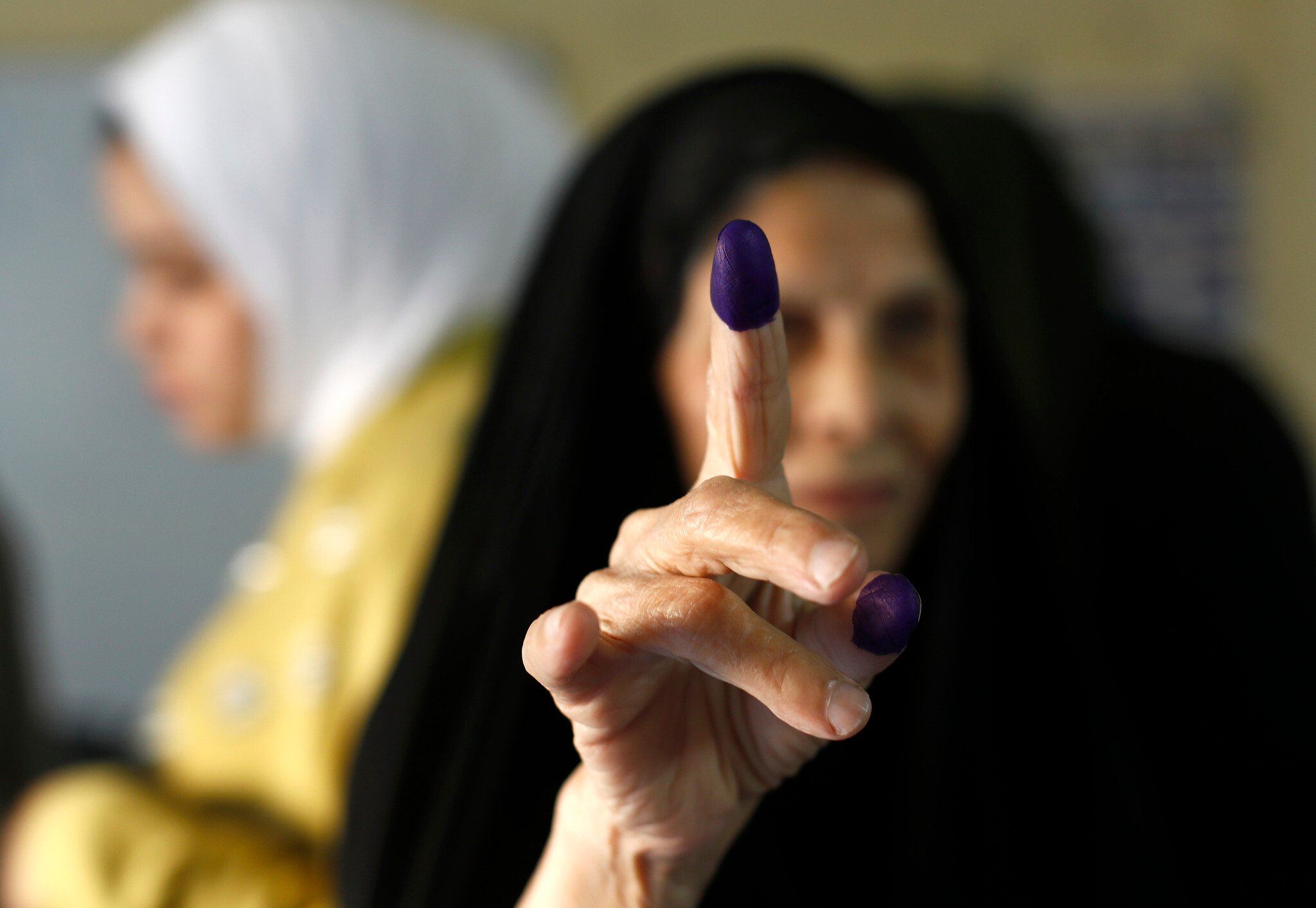
ERBIL, Kurdistan Region - Ruling Shiite parties eye majority of votes in provinces with massive numbers of seats, while fears grow over a political rift among Sunni parties, as campaigning for the November legislative election intensifies, and the rhetoric gets tougher.
Shiite alliances and lists in this election are focusing more on provinces with the most parliamentary seats, chief among them Baghdad, Iraq's capital, as well as some other provinces with symbolic and sacred significance, including Karbala and Basra. What is clear is they have all entered into the fiercest competition, divided among old lists and alliances from the past two decades along with some new emerging lists eyeing seats in this election.
These Shiite lists, most of which are within the ruling Coordination Framework, holding nearly 140 seats in Iraq's parliament, raise their voices louder in determining who will lead the next government.
For Shiites, Baghdad is important. In the province, there are nearly 3,000 candidates from different lists. The province has 71 seats with nearly 4.4 million voters. These large numbers have made Shiites consider Baghdad the decisive point for the shape of the next government and even the next prime minister.
Other decisive constituencies for Shiite parties are Basra, Najaf, and Karbala. These four provinces together have more than 7.5 million voters, making up nearly 35 percent of Iraq's total voters.
On Wednesday, Nouri al-Maliki, head of the State of Law Coalition, addressed voters in Karbala asking them to participate actively in the elections. Maliki, without revealing details, spoke of "conspiracies against Iraq" to defeat the political process.
In addition to predominantly Shiite provinces, some Shiite parties have also strongly entered campaigning to garner votes in mixed Shiite-Sunni provinces. Sudani aims for a second term in office.
Incumbent Prime Minister Mohammed Shia al-Sudani, announced from Salahuddin province that "development projects in this province are being implemented without delay."
"We have constructed hospitals and various projects in Dujail, Dur, Samarra, and Duz," - all districts in Salahaddin province.
Sudani, along with several other Shiite party leaders, aims to be first in the elections.
“Polls say so and he is strong among the people because of three years of stability and the services provided,” Farhad Alaadin, a senior advisor to Sudani said, referring to what he described as the prime minister’s growing popularity.
Despite expectations of a strong showing by Sudani’s list, the senior advisor underscored that Iraq’s political system makes single-party dominance impossible. “No party can win a majority alone,” he said, adding that “it will always need an agreement and coalition with other parties to form a government.”
“The next prime minister, most likely Mohammed Shia Sudani, should hold talks with other Shiite leaders and other parties to reach an agreement,” he explained, predicting that coalition talks will again be decisive in shaping the next government.
Apart from the competition between Sudani and Maliki, other lists have also emerged. Mohsen al-Mandalawi, the current deputy speaker of the Iraqi parliament has entered the election race with the Al-Assas Alliance, comprising 8 small parties focusing on youth votes. There are other alliances among Shiites, but eyes are mostly on the competition between several lists.
Sunnis between Taqaddum's hegemony and fresh voices
Sunnis in this election have four main alliances and parties participating: Taqaddum led by Mohammed al-Halbousi, Azm Alliance led by Muthanna al-Samarrai, Khamis Khanjar's Siyadah , and Tafawuq led by Ibrahim Namis.
Sunni competition is mostly in Anbar and Nineveh, besides some other votes in Kirkuk, Salahaddin and Diyala. They have entered fierce competition for seats in Iraq's largest province by area. Each believes they deserve most of Akbar's seats, and they accuse each other of creating obstacles to their campaigns.
Ahmed al-Dulaimi, member of Azm Alliance, alleges the head of Taqaddum Alliance has asked Anbar's governor not to approve gatherings and meetings of Azm supporters in western Anbar. Azm considers this a violation.
Halbousi's Taqaddum believes they deserve the majority of Sunni votes.
"State administration must be built on the basis of competence and genuine partnership," Mohammed al-Jubouri, Taqaddum Party spokesman, told Rudaw, believing his party will remain "the largest and most influential" Sunni force in Iraq's political arena.
Azm, a fierce competitor of Taqaddum, believes people should not trust in the hegemony and authority of one party.
"This time in Anbar, one party will not rule," Walid al-Fahdawi, a member of Azm Alliance, said. "Taqaddum will lose 5-6 seats, the balance will return to the province, and other parties will gain seats."
Tafawuq Alliance, is a newly-emerged alliance led by Ibrahim Namis.
"Through this election we must once again become the people's voice and end single-party hegemony," he told Rudaw.
Anbar has 15 seats, with 10 Sunni parties and alliances competing to win the most seats.


Comments
Rudaw moderates all comments submitted on our website. We welcome comments which are relevant to the article and encourage further discussion about the issues that matter to you. We also welcome constructive criticism about Rudaw.
To be approved for publication, however, your comments must meet our community guidelines.
We will not tolerate the following: profanity, threats, personal attacks, vulgarity, abuse (such as sexism, racism, homophobia or xenophobia), or commercial or personal promotion.
Comments that do not meet our guidelines will be rejected. Comments are not edited – they are either approved or rejected.
Post a comment