


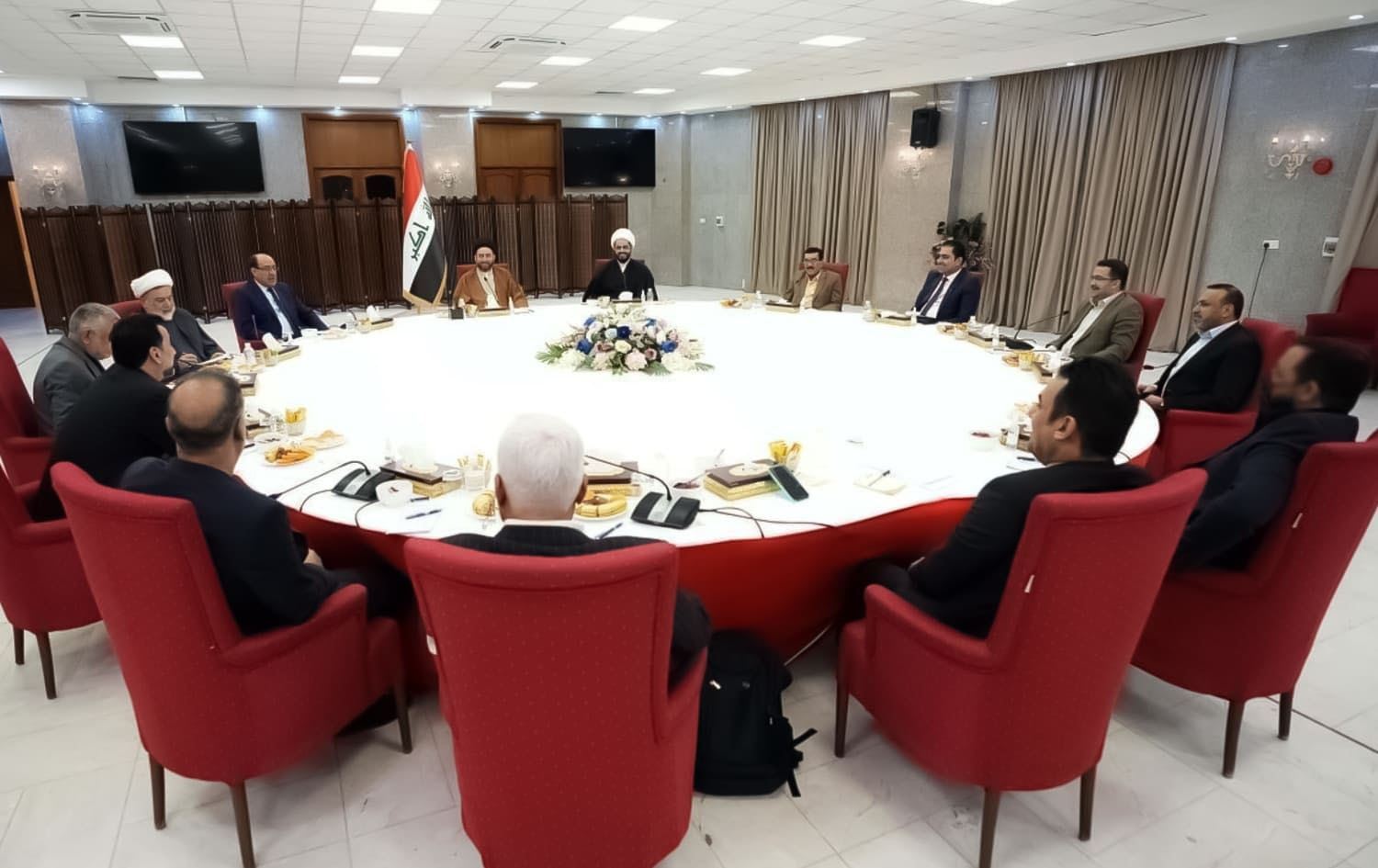
ERBIL, Kurdistan Region - Iraq’s Shiite-led Coordination Framework plans to field multiple candidate lists in the disputed province of Kirkuk for the November 2025 parliamentary elections. Members of the Iran-aligned alliance told Rudaw that the strategy aims to increase their chances following underwhelming results in previous polls.
Ali al-Daffayi, politburo member and spokesperson for the Islamic Supreme Council of Iraq (ISCI), told Rudaw that “the Coordination Framework has decided to run small or medium electoral lists” in the upcoming vote, particularly in contested areas such as Kirkuk.
“This is a purely technical matter,” Daffayi said, adding that the move complies with Iraq’s current electoral law.
In March 2023, Iraq’s State Administration Coalition led efforts to adopt a modified proportional representation system based on the Sainte-Laguë method. Under this system, total party votes are divided by a fixed quotient to allocate parliamentary seats. The amendments also reverted Iraq’s electoral map from 83 districts to the previous model of 19 province-wide constituencies.
The changes sparked widespread criticism for favoring established parties and disadvantaging independents and smaller blocs.
The State Administration Coalition - comprising the Shiite-led Coordination Framework, the Sunni Sovereignty Alliance, and the two main Kurdish parties, the Kurdistan Democratic Party (KDP) and the Patriotic Union of Kurdistan (PUK) - currently controls 275 out of 329 seats in the Iraqi parliament.
Notably, Daffayi dismissed concerns that the Coordination Framework’s multiple-list approach reflects internal divisions. “The Coordination Framework is not a political party and has no singular leadership; it is a political alliance,” he said. “Despite ongoing internal disagreements, the Framework remains united in its overarching goal: electoral success and forming the largest bloc in parliament.”
Under Iraq’s post-2003 ethno-sectarian power-sharing system, the prime minister is traditionally a Shiite, the speaker of parliament a Sunni Arab, and the president a Kurd.
Daffayi emphasized that the Coordination Framework’s “fundamental ambition is for the premiership to be held by someone with the highest level of competency, integrity, and practical experience.”
For his part, Rahim al-Aboudi, a senior member of the Hikma Movement - part of the Coordination Framework and led by prominent Shiite cleric Ammar al-Hakim - told Rudaw that the coalition may run up to three different electoral lists in Kirkuk. He added that some member parties may also support independent candidates or lists that are unofficially aligned with the alliance.
Meanwhile, Mohammed al-Bayati, a senior Badr Organization official in Kirkuk, said that around 80 percent of the Framework’s members plan to support a new list named the Turkmen Rescue Front. The Badr Organization, led by Hadi al-Amiri, is the armed wing of the Fatah Alliance and a core component of the Coordination Framework.
A similar approach appears to be taking shape among Kurdish parties as well.
A senior PUK member, Ali Qalayi, told Rudaw last week that a unified Kurdish list in Kirkuk - including both the PUK and the KDP - may not be strategically beneficial.
“It’s not guaranteed that running on a single list will secure more seats, whether for parliament or provincial councils,” he said, noting that the decision is based on technical calculations rather than political disputes. “There are no disagreements on this issue,” Qalayi added.
Iraq’s Independent High Electoral Commission (IHEC) told Rudaw in late April that 70 political parties have expressed interest in contesting the November elections. Registration began on April 15.
Hassan Hadi, a member of IHEC’s media team, then stated that the commission has invalidated over one million voting cards. By the end of the year, approximately 29 million citizens in Iraq and the Kurdistan Region are expected to be eligible to vote - though only those with biometric voting cards will be allowed to cast their ballots.
Sangar Abdulrahman and Hastyar Qadir contributed to this report.


Comments
Rudaw moderates all comments submitted on our website. We welcome comments which are relevant to the article and encourage further discussion about the issues that matter to you. We also welcome constructive criticism about Rudaw.
To be approved for publication, however, your comments must meet our community guidelines.
We will not tolerate the following: profanity, threats, personal attacks, vulgarity, abuse (such as sexism, racism, homophobia or xenophobia), or commercial or personal promotion.
Comments that do not meet our guidelines will be rejected. Comments are not edited – they are either approved or rejected.
Post a comment